Tag Archives: Recession

OJT: On the Job Training

Barack Obama.

You know it’s bad when the far left begins to give you economic advice:

Liberal Democratic lawmakers, including the Congressional Black Caucus, are unhappy with the Obama administration’s pace of efforts tackling the unemployment rate, which is a whopping 10.2 percent and expected to rise.

The CBC, in particular, say Obama officials have not done enough to address the severe economic problems in the black community. Rep. Maxine Waters, D-Calif, reportedly issued a warning Wednesday that the 43 members of the caucus are planning to vote with the GOP to derail a number of Democratic bills if it isn’t addressed.

However bad it is for Obama this, at least, is encouraging:

Labor support is more in favor of funding labor projects, in terms of public works, putting more money into the states and cities but the White House is concerned about the deficit.

Finally.

Adult Talk in the World

This assessment should shake up team Obama:

BEIJING — China’s top banking regulator issued a sharp critique of U.S. financial management only hours before President Barack Obama commenced his first visit to the Asian giant, highlighting economic and trade tensions that threaten to overshadow the trip.

Liu Mingkang, chairman of the China Banking Regulatory Commission, said that a weak U.S. dollar and low U.S. interest rates had led to “massive speculation” that was inflating asset bubbles around the world. It has created “unavoidable risks for the recovery of the global economy, especially emerging economies,” Liu said.

The situation is “seriously impacting global asset prices and encouraging speculation in stock and property markets.”

I LOVE getting schooled by China!

schools in session

Freddie and Fannie: Just the Beginning

I am convinced that Fannie and Freddie were the causes that led to the current recession.  I am sure that when incentives were created to give people money who had no or little ability to pay that money back, bad bad things were going to happen.

But somehow all of that got lost in all of the fall out.  What we heard was how evil those greedy corporations are.  What we heard was how Wall Street doesn’t look after Main Street.  What we heard was that it was Big Corporations that are somehow “Too Big To Fail” that brought this country to its knees.

What we didn’t hear was the story behind Fannie and Freddie:

NEW YORK (Reuters) – Freddie Mac, the second largest provider of U.S. residential mortgage funding, on Friday posted a loss of $5 billion in the third quarter and predicted it would need more government support amid a “prolonged deterioration” in housing.

And why is the company losing so much money?

delinquencies worsened on loans it guarantees.

Well, heck, what can ya expect?  The little brother of Fannie Mae is surly the runt of the litter and can only look on as big sister excels, right?  Right?

Its larger rival Fannie Mae on Thursday said it would need $15 billion from the U.S. Treasury after a whopping $18.9 billion third-quarter loss.

Whoops!  Didn’t see THAT one coming.

But hey, Fannie and Freddie–ya know, they are players but really, they aren’t THAT big; are they?  Or are they?

Results at Freddie Mac and Fannie Mae are widely watched as a barometer of the U.S. housing market since they own or back nearly half of outstanding mortgages.

Jeepers.  By golly, they ARE that of a player in the market!  And maybe, just maybe, when those two players begin to change the way in which they do business, the rest of the market attempts to adapt?

In other words,  I guess what I’m saying is that when Fannie and Freddie, backed by good Ol’ Unc [that’s the USofA to you and me], begin too incent market forces to provide mortgages to people who can’t afford mortgages, you end up with a bunch of:

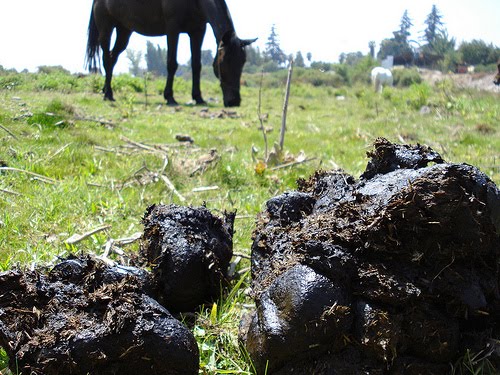
horse.shit

But hey, what’s $51.7 billion between friends?  Or even $60.9 billion?  At least your good for it, right?

Starting in 2010, the company will begin accounting for $1.8 trillion in mortgage-backed securities it guarantees on its balance sheet to meet new guidelines. This will increase interest income and interest expenses, and could have a significant negative impact on net worth, it said.

Hmm, something smells in the State of Denmark.

Shares of Freddie Mac were flat at $1.23 in light after-hours trading following the results.

And if you’ll buy shares at a buck 23, I have some fertilizer for your garden…

Change You Can Believe In

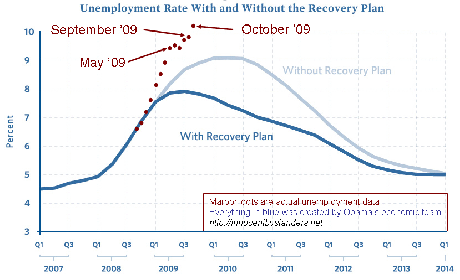
A picture is worth a thousand words:

stimulus-vs-unemployment-october-dots

From Innocent Bystanders via TJIC

Freakin’ Obama.

This Isn't Going To End Well

We know what happens when the government pressures banks to lend to people they wouldn’t otherwise lend to, right?

So, what does Obama wanna do when banks won’t lend to people they don’t want to?  He pressures ’em.

President Obama is prepared to take “every appropriate step” to pressure banks to lend more money to small businesses, he said Saturday, the latest in a week of salvos his administration has directed toward financial institutions.

Obama said banks should return the favor for a $700 billion taxpayer-financed financial bailout package by lending more money to small businesses, without specifying what steps he would be willing to take to mount pressure on the banks.

Too many small business owners remain unable to get credit, Obama said in his weekly radio address, despite his administration’s efforts to jump-start lending, which was virtually frozen when the financial crisis took hold last year.

“These are the very taxpayers who stood by America’s banks in a crisis, and now it’s time for our banks to stand by creditworthy small businesses and make the loans they need to open their doors, grow their operations and create new jobs,” Obama said.

“It’s time for those banks to fulfill their responsibility to help ensure a wider recovery, a more secure system and more broadly shared prosperity,” said Obama.

Because 9.8% unemployment just isn’t high enough.  You know what happens when you start a Rookie?  He gets beat.

Because It Worked So Well The First Time

Unbelievable!

People often forget the lessons that history serves up to us.  We are destined to relive the errors of our past.  This happens in war, in love and, it seems, it politics.

You would think that with a recession just ending, an economy that won him the election and a financial crisis “the biggest since the Great Depression” Mr. Obama would know not to take these history lessons to heart.

But he isn’t, he’s going right back to the well that put us in this situation to begin with.

WASHINGTON (Reuters) – The Obama administration on Monday launched a program to help the depressed U.S. housing market by effectively allowing state and local housing finance agencies to borrow from the U.S. Treasury.

The initiative, announced as new data showed a downturn in homebuilder sentiment, aims to restart a source of mortgage financing for first-time and low-income buyers that has been largely shut down by credit market gridlock.

Described as temporary by the U.S. Treasury, the Department of Housing and Urban Development and the Federal Housing Finance Agency, the program will allow state and local agencies to issue bonds through government-sponsored mortgage finance giants Fannie Mae and Freddie Mac. Those bonds would then be purchased by the Treasury.

“Through this initiative, the administration aims to help … jump start new lending to borrowers who might not otherwise be served and to better support the financing costs of their current programs,” U.S. Treasury Secretary Timothy Geithner said in a statement.

At the very root cause of this most recent crisis is the fact that it was easy for people to borrow money to buy houses.  Many of these people would not have been able to afford to borrow that money in the past.  With the added demand on the housing market, the price of homes sky rocketed.  This in turn caused further investment in that market and so on and so on.  Finally, when those folks who borrowed money they couldn’t afford failed to pay that money back, the wheels came off.  The rest, as they will say, is history.

So what are we doing?  Ignoring history and doing the exact same thing; borrowing money to people who can’t afford it.

Corporate Good Will

This is how it should be done.

The state’s largest natural gas utility is asking its customers to pay a little extra each month, in a novel effort to help cover heating bills for low-income residents.

Piedmont Natural Gas, with 725,000 customers in the state, expects a surge of delinquent bills this winter in the midst of a grinding recession and is hoping to avert a corresponding increase in disconnected accounts.

The company this morning introduced a program to let its customers sign up to “round up” their bills, with the difference going to a fund to help residents who can’t afford to pay their utility bills. The program rounds up Piedmont customer bills to the nearest dollar and will result in an average monthly donation of 50 cents, or about $6 a year.

If 100,000 people sign up, Piedmont would raise about $600,000 a year toward the program. The company is contributing $100,000 of its own money and will contribute $50,000 more if 100,000 people sign up.

The money would be given to the state Department of Health and Human Services to distribute to social-service agencies. The donations would be distributed to all customers who can’t pay their utility bills, not just natural gas customers.

Here is a corporation that is using it’s position in society to help society.  Further, it is doing it by asking, not forcing by fiat.  Further, Progress is putting it’s money where it’s mouth is; they are donating $100,000 of their own money to the program.  Lastly, they are giving the money to social-service agencies to distribute as needed; not force those agencies to simply return that money to Progress.

Kudos to Progress Energy!

Hope and Change

Look, by now you should know that I am no fan of Obama.  However, I am a BIG fan of me.  And when it comes to me, I like to apply the concept of “value” in my life.  In fact, I was describing just such a concept to my 1st grader this afternoon.  We were discussing haircuts and price.  See, I don’t like to spend money on haircuts AND I don’t like crappy haircuts.  So, this means that I often times don’t get haircuts even when I need ’em.  Further, because I will only purchase cheap haircuts, Ii have to drive to where they further reducing how often I get them.  Anyway, we priced a trim right next door to the grocery today and we began discussing value.

Back to the point–energy.  Look, I am a market believer AND I am a environment believer.  I enjoy both.  And so it is that I don’t like to pollute and destroy the nature that we live in [at the same time that I have a decent sized piece of property in rural Wake county that maybe isn’t very environmentally sound] AND I enjoy low energy bills.  What this means is that I like to spend less on gas and electricity than I do spending more.  And, according to almost everyone, you can’t have both.

See, we are stuck in the new “Don’t Pollute” meme.  In the past, you had the Indian riding the horse with a tear in his eye as he surveyed the land around him being destroyed.  Now, now you have the polar bear floating away on melting ice as he becomes extinct.  And I wonder how it works that these things are bought into every time.  I don’t know–maybe it’s because the young watch more tv and are more vocal than the elders?  Not sure.

But here ya have it.  Because of global warming, we have to reduce our dependence on fossil fuels.  And, and if that doesn’t work, then we have to reduce our dependence on fossil fuels because we import oil from countries that hate us.  And, again, if that doesn’t work, then we have to reduce our dependence on fossil fuels because we’ll run out.  Wow.  It’s tiring.

I guess the point of all of this is this story by WRAL:

Imagine your power bill going up by $200 a month.

Progress Energy spokesman Mike Hughes said Thursday that it’s a possibility under President Barack Obama’s energy plan that narrowly passed the U.S. House of Representatives last week.

The bill, which Obama has said will reduce the nation’s dependence on foreign oil and clean the air, calls for a reduction of carbon emissions by 17 percent by 2020, and for 20 percent of the nation’s energy to be renewable – such as wind and solar – by 2020.

In the end, Liberals are not so much about doing much of anything on their own, they are more interested in dictating to others who they should spend THEIR money.  As such, I don’t suspect that this will actually come to fruition, but if it does, can you imagine what the impact would be on our economy?

How to Get a Ton of People to Cross a Freeway

Incent them.

See, for a long time the whole housing crisis and economy things has been blamed on greed.  You know, greed of the bankers and the banks.  Greed of the mortgage lenders and the lending houses.  Greed on the folks thta bought and sold mortgage backed securities.  All of ’em.  all Street is just infested with greed.  [Note the absence of the greed of the home owner.  Cause’ you know, guys who earn 17k as a fry cook at the DQ aren’t being greedy when they try and buy a 400,000 dollar house.]

Never understood that.  I have always felt it’s supposed to be that way.  You know, like when I’m offered two similar jobs, I take the one that pays the most.  When trying to buy a car, I try to find the best price and then again, when given a chose between gas at $2.55 or gas at $2.85, I always pick the $2.55 price.  Always.  Never occurs to me who is more deserving.  IN fact, the only person I think of is me.  And how I benefit.  We’re all greedy.  And the whole thing depends on that.  It’s why we invent all the things that we invent.  Because we want to make money.  And because of that, we have innovations and quality of life increases and all kinds of progressive stuff.

Anyway, so, I have tried to explain it this way.  Suppose I have a hundred bucks that I wanna lend in order to make some money.  And two guys come to me wanting to borrow that money and then repay me $103.  Who am I going to lend it to?  Well, I am going to try to identify which one is better able and most likely to repay me.  Then I’m gonna lend the money to him.  Every time.  Every single time.  Always.  Not ever the other guy.  Ever.

Except.

Except if I can change the rules a little and shade gain along with risk.  That it, if I am able to enter into agreement on different terms, I may be willing to lend to the other guy.  What, you ask, would cause me to lend to the less qualified borrower?  Why, by increasing the return.  I may be willing to lend to the guy if he agrees to pay me back $115 dollars.  And so we negotiate and come to terms.  Note, however, that neither of us are going to agree to terms unless we think that it is in our best interest to do so.

Now, in this small example, can you think of a thing that would cause me to ignore the ability of the borrower to pay me back?  In other words, what would cause me to just loan that hundo out to EVERYBODY that knocked on my door?  Nothing.  I would never do that.  Ever.

Except.

Except if Ii could turn around and sell that loan to another company.  Now to compress the story…what would cause THAT company to buy these loans from lenders without knowledge of risk?  The same thing.  The ability to sell ’em.  And you know who was buyin?  Fannie and Freddie.  And you know why THEY were buyin’?  Cause they had NO downside.  If they as a company fail, the government would bail ’em out.  And they did and Uncle Sam did too.

So, I have always said that if you lined up 10,000 people on one side of I-540 and I was on the other, I could increase the number of people who tried to cross by increasing the financial incentive to do so.  And, in the end, whose fault would it be if someone was hit and killed?  Tricky huh?

But today, today I am vindicated.

The Chairman’s Weekly Radio Address: March 21, 2009

Barack Obama’s Weekly Radio Address

March 21, 2009

Last week, I spent a few days in California, campaigning talking with Jay Leno ordinary Americans in town halls and in the places where they work.  We talked about their struggles, and we talked about their hopes.

Ahhh yes, hope.  Whoda thunk it; campaign trail and hope.

At the end of the day, these men and women weren’t as concerned with the news of the day in Washington as they were about the very real and very serious challenges their families face every day:  whether they’ll have a job and a paycheck to count on; whether they’ll be able to pay their medical bills or afford college tuition;

Look Sparkey, you are talking to “ordinary Americans” in California.  Of COURSE they’re worried about these things!!  I mean, come on, have you seen what the Democrats have done to that state?

What, YOU are a Democrat that supports all of these things?  Oh my.

whether they’ll be able to leave their children a world that’s safer and more prosperous than the one we have now.

Maybe they think you are going to release the Gitmo innocents into Cali?  Then again, maybe not.  Just sayin’.

Those are the concerns I heard about in California.  They are the concerns I’ve heard about in letters from people throughout this country for the last two years.

Dude, serious.  Are you TRYING to make it obvious that you are campaigning?

And they are the concerns addressed in the budget I sent to Congress last month.

Um, no.  No it’s not actually.  What concerns me [heh heh, I kill me] about your budget is that you are going to turn all of us into California.

With the magnitude of the challenges we face,

Don’t look now, but the recovery appears to have begun.  And again, whoda thunk it, not one dime of bailout money has been spent.

I don’t just view this budget as numbers on a page or a laundry list of programs.

It’s an economic blueprint for our future – a vision of America where growth is not based on

Reality

real estate bubbles or overleveraged banks,

Yo, over leveraged banks?  Umm yeah, not so over leveraged if when this new accounting method is restored.

but on a firm foundation of investments in energy,

Short for tax and economic hardship.

education,

We’ll see.

and health care

You just can’t stop wading in markets you don’t understand.

that will lead to a real and lasting decade long recession prosperity.

These investments are not a wish list of priorities that I picked out of thin air – they are a central part of a comprehensive strategy to grow this economy by attacking the very problems that have dragged it down for too long:

  • High taxes
  • Over regulation

Maybe?

the high cost of health care and our dependence on foreign oil; our education deficit and our fiscal deficit.

Sigh.  I didn’t think so.

Now, as the House and the Senate take up this budget next week, the specific details and dollar amounts in this budget will undoubtedly change.  That’s a normal and healthy part of the process.

But when all is said and done, I expect a budget that meets four basic principles:

First, it must reduce our dependence on dangerous foreign oil and finally put this nation on a path to a clean, renewable energy future.

On the one hand you mention dangerous foreign oil.  Then on the other hand, you mention clean and renewable energy.  Which is it?  Cause we gots lots of domestic energy if you would just let us go get it.

There is no longer a doubt that the jobs and industries of tomorrow

We may differ in the definition of tomorrow here.

will involve harnessing renewable sources of energy.  The only question is whether America will lead that future.  I believe we can and we will, and that’s why we’ve proposed a budget that makes clean energy the profitable kind of energy, while investing in technologies like wind power and solar power; advanced biofuels, clean coal, and fuel-efficient cars and trucks that can be built right here in America.

Second, this budget must renew our nation’s commitment to a complete and competitive education for every American child.  In this global economy, we know the countries that out-educate us today will out-compete us tomorrow, and we know that our students are already falling behind their counterparts in places like China.  That is why we have proposed investments in childhood education programs that work; in high standards and accountability for our schools; in rewards for teachers who succeed; and in affordable college education for anyone who wants to go.  It is time to demand excellence from our schools so that we can finally prepare our workforce for a 21st century economy.

I think I agree with all of this.  But it’s a turd.  Who hasn’t sad this?

Third, we need a budget that makes a serious investment in health care reform – reform that will bring down costs,

With ya.

ensure quality,

Right there.

and guarantee people their choice of doctors and hospitals.

Wow.  Three for three.

Right now, there are millions of Americans who are just one illness or medical emergency away from bankruptcy.

Oh oh.

There are businesses that have been forced to close their doors or ship jobs overseas because they can’t afford insurance.  Medicare costs are consuming our federal budget.  Medicaid is overwhelming our state budgets.  So to those who say we have to choose between health care reform and fiscal discipline, I say that making investments now that will dramatically lower health care costs for everyone won’t add to our budget deficit in the long-term – it is one of the best ways to reduce it.

See, but you don’t wanna reduce costs.  You wanna give health insurance to everyone.  If you wanted to reduce costs, you would be doing a whole different set of things.

Finally, this budget must reduce that deficit even further.  With the fiscal mess we’ve inherited and the cost of this financial crisis,

Ok dude, so, if you are going to keep at it, I am.  You voted for it and in part were responsible for the crisis.  Senator.

I’ve proposed a budget that cuts our deficit in half by the end of my first term.  That’s why we are scouring every corner of the budget and have proposed $2 trillion in deficit reductions over the next decade.

Not wholly true.  But at this point, I’ve lost count.

In total, our budget would bring discretionary spending for domestic programs as a share of the economy to its lowest level in nearly half a century.

What do you mean by discretionary?

And we will continue making these tough choices in the months and years ahead so that as our economy recovers, we do what we must to bring this deficit down.

I will be discussing each of these principles next week, as Congress takes up the important work of debating this budget.  I realize there are those who say these plans are too ambitious to enact.  To that I say that the challenges we face are too large to ignore.  I didn’t come here to pass on our problems to the next President or the next generation – I came here to solve them.

The American people sent us here to get things done, and at this moment of great challenge, they are watching and waiting for us to lead.  Let’s show them that we are equal to the task before us, and let’s pass a budget that puts this nation on the road to lasting prosperity.

I agree.  So throw this one away and go back to the drawing board.  Thanks, and God bless America!