North Carolina Senate Seat – Kay Hagan

Already there is talk about the 2014 elections.

Ugh.

I never really cared about politics until about 2006.  That’s when I heard a bit of trivia concerning the upcoming 2008 Presidential primaries.  For the first time in a long time there would be no sitting President or Vice-President running.  It would be a wide open primary on both sides.

Interesting.

Since then I’ve paid more attention and am just now learning that there isn’t a time when someone isn’t thinking about the next election.  With that said, North Carolina has a senate seat up for bid this time around.

And the front runner is democrat Kay Hagan:

 The Rothenberg Political Report ranks U.S. Sen. Kay Hagan’s seat “leans Democrat” in the first 2014 Senate election ratings. The report – a leading Washington handicapper – says: “Given the GOP’s recent victories in the state, Hagan is almost guaranteed a serious challenge.”

The Washington Post’s political prognosticators rank the race No. 4 on their list of most competitive Senate seats. The write-up: “A recent poll from Democratic-leaning automated pollster Public Policy Polling shows Democratic Sen. Kay Hagan’s approval rating is underwater, but she nonetheless leads potential GOP competitors. If Republicans can find the right candidate, Hagan will face a tough road to reelection.”

Ms. Hagan ran in 2008 when Barack Obama’s ticket carried many a democrat to office.  However, even without Obama carrying her, I would have voted for her except for one thing: The senate was in danger of, and then did in fact, move into democratic super-majority status.  Our sitting senator at the time was Elizabeth Dole, a rather nondescript politician without a large base.  Further, she ran an especially nasty ad featuring Hagan that sealed the deal for me – almost.

I like the idea of splitting senators.  I like that Hagan spent time in the state government of North Carolina and I thought she was moderate enough.  But I just couldn’t vote for her and let the democrats get 60 seats.  Of course, as we all know, they did.  Alaska elected a democrat after their republican was subject to scandal.  And then Minnesota allowed that dipshit Al Franken to cheat his way into office and seal the deal.

Hagan is going to vote for Harry Reid if she wins.  And she’ll support most of his legislation.  However, she is relatively moderate scoring 56,52 and 76 percent more liberal than her senate peers on issues economic, social and foreign policy.

If we have to have a democrat represent us in Washington we could do worse.  And with the recent republican domination in the state, sending a moderate liberal voice to the senate might be a good thing.  The only condition that might sway me from supporting her is the balance of the senate.  If it gets close to moving past 55-45 like it is now, I am going to pull for a Hagan loss.
North Carolina GOP – Unemployment Benefits

Another legislative agenda for the state’s republican dominated state government:

 Tens of thousands of unemployed workers receiving federal emergency unemployment will likely lose their benefits starting July 1 as legislators overhaul the program.

Legislative leaders said this week that they will push ahead with a July 1 start to cuts in weekly benefits for unemployed workers. The measure would put the state in violation of the recently passed federal relief package that would have provided benefits to laid-off workers through December 2013. The federal legislation specifically forbid the states from altering the weekly benefit amount, which the General Assembly is poised to do as it returns to session Wednesday.

The reason for the change?  Well, it turns out that the federal government funded the North Carolina’s unemployment payments.  Funded to the tune of nearly $2.5 billion.  And until that debt is paid, North Carolina businesses are required to higher federal unemployment taxes, or FUTA.  In fact, each year that there is an outstanding balance, businesses in NC have to shell out an additional $21 per employee per year, cumulative.

As a response to this ever growing tax burden faced by employers, the idea is to reduce the scope of the state’s UI payout to reduce the normal tax payed.

Is it popular?

Worker advocates called the measure unnecessary and shortsighted.

“This will push thousands and thousands of North Carolinians off an artificial cliff and deny hundreds of millions in dollars to businesses and communities. That money adds nothing to our debt and had already been appropriated,” said Harry Payne, former labor commissioner and worker advocate for the North Carolina Justice Center.

The extended benefits was being funded entirely by the federal government. Each week, that program funnels $25 million in benefits to about 85,000 laid-off workers.

“If anyone wants an example of thoughtlessness, I’ll hold this piece up high,” Payne said. “This is about not understanding what people are going through.”

Certainly not.

However, as the tax per job increases, more and more NC businesses will look to get out of the way of those taxes.  And the only way to do that is to constrain jobs.  Something we certainly don’t wanna do.  Further, by reducing the size of the UI check, the incentive to look for work increases, driving more and more people into the labor force.

North Carolina GOP – Welfare Reform

In what is looking like is going to turn into a trend, the North Carolina GOP feels emboldened by their recent ass-whipping of the democrats in 2012.  The next target in their sites?

Welfare reform:

State lawmakers are discussing draft legislation that would prohibit lottery retailers from knowingly selling tickets to customers who receive public assistance, such as food stamps, or are in bankruptcy, Pat Gannon at the Insider reports. “We’re giving them welfare to help them live, and yet by selling them a ticket, we’re taking away their money that is there to provide them the barest of necessities,” said Rep. Paul “Skip” Stam, R-Wake. He acknowledged it would be difficult for lottery clerks to know whether players get government help. But he suggested that in obvious cases, such as when customers pay for groceries with food stamps, they shouldn’t be allowed to buy lottery tickets at the same time.

So, there’s a bit to think through here, the first of which is this:

Is it really the role of a government to dictate how people spend their money?  Is not a grown adult able to make a decision to spend their money in any way and manner that they desire?

I don’t wanna bring up whether or not government CAN do this, after all, if New York City can ban large sodas, so then can the state of North Carolina ban the sale of lottery tickets.

So yes, the government can, but should they?  I, personally don’t think so.  Not that I don’t resonate with the whole, “They shouldn’t play the lottery” thang – they shouldn’t:

Combining the players making less than $25,000 per year we see that just about HALF of the population plays the lottery. Further, those people who play are spending near $600 a year! This means that these players have near $600 of annual disposable income that they are choosing to spend on the lottery.

The law maker is right, folks who don’t have money have no business spending money on a system that is, in essence, a tax on the mathematically challenged.  However, we don’t live in a world, or at least we don’t wanna live inn a world, where we need our government to protect us from every. single. bad. decision. there is to make.

The last point I wanna make is concerning the lottery itself.  I get the impression that state run lotteries are the domain of the democrats.  That, typically, republicans are against the lottery.  Which begs the question, how can a caucus that rages against class inequality support a system that takes money from the general public, aggregate it, and then give an amount of money to an individual that places them in not only the top 1%, but the top .01%?

Fascinating.


Shaking My Head At The Data

I was over at Coyote Blog the other day when I saw a discussion surrounding this chart:

Coyote was taking Kevin Drum to task for his analysis of the data described by this chart.  Specifically:

Republicans like to say we have a spending problem, not a taxing problem, but the evidence doesn’t back that up. Total government spending didn’t go up much during the Clinton era, and it’s actually declined during the Obama era. In the last two decades, it’s only gone up significantly during the Bush era, the same era in which taxes were cut dramatically.

What we have isn’t a spending problem. That’s under control. What we have is a problem with Republicans not wanting to pay the bills they themselves were largely responsible for running up.

I looked at the chart and had to go, “Huh, he might have a point.”  Then I read Coyote’s complaint:

This is the total of all government spending at all levels, not just Federal.  In fact, had he shown Federal spending (likely more appropriate given he is trying to draw conclusions about Presidents), the numbers would have continued up over the last few years.

How can Drum really make an argument dealing specifically with federal implications and use data that includes state and local spending?  If he wants to discuss federal expenditures he should use data that describes ONLY federal expenditures.  Not data that gives Obama credit for local fiscal restraint.

North Carolina GOP – Tax Reform

The GOP didn’t do so well at the national level in the 2012 elections.  However, here in North Carolina, the GOP cleaned house.  Not only did North Carolina break for Romney, the only battle ground state to do so, but they elected a republican governor  for the first time in 20 years.  In fact, including this current governor, there have been only 3 republicans in the mansion since 1901, well over 100 years.

Further, the GOP extended their majority in both the state house and senate.  Those majorities are now so wide that the republicans can propose and send to the ballot box amendments to the constitution without a single democrat voting with them.

I don’t think that such dominance is healthy, either way – democrat or republican.  So it isn’t a surprise that one of the first things on the agenda is tax reform:

RALEIGH — Republican lawmakers outlined a proposal Wednesday to revamp the state’s tax system, offering a slew of reforms that would radically shift the tax burden in North Carolina.

The proposal would eliminate personal and corporate income taxes in exchange for higher state sales taxes levied against groceries, medical expenses and other currently tax-free services.

I suspect that this is going to go over like a lead balloon.  So it shouldn’t be a surprise that opposition is already forming:

The N.C. Budget Center, a liberal think tank, conducted a simulation analysis that suggested more than half of taxpayers, particularly the middle and lower class, would see their overall tax burden rise, while the most wealthy would get a significant cut.

Now, I’m not as familiar with the state numbers as I am the familiar national numbers as they pertain to who pays and who doesn’t pay state income tax.  And while I am sympathetic to the argument that an increased sales tax would hit the lower and middle class harder, I am not as sympathetic to an argument that takes a citizen from paying no tax to having some burden to the state.

With that said, I do agree with “Friend of Tarheel” Dave Ribar when he claims:

But critics caution that the proposals represent a fundamental change in who pays the state’s tax burden, and economists said that low-income people would feel the brunt. “For this particular proposal, the responsibility would shift from rich households and prosperous corporations to poor households and smaller businesses,” Dave Ribar, a professor at UNC-Greensboro, concluded in his analysis of the proposal.

North Carolina funds its budget through various taxes working in balance.  While we have high income taxes and corporate taxes, we have a lower sales tax combined with a very inexpensive tax on housing.  Further, our gasoline tax is high compared to our region.

So, while I get the republican’s desire to change the income tax and corporate tax scheme, I’m afraid that they aren’t going to take the whole picture into account and maybe, just maybe, make the whole thing worse.

Here are the details released so far:

It costs roughly $12 billion to eliminate the corporate and personal income taxes and business franchise taxes, as the GOP proposes. The money accounts for more than half the state’s $20 billion annual budget.

Proposed tax hikes

To offset the cuts, Senate Republicans are considering:

• Eliminating all 318 existing tax breaks in the state’s tax code, which account for $9 billion in revenue. The breaks cover everything from motor vehicle taxes to prescription drugs and insulin to sales taxes paid by nonprofits.

• Generating $12.9 billion in new revenue by increasing the 6.75 percent combined sales tax rate levied in most of the state to an 8.05 percent combined state and local tax rate.

The higher rate would apply to all goods and services – including those currently exempt from taxes, such as lottery tickets, haircuts, dentist visits, housekeeping and lawyers’ fees.

One major increase would be the sales tax on groceries. It currently sits at 2 percent but would increase to 8 percent.

Together, the sale tax changes would provide $12.9 billion.

• Levying a 1.05 percent tax on businesses, indexed to either net worth or gross receipts. Republicans are calling this a “license fee” that would produce $4 billion.

• Increasing the tax on all commercial and residential real estate sales, from the current 0.2 percent rate to 1 percent, generating $400 million.

Expect much hand wringing to take place.

Stagnant Middle Class

Perhaps this is simply a myth.

Don Boudreaux and Mark Perry weigh in over at the Wall Street Journal:

A favorite “progressive” trope is that America’s middle class has stagnated economically since the 1970s. One version of this claim, made by Robert Reich, President Clinton’s labor secretary, is typical: “After three decades of flat wages during which almost all the gains of growth have gone to the very top,” he wrote in 2010, “the middle class no longer has the buying power to keep the economy going.”

This trope is spectacularly wrong.

Don and Mark touch on a point that I often make:

…this wage figure ignores the rise over the past few decades in the portion of worker pay taken as (nontaxable) fringe benefits. This is no small matter—health benefits, pensions, paid leave and the rest now amount to an average of almost 31% of total compensation for all civilian workers according to the BLS.

That’s not an insignificant amount.  I often hear that compensation for health care shouldn’t count, after all, why should the worker have to accept ever increasing costs of fixing a broken leg?  A response to which I ask, “Would you be willing to give up that health insurance?”

Always the answer is no.

However, they point out a concept that I often miss:

One underappreciated result of the dramatic fall in the cost (and rise in the quality) of modern “basics” is that, while income inequality might be rising when measured in dollars, it is falling when reckoned in what’s most important—our ability to consume.

I absolutely think it’s critical to include in these conversations what we are able to consume today as opposed to 30 years ago.

Finally:

Despite assertions by progressives who complain about stagnant wages, inequality and the (always) disappearing middle class, middle-class Americans have more buying power than ever before. They live longer lives and have much greater access to the services and consumer products bought by billionaires.

Lefty Has A Friend

More on California taxes.

I posted on Monday that Phil Mickelson has had enough of the confiscatory powers of the state:

 And now California is about to.  When you tax the living snot out of people they are going to react.  They’ll either move or quit.

And that results in $0.00 tax revenue.

It’s really not rocket surgery.

Perhaps the only thing more frustrating than a government that confiscates so much wealth is the fact that it is so predictable:

…but when pressed during his interview Tuesday, here’s how Woods responded:

“I moved out of here back in ’96 for that reason. I enjoy Florida but it was also…I understand what he was I think trying to say. I think he’ll probably explain it better in a little bit more detail.”

When California takes 13.3% and Florida takes zilch the calculus is pretty simple.

2012 Election in North Carolina

Some interesting stats from the 2012 Presidential election:

A new analysis of voter turnout data for the November 2012 election proves North Carolina has earned its reputation as a swing state.

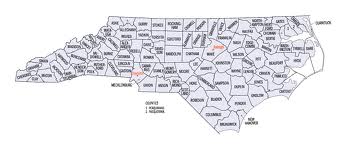
Democrat Barack Obama and Republican Mitt Romney evenly split the 10 counties with the highest turnout. Beaufort, Davie, Greene, Moore and Person voted for Romney, while Chatham, Granville, Hertford, Wake and Warren voted for Obama.

Living in Raleigh I’m disappointed that Wake county broke for Obama.  However, I continue to take immense pleasure that we were the one battle ground state that Romney carried.

More tidbits:

  • Overall, turnout in 2012 was 68.3 percent – down slightly from 69.6 percent in 2008.
  • Republican women picked up a percentage point, from 72.3 percent in 2008 to 73.4 percent in 2012.
  • GOP men made an even bigger gain, from 70.7 to 72.2 percent.
  • The number of registered Democrats who voted in 2012 actually dropped by nearly 53,000, even though the party added about 8,800 registered voters since 2008.
  • Turnout among black voters dropped slightly, from 71.9 to 70.3 percent, that’s in line with the drop in overall turnout.
  • Turnout for voters 18-25 dropped by more than 5 percent from 2008
  • [Hispanic] turnout was 4.9 percent lower than in 2008.
  • Senior citizens … picked up 4.2 percent at the polls, with a 2012 turnout of 76.6 percent – the highest of any demographic group.

With a commanding majority in the state political picture, it’ll be interesting to see how the republicans govern and lead the state for the next two years.

The Decline of the Union Worker

If the decline of the union means that American companies begin hiring more people, I’m all for the decline of the American union:

Last July was a good month for factory workers in Anderson, Ind., where a Honda parts supplier announced plans to build a new plant and create up to 325 jobs. But it was a grim month in the Cleveland suburbs, where an industrial plastics firm told the state of Ohio it was closing a plant and laying off 150 people.

Nearly all of the Ohio workers belonged to a labor union. Workers at the Indiana plant don’t. Their fates fit a post-recession pattern: American factories are hiring again, but they’re not hiring union members.

But nationally, is there a trend that would suggest that union shops are doing better than or worse than non-union shops?

U.S. manufacturers have added a half-million new workers since the end of 2009, making the sector one of the few bright spots in an otherwise weak recovery. And yet there were 4 percent fewer union factory workers in 2012 than there were in 2010, according to federal survey data. On balance, all of the job gains in manufacturing have been non-union.

This isn’t rocket surgery.  It’s been a fact for a long time now that unions are nothing more than modern day racketeer outfits.  While they may provide better compensation for their members, they restrict the number of jobs that otherwise might have been available.  Further, and perhaps more insidious, is the fact that the monies generated from their members goes straight into the hands of politicians.

Good riddance.

Laffer Curve: PGA Style

Imagine a curve.  On the left hand side the value is zero.  Then, as you move from left to right, the slope goes up peaking somewhere then slides down back to zero.  That’s the Laffer Curve.

If you tax income at 0%, you realize $0.00 of tax revenue.  If you tax income at 100% you will also realize $0.00 of tax revenue; no one works for free.  In between is the sweet spot.

And it appears that, for Lefty, a 63% take is just too much:

LA QUINTA, Calf. — Phil Mickelson started his 2013 PGA Tour season at the Humana Challenge in partnership with the Clinton Foundation with a tie for 37th place. But after a final-round 66, Mickelson did more than hint that the 2014 season may see some big changes for the World Golf Hall of Famer.

“Well, it’s been an interesting offseason. And I’m going to have to make some drastic changes,” Mickelson said at the Palmer Course at PGA West in La Quinta. “I’m not going to jump the gun and do it right away, but I will be making some drastic changes.”

And what changes might he be making?

PHIL MICKELSON: Well, it’s been an interesting offseason. And I’m going to have to make some drastic changes. I’m not going to jump the gun and do it right away, but I will be making some drastic changes.

Q. Meaning leaving from California?

PHIL MICKELSON: I’m not sure.

Q. Moving to Canada?

PHIL MICKELSON: I’m not sure what exactly, you know, I’m going to do yet. I’ll probably talk about it more in depth next week. I’m not going to jump the gun, but there are going to be some. There are going to be some drastic changes for me because I happen to be in that zone that has been targeted both federally and by the state and, you know, it doesn’t work for me right now. So I’m going to have to make some changes.

And why does he think he needs to make these changes?

PHIL MICKELSON: Yeah. I’ll probably go into it more next year or next week. But if you add up, if you add up all the federal and you look at the disability and the unemployment and the Social Security and the state, my tax rate’s 62, 63 percent. So I’ve got to make some decisions on what I’m going to do.

France learned it.  And now California is about to.  When you tax the living snot out of people they are going to react.  They’ll either move or quit.

And that results in $0.00 tax revenue.