
Tag Archives: California

Yes, Indeed

Sometimes I get worried or concerned over the state of our voters.  The knowledge, or lack of it, among our citizenry is stunning.

But then you get teh krazy from the people who craft legislation:

What do you say to that?

Obamacare and Cost Savings

health care

Remember when proponents of Obamacare told us that government run health care models were better than private ones because they wouldn’t have to spend money on things like profit?

Or marketing?

So far California has received $910 million in federal grants to launch its new health insurance exchange under the Affordable Care Act (“Obamacare”).

The California exchange, “Covered California,” has so far awarded a $183 million contract to Accenture to build the website, enrollment, and eligibility system and another $174 million to operate the exchange for four years.

The state will also spend $250 million on a two-year marketing campaign.

Two hundred fifty million on marketing.

Not to mention the $143 million extra to start the thing:

Privately funded Esurance began its multi-product national web business in 1998 with an initial $5.5 million round of venture fund investment in 1999 and a second round of $34 million a few months later.

I’m not sure that we’ll ever be able to fix this thing we call Obamacare.  But it sure is gonna cost us if we don’t.

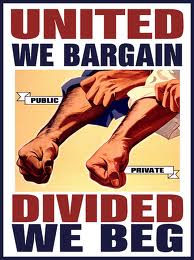
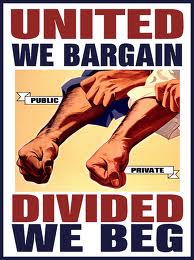
Unions: Legalized Racketeering

Unions

I have no issue whatsoever with the McWorker, along side his McFriend, walking into the McBoss’s office and asking for a raise.  And if denied, threatening that the two of them, in hopes they are valuable, will walk off the job and go to work somewhere else.

In this case, the McBoss can call the McBluff and say, “No raise for you!” and hope the McWorkers get back to McWork.  Or, perhaps the McBoss, seeing the value of the McWorkers, will relent and approve the raise and everyone is happy.

In other words, uniting in the pursuit of self interests is fine.  As long as the rules are fair for everyone.  And when it comes to unions, the rules are most certainly not fair:

“The most glaring examples of union favoritism under state laws,” notes a 2012 U.S. Chamber of Commerce report, “tend to occur in criminal statutes and allow individuals who engage in truly objectionable behavior to avoid prosecution solely because they are participating in some form of labor activity.”

Pennsylvania unions now enjoy a loophole that the state’s anti-stalking law “shall not apply to conduct by a party to a labor dispute.” In Illinois, anti-stalking laws exempt “any controversy concerning wages, salaries, hours, working conditions or benefits … the making of collective bargaining agreements.”

These exemptions prove that organizing tactics used by unions can have something in common with those of stalkers – and can perhaps inflict similar emotional distress.

While a number of states have exemptions that have allowed union members to intimidate and harass, California is by far the worst actor. As in other states, it is a crime in California to interfere with a lawful business through physical obstruction or intimidation of workers or customers.

Yet California has exempted unions from this law. The negative effects were clear in 2008, when United Food and Commercial Workers Union members picketed a new Ralph’s grocery store in Fresno. They went beyond traditional picketing, harassing customers and instigating confrontations with employees on store property. When store workers finally called the police, authorities refused to come and put a stop to the union’s disruptive behavior.

The police refused to even dispatch to the site.

But it gets even worse:

California also has a host of exemptions that allow union members to violate the property rights of private citizens. The 2008 Researcher Protection Act makes entering the residences of academic researchers to interfere with their work a crime. Sounds reasonable. Yet this doesn’t apply to union members. They can invade a professor’s home in California and it’s not a crime – so long as the invader is “engaged in labor union activities.”

And even worser:

Labor bosses have even deemed it necessary to get legislators to grant unions exemptions from laws against sabotage. Wisconsin’s state law against sabotage exempts unions, so as to not curtail their organizing activities. The fact that anti-sabotage laws might be construed as an impediment to union organizing says more about union organizing efforts than anything else.

Yet, in 2011, union members were alleged to have sabotaged equipment belonging to supporters of Governor Scott Walker’s labor reforms. In New York and New Jersey, during a labor dispute between Verizon and the Communications Workers of America, the telephone company contacted the FBI to investigate allegations of sabotage. The company reported equipment being stolen, fiber-optic lines cut and an office heating system tampered with.

During a union organizing effort in Ohio, the owner of one non-union electrical services company had his tires slashed and rocks thrown at his windows. One of his employees was assaulted. The owner was himself shot in the arm while confronting a person who was vandalizing his car on his property. Other owners of non-union shops experienced similar harassment and intimidation. When the Associated Builders and Contractors called on unions to halt such odious behavior, the unions responded that their actions were perfectly legal.

We all should have the right to bargain for our services and our compensation.  We should be able to grieve our differences when they occur.  But we should all be safe from threats, violence, theft and assault.

We’re Gonna Ration

The allocation of scare resources: Rationing.

There are a lot of ways of doing it; time, money, connections even luck.

Some of us think that rationing by money optimizes quality and supply.  Others think that rationing by time does the same thing.  I disagree:

SACRAMENTO — As the state moves to expand healthcare coverage to millions of Californians under President Obama’s healthcare law, it faces a major obstacle: There aren’t enough doctors to treat a crush of newly insured patients.

So, California is going to ration on time.  And one of the metrics that time based rationing optimizes is – low quality:

Some lawmakers want to fill the gap by redefining who can provide healthcare.

They are working on proposals that would allow physician assistants to treat more patients and nurse practitioners to set up independent practices. Pharmacists and optometrists could act as primary care providers, diagnosing and managing some chronic illnesses, such as diabetes and high-blood pressure.

Now, to be sure, allowing non-doctor health care providers could very well be positive; after all – why do we need an MD to refill a prescription for blood pressure medication?  However, I’m sure that California isn’t embracing this is an open-market mindset.  Rather, docs are just fleeing the medicaid business.  In fact, in California, only 57% of doctors are accepting new medicaid patients.


Laffer Curve: PGA Style

Imagine a curve.  On the left hand side the value is zero.  Then, as you move from left to right, the slope goes up peaking somewhere then slides down back to zero.  That’s the Laffer Curve.

If you tax income at 0%, you realize $0.00 of tax revenue.  If you tax income at 100% you will also realize $0.00 of tax revenue; no one works for free.  In between is the sweet spot.

And it appears that, for Lefty, a 63% take is just too much:

LA QUINTA, Calf. — Phil Mickelson started his 2013 PGA Tour season at the Humana Challenge in partnership with the Clinton Foundation with a tie for 37th place. But after a final-round 66, Mickelson did more than hint that the 2014 season may see some big changes for the World Golf Hall of Famer.

“Well, it’s been an interesting offseason. And I’m going to have to make some drastic changes,” Mickelson said at the Palmer Course at PGA West in La Quinta. “I’m not going to jump the gun and do it right away, but I will be making some drastic changes.”

And what changes might he be making?

PHIL MICKELSON: Well, it’s been an interesting offseason. And I’m going to have to make some drastic changes. I’m not going to jump the gun and do it right away, but I will be making some drastic changes.

Q. Meaning leaving from California?

PHIL MICKELSON: I’m not sure.

Q. Moving to Canada?

PHIL MICKELSON: I’m not sure what exactly, you know, I’m going to do yet. I’ll probably talk about it more in depth next week. I’m not going to jump the gun, but there are going to be some. There are going to be some drastic changes for me because I happen to be in that zone that has been targeted both federally and by the state and, you know, it doesn’t work for me right now. So I’m going to have to make some changes.

And why does he think he needs to make these changes?

PHIL MICKELSON: Yeah. I’ll probably go into it more next year or next week. But if you add up, if you add up all the federal and you look at the disability and the unemployment and the Social Security and the state, my tax rate’s 62, 63 percent. So I’ve got to make some decisions on what I’m going to do.

France learned it.  And now California is about to.  When you tax the living snot out of people they are going to react.  They’ll either move or quit.

And that results in $0.00 tax revenue.

The State of States

If only federal republicans could govern in the way and manner of state republicans:

Thanks to a Republican governor committed to developing its natural resources, not punishing entrepreneurs who do, Texas legislators are facing an $8.8 billion surplus over the next two years. To the east, Republican governors Bill Haslam of Tennessee and Rick Scott of Florida have also turned recession deficits into budget surpluses. Moving north, Michigan’s Gov. Rick Snyder, Iowa’s Gov. Terry Brandstad, and Indiana’s out-going-Gov. Mitch Daniels, also can now all boast surpluses in the hundreds of millions of dollars. All of these governors managed to turn their state’s fiscal situation around through spending cuts, not tax hikes. Now their budgets are in the black and their economies are growing.

I think it’s important to focus on the second to last sentence in that quote:

All of these governors managed to turn their state’s fiscal situation around through spending cuts, not tax hikes.

And lest we think that this is just a series of circumstances related to an overall nation economic rebound:

Things do not look as good in Democrat-controlled states. Illinois, who massively raised taxes on the rich, still has a $5.9 billion stack of unpaid bills. California, who also raised taxes on the rich, was supposed to post a small surplus this year. But tax collections are coming in at 10.8 percent below budget projections. As a result, the state is now projected to be $1.9 billion in the red by the end of this fiscal year.

Now, if that same fiscal responsibility could translate to the national level.

Public Transportation – Going Private

There’s often talk of public transportation.  And I get the idea; the more accessible work, shopping and other services are to folks who might be struggling, the better off those folks might be.  A second argument surrounds the environment.  The more people use mass transit, the better off we are in terms of gas use, pollution and, recently, CO2 emissions.

Not to mention the fact that traffic just sucks and anything that we can do to minimize it is a plus.

All arguments aside, suppose, for the same of this discussion, that I cede all points.  That mass transit is the way to go, my question is this:

Does it matter what agency provides that transit?

The answer is:

Apparently so.

By now you’ve heard about the perks that come with working in Silicon Valley. Free lunch, 20 percent time — that’s the work time you can use to pursue independent projects.

Well, another perk? A private bus that picks you up in your neighborhood in San Francisco and shuttles you down to your corporate campus about an hour south in the suburbs of Silicon Valley.

During rush hour in San Francisco, you see them everywhere, said Eric Rodenbeck, the creative director of Stamen Design in the Mission District of San Francisco.

“They’re just so big,” Rodenbeck says. “These buses are two stories high and they’re barrelling down residential streets, and no one knows where they’re going except the people who are on them.”

So now the complaint against “Big Business” is that they bus people to work.  It’s almost like if the government isn’t providing it for you, it’s just this great big secret conspiracy or something:

“You know it’s almost like this masonic ritual,” Rodenbeck says.  ”If you’ve got the key, this whole other city layer unlocks itself to you. And that’s the kind of urban puzzle we like to solve.”

I mean, serious.

So what we have are private companies shelling out their own money to transport people from where they live to where they work.  All this to reduce traffic, reduce emissions, pollution and dependence on oil and other fossil fuels and it STILL isn’t good enough:

Rodenbeck says he thinks the locations are secret because the companies are “sensitive to this idea that they are funding a change in the infrastructure in San Francisco without it being regulated.”

The San Francisco Municipal Transportation Agency is in the midst of studying what’s essentially emerging as a private mass-transportation system, says Jerry Robbins, a transportation planner for the agency.

“The increase in employer buses has sparked some reaction from residents,” Robbins says.

He says that since tech companies contract out the work to private bus companies, which are regulated by the state, the city has little say in what they do.

But Robbins says the agency has fielded complaints that the the private shuttle buses, which often stop at public bus stops, are causing delays and traffic.

Again, private companies are providing transportation, almost exactly like that being provided by the government, but residents don’t like it because it’s not regulated.

But how many folks does this private system haul everyday?

When the map was finished, Stamen counted busses from Apple, eBay, Electronic Arts, Facebook, Google and Yahoo, and they found the buses ran through almost every neighborhood in San Francisco. Stamen estimates that about 14,000 people ride the private shuttle buses every day.

Fourteen Thousand.  People.  Everyday.  In government speak that is 28,000 trips. Everyday.  For free.  And how does the private sector seduce such riders?

“It’s pretty sweet,” Birch said. “They let us choose the type of seats and decor inside. And it’s got dim lighting with the Google colors.”

There’s also free Wi-Fi on the shuttles, and Birch said it’s basically another hour of work.

The tech world is driven by young, educated largely urban workers. But companies like Facebook, Google and Apple are located in the suburbs of Silicon Valley, which is about an hour south of the San Francisco.

“I think a lot of young people who work at the tech companies they want the city life they want something that’s fun and entertaining, and you don’t get that in the suburbs,” Birch said.

Yeah.  By offering what people want.

Look, I like buses more than I like cars.  And I like trains more than I like buses.  And I like lite rail more than I like trains.  But more than any of that I like solutions that actually work.  So maybe the public sector should take some clues from the private sector and begin to work to loosen the grip of public transportation and let it move into the private space.

You might just get free WiFi.


Laffer Curve – California Dreamin

California is broke.  Way broke. And spending is the problem.  So what did California do?  They enacted new laws calling for new taxes on the rich:

The big state tax news is that California voters said to sock it to the rich–specifically those with income of $250,000 and up. California Proposition 30, which Gov. Jerry Brown’s budget and public education in particular depended on, passed.

Proposition 30 creates three new upper income tax brackets for the next seven years. For example, folks with $250,000 to $300,000 a year in income will pay 10.3%, up from 9.3%. The new top income tax rate–for folks with income of $1 million-plus–will be 13.3%, up from a current top rate of 10.3%. That eclipses New Yorkers’ combined state and local top rate of 12.7% and Hawaii’s top rate of 11%. The income tax hikes are retroactive to Jan. 1, 2012, but the extra bill isn’t due until April 15, 2013.

The expected result?  Well, if past results can predict future ones, I would expect that California sees more people leaving:

Nearly four million more people have left the Golden State in the last two decades than have come from other states. This is a sharp reversal from the 1980s, when 100,000 more Americans were settling in California each year than were leaving. According to Mr. Kotkin, most of those leaving are between the ages of 5 and 14 or 34 to 45. In other words, young families.

Meanwhile, taxes are harming the private economy. According to the Tax Foundation, California has the 48th-worst business tax climate. Its income tax is steeply progressive. Millionaires pay a top rate of 10.3%, the third-highest in the country. But middle-class workers—those who earn more than $48,000—pay a top rate of 9.3%, which is higher than what millionaires pay in 47 states.

People aren’t gonna put up with it; they aren’t going to continue to work harder for less, pay more for smaller houses and face ever increasing costs associated with energy and transportation.

The Laffer Curve wins again.

President Obama’s Mandate

Here’s what Coyote thinks of Obama’s mandate:

Barack Obama argues that the last election gave him a mandate to raise taxes on the rich.  Put another way, he is arguing that 52% of the people voted to raise taxes on 2%.

Nice.

I particularly like his illustration:

Let’s take a look at two propositions [in California]:

  • Prop 30, which propose to raise taxes on on the rich to help close the deficit (there was a token 0.25% sales tax increase for cover, but everyone knew it to be a tax on the rich).
  • Prop 39, which was a broad-based income tax increase which raised taxes on most everyone (or at least on the 50% or so who pay income taxes).

So, let’s look at the results:

  • Raise taxes on only the very rich:  PASS
  • Raise taxes on everyone (including me):  FAIL

Wolves and lunch and lambs people.  Wolves, lunch and lambs.

California’s Bullet Train Folley

The California senate voted on Friday to begin work on a bullet train:

 (Reuters) – California lawmakers gave a nod of approval to a high-speed rail plan on Friday in a make-or-break vote for $8 billion in funding to start construction on a 130-mile section of track through the state’s central agricultural heartland.

I have to admit that I’m thoroughly perplexed by the fascination with mass transit in general and high speed rail in particular.  I don’t understand the whole religion surrounding this thing.

Now, don’t get me wrong.  Railroads, in their time, helped to build this country.  They greatly reduced the time it took to get from one place to another and brought prosperity where ever they were built.  My little town in Minnesota was a railroad town.  Further, I love trains.  I love watching ‘em, I love pictures of ‘em and I love going to see train museums.

However, I don’t think that this is a love of trains that’s driving this.  I think it’s a combination of a couple of things:

  1. The “Green Movement”
  2. A desire to get people around more efficiently

Now, don’t get me wrong.  I love efficiency.  I would be very much in favor of supporting an infrastructure that was able to move more people in less time for less money.  And if we can do that, I think that we should.  Additionally, I resonate with the “efficiency” claims of the “Green Movement.”

In short, if we are, really, able to create a transportation model that gets people from here to there better than what we have now, and that includes cost, you have my vote.

So here’s the question:

How expensive would a train system have to be in order for the most liberal supporter say, “It’s just not worth it.”

Would it be $5.00 a ticket?  Maybe $15?  If the ticket were to cost, say $60, would you still support high speed rail?