Political Correctness: Hyphenism

Honest to God heard this on a pop radio station this morning.

The morning show was discussing the resignation of the pope along with Black History month and wondered if they would elect a black pope.  One of the hosts mentioned that there was indeed a black cardinal from Ghana.

“That would so totally be appropriate; electing an African-American cardinal to be Pope during Black History month.”

Now, she did realize what she said, stumbled a little before correcting herself clarifying that the cardinal was just African,  not African-American.

Some people really reject the notion of the hyphen; that it’s silly or even insulting.  Me?  I tend to think we should refer to a person, people, groups or whatever, by the name/term that they desire.  So if someone wants to be referred to as “Pete” instead of “Peter” or “African-American” instead of “black”, I’m for self identification.  With that said, I would feel a little strange referring to myself as “German-American”.  However, my grandfather and grandmother are native Germans, born in Germany and straight off the damn boat at the Island.

Anyway….the native Ghana born cardinal is, you know, African-American.


Decay

Life.

Life happens and then we have to deal with it.  Often times it’s messy but sometimes it’s breathtaking.

However, when tragedy comes, and it will, we need to begin to re-evaluate our response.  For me, the tragedy is a time to reflect on the love we have for one another, how delicate our lives are in the balance.  Have we done good?

Can we do more?

But what we cannot do is legislate away the boogieman.

No matter how badly I want to, I can’t make it against the law for the brain tumor to take my dad.

And you can’t legislate fun:

LOVELAND, Colo. — A 2nd grader has been suspended from school in Loveland for a make believe game he was playing.

The 7-year-old says he was trying to save the world. But school administrators say he broke a key rule during his pretend play.

“I was trying to save people and I just can’t believe I got dispended,” says Alex Evans, who doesn’t understand his suspension any better than he can pronounce it.

“It’s called ‘rescue the world,’” he says.

He was playing a game during recess at Loveland’s Mary Blair Elementary School and threw an imaginary grenade into a box with pretend evil forces inside.

“I pretended the box, there’s something shaking in it, and I go ‘pshhh.’”

The boy didn’t throw anything real or make any threats against anyone. He explains he was pretending to be the hero. “So nothing can get out and destroy the world.”

But his imaginary play broke the school’s real rules. The school lists “absolutes” designed to keep a safe environment. The list includes absolutely no fighting, real or imaginary; no weapons, real or imaginary.

That is insane.  We’ve gone too far.

Don’t like people shooting people with guns?  Make shooting people with guns illegal.  Then, make the penalty as harsh as required to drive down the incidence of people shooting people with guns.

But let the boys play “Rescue the world.”

The Opposite of Banning Guns

The debate surrounding guns brings out a bunch of interesting stories.  But this one is pretty interesting:

No town in the U.S. has been as public about its support for guns as Kennesaw, population about 30,000, where city leaders for 30 years have required that every household have at least one gun. The Dec. 14 killings of 20 children and six adults, the second-deadliest school shooting in U.S. history, has done little to change that, residents say in interviews.

The state of Georgia allows citizens to carry guns openly as long as they hold permits, in a region where guns have long been prized and firearms are part of the culture, Crowe said.

“It’s ingrained in us,” he said. “It’s about responsibility as much as anything and I am passing that on to my kids.”

Kennesaw, about 30 miles northwest of Atlanta, had about 5,000 people when its City Council adopted an ordinance requiring heads of households to own a gun and enough ammunition to use it, said police Lieutenant Craig Graydon, 47, who’s fielded questions about the law for 26 years.

An interesting take indeed.


Higher Education And North Carolina

Our new governor, Pat McCrory, made some news this past week when he commented on higher education, and some majors, in North Carolina:

On the show, McCrory said “educational elite” had taken over, offering courses that have no path to jobs. He said he instructed his staff Monday to draft legislation that could alter the state money that universities and community colleges receive “not based on how many butts in seats but how many of those butts can get jobs.” (Listen to the audio here.)

The governor joined Bennett in criticizing certain academic areas, such as gender studies and philosophy. When Bennett made a crack about women’s and gender studies at nationally ranked UNC-Chapel Hill, McCrory said, “If you want to take gender studies that’s fine, go to a private school and take it. But I don’t want to subsidize that if that’s not going to get someone a job.”

In typical fashion, the response from the University:

“I wasn’t surprised,” said Joanne Hershfield, chair of UNC-Chapel Hill’s department of women’s and gender studies. “But it is kind of frightening. These kinds of attacks on women’s and gender studies are pretty prevalent.”

Indeed – Attack.

In any event, the general response to push-backs like these are:

McCrory’s comments on higher education echo statements made by a number of Republican governors – including those in Texas, Florida and Wisconsin – who have questioned the value of liberal arts instruction and humanities degrees at public colleges and universities.

Sign me up as one of those question that value.

I went to the University of Minnesota’s Institute of Technology.  We openly mocked the general population at large, the CLA’ers – College of Liberal Arts. *  The idea being that the truly rigorous study took place in the hard sciences and not the softer social ones.

Now, do I think that the knowing of things “softer” is valuable?  Sure, to a degree.  I think it rounds a person out, I think it contributes to their awareness of themselves and of others.  But when I hire, I hire on the basis of the hard sciences; computer science, math, engineering.  And given equal qualifications in such, I may give the nod to the more generally rounded individual.

In a larger point, is there room for the PhD in Scandinavian  Art History?  Sure, but in what quantity?

Finally, I’ll leave you with this.  The cry from the left has been that of wage inequality.  All the while claiming that education should be valued for its own merit; career be damned.  So, it’s one or the other.  If education has merit on its own, then so be it, study your philosophy, your women’s studies and your art appreciation.  Just don’t come bitching to me when you find that no one is willing to pay you for those services.

* Full disclosure, I graduated with a degree in Mathematics, a minor in Philosophy and a teaching license.

R v. Wade – 40 Years On

I’m a little late on this.  I meant to post on this last week, closer to the anniversary of the monumental decision, but alas, the technical wizardry required to bring you the clips below were beyond my meager ability.  It took a bit of time to accomplish.

Anyway, I still feel the same about this debate as I did 6 months ago, 6 years ago and as a Sr. in college.  I really, honestly feel that America is much more in agreement than disagreement on the topic of abortion. For example, Gallup had a poll in 2011:

I’m afraid the debate has been taken over and dominated by the extremes.  The extremes of both sides.

Heh.  Sound familiar?

As a conservative and a Christian, I can understand where “my guys” are coming from and it’s easy to identify the crazy and disregard them.  But for the life of me, I just don’t get the far left and their position on the defense of every single aspect of the abortion debate.

Anyway, when it comes up, I always think of these two scenes in an episode from “Boston Legal”.

The context, of course, is a liberal law firm in Boston.  One of the named partners however, Denny Crane, is a staunch republican and often caricatured as such.  The show is a sounding board for liberal issues, when the show is about issues.  However, it’s more often than not funny and entertaining.

Anyway, in this episode, the two main liberal attorneys are faced with a dilemma; a 15 year old girl is seeking a court override of the parental consent required for an abortion.  The attorneys, normally in favor of such laws, take the case.  However, the scene turns complicated when the intent of the girl is not so much that she doesn’t wanna have a child, it’s that she doesn’t wanna have a daughter.

This creates a moral dilemma played out here:

In my experience, it’s spot on.  To the extreme supporter of Roe, it’s not so much the support of what’s going on, as it is the absolute critical nature of the ruling itself.

Finally, the bourbon scene:

Notice the hint at the “beginning of life” thing.

Entitlement Programs

I’m gonna step in the mind of a bigger state thinker for a second.

In this mind, the goal is to identify all individuals and/or families that are in some sort of need.  This need could be based on a scale of sorts; usually income based.  That is, if income is too low, programs should be created or funded in order that some definition of “basic needs” is met.

These basic needs could be supplemented by straight cash, tax breaks, food programs, rent programs, energy programs or any other such program.

Okay, I may disagree with that mindset, but for now, that’s the mindset I’m in.  Now, given this reality, the goal, as a criteria for success, would be to make sure that all qualified individuals and/or families, would be identified and enrolled.  We don’t want a shadow population of folks who are in need of assistance or care, to exist.

In this aspect, I get that the bigger state thinker would want to expand the rolls of these programs.  I get that, right?

To the point that we want to include all qualified individuals in the program, I understand why someone would want to make sure the program “grew”.  I can even see the logic behind expanding the criteria of “need” to include an ever growing population.  What I am NOT sure about, and what I really truly guard against, is, “Do our goals change when all qualified individuals are enrolled?”

In other words, when all the poor and less fortunate have been enrolled in these programs, is there any effort to get them UNqualified?  For example, give them what ever it is that is needed to be able to create a level of income that allows them to leave the program.

To me, there are two kinds of charitable giving, two kinds of programs that can be set up.  One is where resources are gathered and distributed just to make the ends meet.  Food to feed the hungry, coats to warm the cold.  Stuff like that.  I think of that as “give a man a fish” kinda program.

Me?  I’m interested in the “teach a man to fish” kinda programs.  And I just don’t see the rigor, the discipline, the will or, frankly, even the desire on part of the policy makers to craft such steps into their programs.  I don’t see a willingness to exhibit the tough love that even parents engage in with their own children.  A love that says, hell-demands, that by paying your rent and your heat and your car payment, I am not helping you in life, I am, in fact, hurting you.

Liberals often claim that the right cares more about the unborn than about the orphan or the single mom or the poor.  There may be something to that, maybe.  But given that it’s the conservative that is more charitable than the liberal, I don’t buy it.  Rather, I see it that the programs favored by the conservative more resemble the “programs” that they teach and enforce upon their own children.  Namely sacrifice, hard work, goal deferral and plain old “do the job right”.

I just don’t get how feeding and housing a person for years and years helps them.

Am I wrong?

This Wasn’t Offered When I Went To The “U”

Those darn kids these days:

Students at the “U” are invited to a lecture this spring all about women and orgasms. Some say it’s interesting.

From the University:

As the state’s preeminent education and research institution, the University of Minnesota provides information on a wide range of topics. The vast majority of these topics are not controversial, but some are.

“The Female Orgasm: A Program About Sexual Health and Female Empowerment” will be held on the University of Minnesota Twin Cities campus on April 10 from 6:30-8:30 p.m. The workshop is an educational opportunity for participants to talk openly in small groups about healthy sexuality and relationships broadly, and discuss and analyze the messages women receive about their bodies and sexuality from media and elsewhere. The intent of the workshop is to educate individuals in making decisions about what is right for them as they seek to build healthy relationships. The departments hosting the workshops know that this program will not appeal to every student. Participation is not mandatory.

School just ain’t what it used to be!

The Cost of a Pencil

The other day my daughter and I were walking through the grocery store when she saw a pencil.  She asked me if she could have it.  Normally I like that kind of “toy” request; I can make the deal contingent on a poem, a math problem or a little story.

But this day I said “no”.

But daahhh-ad!  It’s only a dollar!  How long does it take you to earn a dollar.

So I bought her the pencil and when we got home I taught her about taxes.

It turns out that just accounting for my portion of the North Carolina sales tax, my federal income tax and then North Carolina income tax, the cost of that $1.00 pencil goes to $1.68.

I didn’t bother to go through the FICA, the gas tax, and the tax on the car that drove us to the grocery.  Just the three.

Think of that, 40.48% of my income, just accounting for those three taxes, are consumed to buy a simple pencil.

Spending Cuts

Before the compromise that pushed the sequestration out 3 months, I was in favor of allowing the cuts to take place.  I know that the result would have been recession but it would have been short and only technically accurate.  In reality the cuts would strengthen the economy and we would find ourselves better off.

However, the compromise isn’t such a bad thing.  On the one hand it forces the senate to actually take up a budget AND we still can let the cuts take place.

But are we serious?

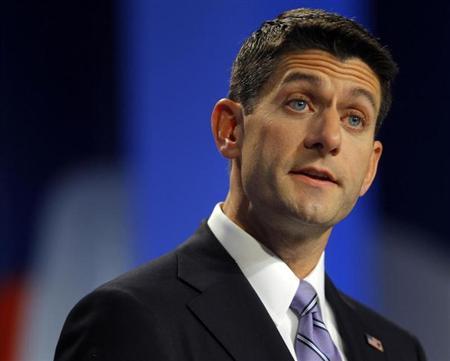
“I think the sequester is going to happen,” Representative Paul Ryan, chairman of the House budget panel and the party’s 2012 vice presidential nominee, told the NBC program “Meet The Press.”

House Republicans, most of whom had strongly opposed any tax rate increases in the “fiscal cliff” debate, have now started to shift their focus away the issue of tax increases and toward the spending cuts.

“We think these sequesters will happen because the Democrats have opposed our efforts to replace those cuts with others and they’ve offered no alternative,” Ryan said.

I hope that this means the republicans are serious.  It’s very clear that, whether Obama really has capital or not, he THINKS he does, and isn’t going to negotiate.

Fine.

Time to take our medicine.

The Gun Debate Just Got Interesting

An big city sheriff in liberal Wisconsin just upped the ante in the gun debate:

The sheriff’s advice is sure to flame the debate on both sides.  To be sure, it already has:

Jodie Tabak, Mayor Tom Barrett’s spokeswoman, released this statement:

“Apparently, Sheriff David Clarke is auditioning for the next Dirty Harry movie.”

And there’s more:

Jeri Bonavia, executive director of Wisconsin Anti-Violence Effort, said she hears “over and over” from most law enforcement officials that the community should work to “take more guns off the streets, not add more.”

“What (Clarke’s) talking about is this amped up version of vigilantism,” Bonavia said. “I don’t know what his motivations are for doing this. But I do know what he’s calling for is dangerous and irresponsible and he should be out there saying this is a mistake.”

However, the sheriff is not without his supporters:

Asked about Clarke’s assessment of 911, James Fendry, director of the Wisconsin Pro Gun Movement, said, “It’s never been a great option (calling 911). Unless you can take care of yourself, you’re kind of SOL.”

Fendry, a former police officer, said that he tells citizens, “You’re not armed to be law enforcement. You’re armed to protect your own life and the lives of your family until law enforcement arrives. Do not go on search and destroy missions in your home.”

I tend to agree with the folks who are calling on Clarke to show restraint.  The debate is amped up as it is; folks are already looking for any and all reasons to buy a gun.  Heck, in many cases they’re looking for reason NOT to buy a gun.  And when a cop comes out and says that the white hats can’t get there in time; well, it only serves to embolden the guys in the black hats.

County Executive Chris Abele said Clarke is sending the wrong message.

“I think it’s irresponsible and it doesn’t help public safety to tell the public there’s some kind of imminent danger that they need to go buy guns,” Abele said. “Essentially, you’ve got a (public service announcement) that’s recommending people need to go buy guns because they can’t rely on the response they’ll get from 911. I’m here to tell you, we have phenomenal police departments.”

Roy Felber, president of the Milwaukee Deputy Sheriffs’ Association, said the ad sounded to him like a call to vigilantism.

“That doesn’t sound smart,” Felber said. “That’s why society has police officers.”

One the main and best deterrents to crime is that the cops are on the way and that they WILL catch you.  To break that seal, to allow even a hint of doubt tears down that curtain and what’s behind, may or may not be, ugly.