
It goes without saying that technology has changed the way we live. It’s changed how we communicate, read the news, shop and even pay bills. Heck, it’s changed a daily routine of mine that’s practiced by millions of Americans:
Getting the mail.

It goes without saying that technology has changed the way we live. It’s changed how we communicate, read the news, shop and even pay bills. Heck, it’s changed a daily routine of mine that’s practiced by millions of Americans:
Getting the mail.

We love our teachers. Most people when asked to name the most influential people in their life outside their parents name teachers. And more than loving our teachers, we CHERISH our best teachers. These are the blessed souls that “save us”. These are the folks who make the difference. Sometimes it’s literal; a teacher reaches out and is the difference between a kid failing out or graduating. Other times it’s just to magnify the focus; a good student becomes great.
These are the teachers we mean when we say teachers don’t make enough. These are the ones, the special ones.
But how do we find ’em, pay ’em and keep ’em?
There may be a way.
It’s been a while since we checked in on how things are going in Wisconsin since the state passed the law restricting collective bargaining.
Before the reform, many districts’ annual union contracts required them to buy health insurance from WEA Trust, a nonprofit affiliated with the state’s largest teachers’ union. Once the reform limited collective bargaining to wage negotiations, districts could eliminate that requirement from their contracts and start bidding for health care on the open market. When the Appleton School District put its health-insurance contract up for bid, for instance, WEA Trust suddenly lowered its rates and promised to match any competitor’s price. Appleton will save $3 million during the current school year.
That’s a win. Before the law the districts had to negotiate with ONE insurance provider. Now they can shop. The savings? $3 million.
At the outset of the public-union standoff, educators had made dire predictions that Walker’s reforms would force schools to fire teachers. In February, to take one example, Madison School District Superintendent Dan Nerad predicted that 289 teachers in his district would be laid off. Walker insisted that his reforms were actually a job-retention program: by accepting small concessions in health and pension benefits, he argued, school districts would be able to spare hundreds of teachers’ jobs. The argument proved sound. So far, Nerad’s district has laid off no teachers at all, a pattern that has held in many of the state’s other large school districts
Because teachers are now required to contribute to some of their health care and retirement, the districts are able to save jobs. So far 289 in one district alone. A win.
Another example of saved jobs:
The Wauwatosa School District, which faced a $6.5 million shortfall, anticipated slashing 100 jobs—yet the new pension and health contributions saved them all.
Boom goes the dynamite.
Beyond the cost savings, districts are able to implement policies that encourage better educational outcomes:

In the last 6 years, the government has done stuff that leaves me wondering if there is a limit to what it can do.
For example, we see bills such as the Patriot Act passed into law that really push the limits on government intrusion. If they can do “that”, what can’t they do?
Then there were the wars in foreign nations. If we can just do “that”, is there any thing that we can’t do?
Then TARP, TARP II and the bailout of the car companies.
All of which leads us to Obamacare and the preventative care mandate.
What can’t they do?
Posted in Government, Health Care, Liberty, Politics: National
Tagged Abuse of Power, Barack Obama, George Bush, Regulation, Tyranny

So I think I’ve learned a couple of things about the media as I’ve become interested in this stuff:
This includes those sources that may favor the liberal agenda, The New York Times, for example. And for those that favor the conservative agenda, Fox News, for example.
 I’ve been aware, politically aware, since about 2006 or 2007. That’s when an interesting tidbit caught my attention:
The 2008 Presidential election would be the first in a long time where neither a sitting President or Vice President would be running.
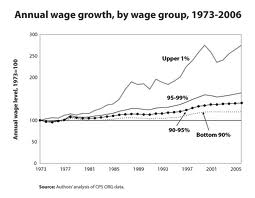
The race would be wide open. I began to pay attention, and I was hooked. And since then I have heard a steady dull roar about the fading middle class. I’ve heard that the richest among us have been getting richer while the rest of us have experienced wages that remain flat.
The world would have us believe that for most of us, wages have experienced stagnation.
Is it true?
Posted in Economics, Economy, Middle Class, Politics: National
Tagged 1, 99%, Income Disparity, Wage Stagnation

When I think of the proper separation of church and state I think of the concept of the institutions. I really think the intent of the separation came about because back in the history of the founding, the head of England was also the head of the church. They were, in many respects, the same.
This lead to the condition where the official function of state was to discourage, and even make it illegal to practice, other religions. I don’t think it was the goal of the time to make sure government didn’t contain religion, only that it not BE religion. There are numerous instances of examples of this belief.
Posted in Liberty, Lobby/PAC, Politics: National, Religion

I recently posted about the city of Cary, NC allowing a small flock of hens within city limits. The idea that keeping animals is a decision that should be up to the property owner not the local federales. I was impressed with Cary, a notorious regulatory city, in allowing the chickens. We’ll see if the ordinance passes.
It is in this spirit that I was discouraged to read a related issue in the town of Louisburg. However, rather than granting the freedom, the city restricted it.
The recent uproar has been centered on the government requiring all insurance polices to cover women’s preventative health care. Such care includes contraceptives, wellness checks, day after remedies and other services. Unlike other conservatives, I don’t object to this over reach due to my moral inclination towards birth control. Or even the Plan B medication. Rather I object to this government mandate on other grounds, namely that we are a free society and capital “O” Ought to be able to chose for ourselves what we purchase.
Posted in Uncategorized