President Obama: High Gas Prices

Gas prices are rising.  And the President’s numbers on how he’s handling the crisis are falling.  America doesn’t think that Obama knows what to do, much less is willing to do anything about it.

And now that the President is looking at an election just 8 months from now, his views and policies on the subject are fluid.  Whereas before he was FOR rising prices:

The drop in oil prices, I do think, makes the conversation about energy more difficult, not less necessary. More than ever, I think, a wholesale investment in transforming our economy — from retrofitting buildings so that they’re energy-efficient to changing our transportation patterns and thinking about how to rebuild our electricity grid — those are all things that we’re going to need now more than ever. But with people not paying $4 a gallon for gas, it means it drops on their priority list. And that makes the politics of it tougher than it might have been six months ago.

Predictably the President feels he’s better situated to affect the transition from fossil fuels to renewable fuels from the White House.  So, he sees a short term lie pivot as justifiable to the larger picture.  In fact, you can see the same attitude from the administration’s energy secretary.  Before prices were going up, he was FOR those prices going up.  Now that it could jeopardize his job, he’s way in favor of those prices falling.

But is he?

Continue reading

Health Care Mandate: Where Does It End

Very soon the Obama administration is going to argue before the Supreme Court that the United States Government is able to mandate the purchase of a private good.  In this case, health insurance.  The reason, as defined by the administration, is that by not purchasing insurance, millions of Americans will transfer untold billions in health care costs to others.

The idea is that to provide basic health services to everyone, the government is able to mandate insurance because it relates to “citizen’s health.”

When faced with arguments like this in the past by supporters of the health care bill and the individual mandate, I’ve asked where the government would draw the line.  Further, I’ve asked for specifics on what the nature of a blueberry mandate and the health care mandate would be.

No answer.  However, I am happy to see that I am not alone in my musings.

Continue reading

FYI

I am going to watch “Game Changer” now.

More to come after.

President Obama’s NCAA Bracket: Politics Never Sleep

President Obama unveiled his NCAA March Madness tournament bracket.  Surprise surprise; he picked The University of North Carolina to win it all.

I was curious, so I took a look at the top 8 seeds.

Continue reading

North Carolina Tolling: Update

As I’ve mentioned in the past, North Carolina is experimenting with toll roads.  As I’ve stated, I’m in favor of this type of taxation.  It more correctly taxes usage than does a generic gasoline tax.  Monies generated from a particular road have a better shot at being spent on the upkeep of that road.  And, the money generated can help build a maintain future infrastructure.

Additionally the tolling can be used to create a market and maximize traffic flow.  By raising rates during peak hours, lowering them during off peak hours, we’ll better be able to move more cars and trucks through than we other wise would.  Sort of a “Tragedy of the Commons” modern style.

But is it working?

Continue reading

Presidential Approval: NY Times/CBS News Poll

He’s tryin’.

The President is coming into the election against a head wind.  Unemployment is high, his signature legislative win is unpopular, and getting more so, and he’s facing some stiff foreign relationship issues.

He’s up against it pretty tough.  The relevant conversations of the day aren’t going his way.  So, I don’t blame him for trying to change the national dialogue.  For trying to pivot from issues he can’t manage well to issue that have proven to be traditional democrat strong suits.

I get the contraception pivot.

But it ain’t working.

Continue reading

The Unrelenting March Of Progress

And another iconic institution fails; or fades.  The encyclopedia is now the way of the dinosaur.  It would appear that the times have caught up to the classic font of knowledge and given way to the internet.  Sadly, the Encyclopedia Britannica will no longer be printed:

The first Encyclopaedia Britannica was printed in 1768. And now, 244 years later, it has been printed for the last time. At least as a set of bound books.

Its publisher has announced that it will no longer be publishing the print version, and will stop selling it when current stock runs out.

A static collection of books that can’t be updated but by the purchase of a whole new set is fading away?

Shocking.

Continue reading

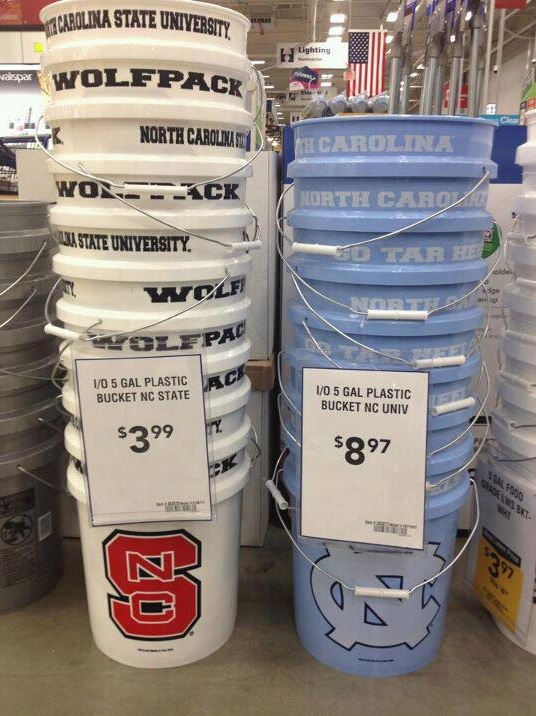
Economics: Tobacco Road Style


We are less than a day away from The Tournament.  3 glorious weeks.

And here, in all it’s simplicity, is an exercise in supply and demand.

Go Obama!  Go Heels!

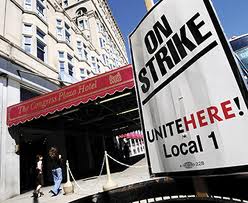
Right To Work: The Negative Impacts Of Unions

One of the benefits to the Tea Party election of 2010 has been the effort to reduce labor’s influence in America.  You’ve seen it in Wisconsin, you saw it in Indiana and now the results coming in from Tennessee.

States are turning to “Right to Work” legislation that allows employees to opt in or opt out of a union.  To be clear, some state allow you to opt out of a union, however, you still “get” to pay the union dues – wonderful option opting out is, yes?

So, how is Tennessee benefiting from their labor stance?

Michigan may be Motor City’s home in most people’s minds, but Tennessee has emerged as another major hub of auto manufacturing and related industries. Big domestic and foreign automakers have several facilities here and are expanding rapidly.

Tennessee, one of many Super Tuesday GOP primary states, has mostly been spared the trauma of mass layoffs, closures and bailouts that plagued the Rust Belt. Business and free-market groups cite a key advantage: It is a right-to-work state, effectively preventing Big Labor from being a major player there.

It’s growing.  And growing rapidly.

And the advantage of Right to Work laws are such that even shops that ARE union are forced to innovate, to invent to become more productive.  If they don’t, they fail.  This same incentive is not in place in full union states.  When all shops are controlled by the unions, the productivity of one slow plant isn’t different than the productivity of the other slow plant.

And why might businesses wanna come to these Right to Work states?

Tennessee’s law has held down labor costs. VW pays $27 an hour for new employees in wages and benefits, about half of the $52 an hour labor cost in Detroit. When the unionized GM agreed to reopen the Spring Hill plant last year, it forced the UAW to accept a starting wage of $15.78

It keep the cost of labor down.  Now, you may ask how that’s a good thing; how paying someone $27 an hour is better for that someone than paying them $52 an hour.

Critics cite the lower wages as proof that the laws hurt workers. But locals say that’s offset by lower living expenses. Nashville’s cost of living is 11% below the U.S. average, the Census Bureau reports. Detroit’s is only 1% below.

Tennessee isn’t immune to the auto industry’s ups and downs, but seems to weather them well.

“We got through the recession without major layoffs,” Woolley said. “There were a lot of curtailments and furloughs (for workers), a lot of short workweeks, but now we are back at full speed.”

When labor is less expensive, the things made with that labor are less expensive as well.  And, as always, while unions may increase wages for their members, they increase wages to the point that fewer and fewer workers are hired in the first place.

Big Labor’s place in America has gone by the roadside; and THAT is great news.

 

Poverty: Reducing The Number Of The World’s Poor

It’s not easy bein’ an American worker these days.  There’s a lot of pressure coming from around the world; folks wantin’ our jobs, willing to work for less money than we’re workin’ for.

It’s hard being an America sometimes.

But there’s an upside.  For the folks who care about such things, the world’s poorest people, people living a life exactly like their parents, grandparents and ancestors have lived for generations, are finally emerging from poverty.  Perhaps for the first time ever, families are leaving the shackles of poverty and rising towards the hope of a middle class, perhaps dare I say, even more.

Continue reading