Harry Reid and Political Advice

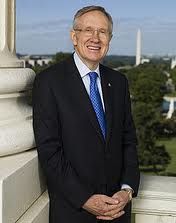
Speaking on the floor of the Senate, Harry Reid felt it an important use of his time to provide some political advice to the Speaker of the House.

“As Speaker Boehner saw on New Year’s Day, when he allows every member of the House to vote – and not only the Republican members of the House to vote — Congress can enact bills into laws,” he said on the floor. “No major legislation can pass the Senate without the votes of both Democrats and Republicans. During the 113th Congress, the Speaker should strive to make that the rule in the House of Representatives, as well.”

Interesting advice to be sure.  And in some ways, Reid is right.  The idea of not voting on legislation that has been passed in one chamber and then been sent to the other for consideration is an idea that would garner significant support from the American public.  Heck, even from me.

However, I wonder if the majority leader would consider taking his own advice and allow House bills that he fears come for a vote in his Senate?

I suspect not.

Fiscal Cliff “Averted”

The last charge of the 112 Congress has taken place.  With just hours before the session was set to close, the congress passed the bill that will now go to Obama’s desk for signature.  Only in my most vindictive moments did I want us to go over the cliff.  I wanted the average person who voted for the current President to face the economic damage first hand.  If nothing else, the prospect of facing an additional $2,500 in taxes with the possibility of the AMT hitting them, they  may have learned what happens when a tax happy spend happy administration gets in power.

As it is, we have very little to be happy about.  The first, if not only, is the fact that the Bush Tax Cuts are now permanent for everyone earning less then $450,000.  About time!  Although now that they are permanent, watch the left begin calling them the Obama Tax Cuts – as if.

The other positive is that the AMT’s annual correction is also permanent.  No more posturing on that one.

But there is a TON to hate.  Taxes going up for anyone in this economy is only going to do more harm than good.  And those taxes are on business and investors.  Not to mention investment itself.

And the worst part?  There wasn’t ANY spending cuts of meaning.  Rather we have that battle in two months.  Oh yeah, I forgot the third thing – no debt ceiling limit rise.

All that means is that we get to go through this all over again in a few short months.

Clinton-Era Tax Rates

Through all the discussion surrounding the fiscal cliff negotiations we have heard the relentless drumbeat of an argument that during the surplus years of President Clinton, the tax rates were higher than they are now.  If it worked then, they theory goes, it can work now.

Makes sense.  Kinda.

But no one is asking for a return to the Clinton-era rates.  They’re asking for a return to the Clinton-era tax rates for SOME, not all.

And, of course, the idea is only to revert to the Clinton-era revenue rates.  Not the spending rates.

What if we went back to the spending of that Clinton era?  Why, during 1999 the federal budget was $1,701 billion.  Adjusted for inflation, that comes to $2,350 billion.  And what is our expected revenue for 2012?  About $2,468 billion.

A surplus of $118 billion.

Obama and the Fiscal Cliff

Obama is confused.

Today he’s remarking that the republicans aren’t negotiating seriously:

In an interview broadcast Sunday, Obama told NBC’s “Meet the Press” that Republicans are responsible for the stalemate that brought lawmakers back to Capitol Hill on a Sunday afternoon.

“They say that the biggest priority is making sure that we deal with the deficit in a serious way. But the way they’re behaving is that their only priority is making sure that tax breaks for the wealthiest Americans are protected,” Obama said. “That seems to be their only overriding, unifying theme,”

To be clear, there is only one party in these negotiations that have, as their entire offer, a single overriding theme.  And that is the President himself.  The President’s entire offer, the whole of it, consists of raising taxes on the wealthy.

And that’s it.

No spending cuts.  No entitlement reforms.  No talk about any effort to reduce the deficit or attack the debt.

Just tax the rich.  And he knows that this isn’t going to address any of the problems we face, on the contrary – it will only make it worse.

But if that was the only aspect of Obama’s confusion, he could be forgiven.  We know that he’s nothing more than a class warrior who hasn’t an inkling of a clue on anything economic.  But he should know how bills make their way through Capital Hill:

Obama said the Senate should vote on legislation to make sure middle-class taxes are not raised and that 2 million people don’t lose unemployment benefits .

The Senate doesn’t initiate financial bills; the House does.  And they have.  Two of them.  Both waiting for Reid and the democrats to take them up, amend them and vote on them.  The pressure is squarely on the Senate right now.  Not the republicans.

Top Tax Rate

What should the rate be on the top earners?

Well, according to a poll conducted by the Hill, 75% of Americans feel that it should be 30% or less.

While Americans may feed on the chum thrown to them in the form of “Tax the Rich”, most people continue to feel that tax rates ought to remain modest.

Bush Tax Rates

How is it that democrats can criticize the Bush tax cuts as hurting the middle class 10 years ago and then claim today that reverting to the rates before those tax rates went into affect would ALSO hurt the middle class?

How does a media allow this to happen?

Faith and the World

I would have thought the number to be smaller:

Hard numbers are often scant in questions of faith. But a new report from the Pew Research Centre, a self-described “fact tank” in Washington, DC, on the state of religious belief in 2010 provides some welcome light. It estimates that 5.8 billion adults and children—around 84% of the world population in 2010—have some kind of religious affiliation.

Of the 1.1 billion unaffiliated, many profess some belief in a higher power. Asia has by far the largest number of people who claim to have no religion; China’s official atheism explains much of that. But 44% of unaffiliated Chinese adults say they have worshiped at a graveside or tomb in the past year. And China has the world’s seventh-largest Christian population, estimated at 68m.

But I’m glad I would have been wrong.


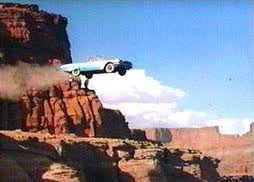
Thelma And Louise

I’m guessing we go over.

John Boehner has said that he’ll give House members 48 hours to get back to Washington.  That means if he were to call them right now they wouldn’t get to their offices until Saturday.  Which leaves 2 days to pass legislation.

And that’s if he agrees to pass the Senate version of the bill.

As it stands right now, I think that the problem is this:

  • The President will not budge on his demand that the tax rate on wealthy Americans goes up.  That is a deal breaker for him.
  • The democrats will not agree to spending cuts other than defense.
  • The republicans will not raise the tax rate on anyone.

The fiscal cliff is made up of two parts.  The first is the expiration of the Bush-era tax cuts.  Because these rates were pushed through using reconciliation, they were set to expire in 2011.  However, as part of a negotiation, the rates were extended for 1 year.  This agreement will end December 31st at midnight.  Failure to extend the Bush tax rates will result in a massive tax hike for every American.

The second part is the agreement made that will mandate budgetary cuts; spending cuts.  Among the items set to be cut is the defense budget.  This is seen to be unappealing to republicans.

A guilty pleasure of mine would be to see us go over this cliff in full.  I want to see how American’s react to the tax hike that will impact them January 1.  This would include the extraordinarily large impact of the AMT that would impact millions of Americans.

However, my sick sense of cosmic justice aside, I really am looking for a permanent extension to the Bush tax cuts.  It not only is the right thing to do, but trying to raise the rates like Obama has been insisting is only a political ploy not meant to address any of the fiscal issues that we have right now.  With the rates made permanent, the economy will be able to remove the uncertainty and move forward in recovery.

As for the cuts.  I say let ’em come.  The impact will be short-term dramatic.  I suspect the economy will move into recession but it will be quick and short.  However, the long term benefit of the cuts will reduce the size of government spending and allow the economy to grow more quickly than it otherwise might.

My desire aside I feel that the ball is in the Senate’s court.  Financial bills originate in the House and move to the Senate for consideration.  The Senate should pass the bill or amend it and return it to the House.  Under Boenher, the House has passed two such bills that are simply waiting to be considered by Harry Reid.  For whatever reason, Reid will not hear those bills and allow the Senate to act.

Right now, the delay in passing a bill is squarely on Harry Reid and the democrats.

Public Transportation – Going Private

There’s often talk of public transportation.  And I get the idea; the more accessible work, shopping and other services are to folks who might be struggling, the better off those folks might be.  A second argument surrounds the environment.  The more people use mass transit, the better off we are in terms of gas use, pollution and, recently, CO2 emissions.

Not to mention the fact that traffic just sucks and anything that we can do to minimize it is a plus.

All arguments aside, suppose, for the same of this discussion, that I cede all points.  That mass transit is the way to go, my question is this:

Does it matter what agency provides that transit?

The answer is:

Apparently so.

By now you’ve heard about the perks that come with working in Silicon Valley. Free lunch, 20 percent time — that’s the work time you can use to pursue independent projects.

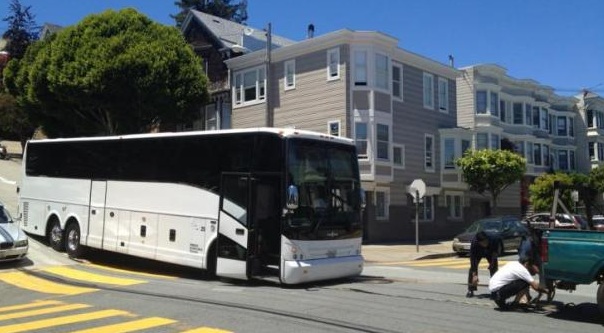
Well, another perk? A private bus that picks you up in your neighborhood in San Francisco and shuttles you down to your corporate campus about an hour south in the suburbs of Silicon Valley.

During rush hour in San Francisco, you see them everywhere, said Eric Rodenbeck, the creative director of Stamen Design in the Mission District of San Francisco.

“They’re just so big,” Rodenbeck says. “These buses are two stories high and they’re barrelling down residential streets, and no one knows where they’re going except the people who are on them.”

So now the complaint against “Big Business” is that they bus people to work.  It’s almost like if the government isn’t providing it for you, it’s just this great big secret conspiracy or something:

“You know it’s almost like this masonic ritual,” Rodenbeck says.  “If you’ve got the key, this whole other city layer unlocks itself to you. And that’s the kind of urban puzzle we like to solve.”

I mean, serious.

So what we have are private companies shelling out their own money to transport people from where they live to where they work.  All this to reduce traffic, reduce emissions, pollution and dependence on oil and other fossil fuels and it STILL isn’t good enough:

Rodenbeck says he thinks the locations are secret because the companies are “sensitive to this idea that they are funding a change in the infrastructure in San Francisco without it being regulated.”

The San Francisco Municipal Transportation Agency is in the midst of studying what’s essentially emerging as a private mass-transportation system, says Jerry Robbins, a transportation planner for the agency.

“The increase in employer buses has sparked some reaction from residents,” Robbins says.

He says that since tech companies contract out the work to private bus companies, which are regulated by the state, the city has little say in what they do.

But Robbins says the agency has fielded complaints that the the private shuttle buses, which often stop at public bus stops, are causing delays and traffic.

Again, private companies are providing transportation, almost exactly like that being provided by the government, but residents don’t like it because it’s not regulated.

But how many folks does this private system haul everyday?

When the map was finished, Stamen counted busses from Apple, eBay, Electronic Arts, Facebook, Google and Yahoo, and they found the buses ran through almost every neighborhood in San Francisco. Stamen estimates that about 14,000 people ride the private shuttle buses every day.

Fourteen Thousand.  People.  Everyday.  In government speak that is 28,000 trips. Everyday.  For free.  And how does the private sector seduce such riders?

“It’s pretty sweet,” Birch said. “They let us choose the type of seats and decor inside. And it’s got dim lighting with the Google colors.”

There’s also free Wi-Fi on the shuttles, and Birch said it’s basically another hour of work.

The tech world is driven by young, educated largely urban workers. But companies like Facebook, Google and Apple are located in the suburbs of Silicon Valley, which is about an hour south of the San Francisco.

“I think a lot of young people who work at the tech companies they want the city life they want something that’s fun and entertaining, and you don’t get that in the suburbs,” Birch said.

Yeah.  By offering what people want.

Look, I like buses more than I like cars.  And I like trains more than I like buses.  And I like lite rail more than I like trains.  But more than any of that I like solutions that actually work.  So maybe the public sector should take some clues from the private sector and begin to work to loosen the grip of public transportation and let it move into the private space.

You might just get free WiFi.

 

Did the Community Reinvestment Act (CRA) Lead to Risky Lending?

Yes it did:

Yes, it did. We use exogenous variation in banks’ incentives to conform to the standards of the Community Reinvestment Act (CRA) around regulatory exam dates to trace out the effect of the CRA on lending activity. Our empirical strategy compares lending behavior of banks undergoing CRA exams within a given census tract in a given month to the behavior of banks operating in the same census tractmonth that do not face these exams. We find that adherence to the act led to riskier lending by banks: in the six quarters surrounding the CRA exams lending is elevated on average by about 5 percent every quarter and loans in these quarters default by about 15 percent more often. These patterns are accentuated in CRA-eligible census tracts and are concentrated among large banks. The effects are strongest during the time period when the market for private securitization was booming.

This should not be contentious or surprising or controversial.

The government wanted to increase the home ownership rate among US citizens.  The government created conditions that would increase that rate.  Such conditions led to practices that helped that increase.

In short; riskier lending.

And at the heart of it all?  The usual suspects; Fran and Fred:

To satisfy CRA examiners, “flexible” lending by large banks rose an average 5% and those loans defaulted about 15% more often, the 43-page study found.

The strongest link between CRA lending and defaults took place in the runup to the crisis — 2004 to 2006 — when banks rapidly sold CRA mortgages for securitization by Fannie Mae and Freddie Mac and Wall Street.

CRA regulations are at the core of Fannie’s and Freddie’s so-called affordable housing mission. In the early 1990s, a Democrat Congress gave HUD the authority to set and enforce (through fines) CRA-grade loan quotas at Fannie and Freddie.

It passed a law requiring the government-backed agencies to “assist insured depository institutions to meet their obligations under the (CRA).” The goal was to help banks meet lending quotas by buying their CRA loans.

But they had to loosen underwriting standards to do it. And that’s what they did.

Oh boy, this won’t play well in the press.