Category Archives: Economics

Money Can’t Buy Happiness

It may not buy you love either, but it sure makes it easier to drink good beer.  I don’t know exactly what this means, but I think it’s a combination of the ability to earn money and then the measure of the power of that income via the  availability of inexpensive goods that makes that salary more valuable.

We’re Gonna Ration

The allocation of scare resources: Rationing.

There are a lot of ways of doing it; time, money, connections even luck.

Some of us think that rationing by money optimizes quality and supply.  Others think that rationing by time does the same thing.  I disagree:

SACRAMENTO — As the state moves to expand healthcare coverage to millions of Californians under President Obama’s healthcare law, it faces a major obstacle: There aren’t enough doctors to treat a crush of newly insured patients.

So, California is going to ration on time.  And one of the metrics that time based rationing optimizes is – low quality:

Some lawmakers want to fill the gap by redefining who can provide healthcare.

They are working on proposals that would allow physician assistants to treat more patients and nurse practitioners to set up independent practices. Pharmacists and optometrists could act as primary care providers, diagnosing and managing some chronic illnesses, such as diabetes and high-blood pressure.

Now, to be sure, allowing non-doctor health care providers could very well be positive; after all – why do we need an MD to refill a prescription for blood pressure medication?  However, I’m sure that California isn’t embracing this is an open-market mindset.  Rather, docs are just fleeing the medicaid business.  In fact, in California, only 57% of doctors are accepting new medicaid patients.


The Cost of a Pencil

The other day my daughter and I were walking through the grocery store when she saw a pencil.  She asked me if she could have it.  Normally I like that kind of “toy” request; I can make the deal contingent on a poem, a math problem or a little story.

But this day I said “no”.

But daahhh-ad!  It’s only a dollar!  How long does it take you to earn a dollar.

So I bought her the pencil and when we got home I taught her about taxes.

It turns out that just accounting for my portion of the North Carolina sales tax, my federal income tax and then North Carolina income tax, the cost of that $1.00 pencil goes to $1.68.

I didn’t bother to go through the FICA, the gas tax, and the tax on the car that drove us to the grocery.  Just the three.

Think of that, 40.48% of my income, just accounting for those three taxes, are consumed to buy a simple pencil.

North Carolina GOP – Unemployment Benefits

Another legislative agenda for the state’s republican dominated state government:

 Tens of thousands of unemployed workers receiving federal emergency unemployment will likely lose their benefits starting July 1 as legislators overhaul the program.

Legislative leaders said this week that they will push ahead with a July 1 start to cuts in weekly benefits for unemployed workers. The measure would put the state in violation of the recently passed federal relief package that would have provided benefits to laid-off workers through December 2013. The federal legislation specifically forbid the states from altering the weekly benefit amount, which the General Assembly is poised to do as it returns to session Wednesday.

The reason for the change?  Well, it turns out that the federal government funded the North Carolina’s unemployment payments.  Funded to the tune of nearly $2.5 billion.  And until that debt is paid, North Carolina businesses are required to higher federal unemployment taxes, or FUTA.  In fact, each year that there is an outstanding balance, businesses in NC have to shell out an additional $21 per employee per year, cumulative.

As a response to this ever growing tax burden faced by employers, the idea is to reduce the scope of the state’s UI payout to reduce the normal tax payed.

Is it popular?

Worker advocates called the measure unnecessary and shortsighted.

“This will push thousands and thousands of North Carolinians off an artificial cliff and deny hundreds of millions in dollars to businesses and communities. That money adds nothing to our debt and had already been appropriated,” said Harry Payne, former labor commissioner and worker advocate for the North Carolina Justice Center.

The extended benefits was being funded entirely by the federal government. Each week, that program funnels $25 million in benefits to about 85,000 laid-off workers.

“If anyone wants an example of thoughtlessness, I’ll hold this piece up high,” Payne said. “This is about not understanding what people are going through.”

Certainly not.

However, as the tax per job increases, more and more NC businesses will look to get out of the way of those taxes.  And the only way to do that is to constrain jobs.  Something we certainly don’t wanna do.  Further, by reducing the size of the UI check, the incentive to look for work increases, driving more and more people into the labor force.

Stagnant Middle Class

Perhaps this is simply a myth.

Don Boudreaux and Mark Perry weigh in over at the Wall Street Journal:

A favorite “progressive” trope is that America’s middle class has stagnated economically since the 1970s. One version of this claim, made by Robert Reich, President Clinton’s labor secretary, is typical: “After three decades of flat wages during which almost all the gains of growth have gone to the very top,” he wrote in 2010, “the middle class no longer has the buying power to keep the economy going.”

This trope is spectacularly wrong.

Don and Mark touch on a point that I often make:

…this wage figure ignores the rise over the past few decades in the portion of worker pay taken as (nontaxable) fringe benefits. This is no small matter—health benefits, pensions, paid leave and the rest now amount to an average of almost 31% of total compensation for all civilian workers according to the BLS.

That’s not an insignificant amount.  I often hear that compensation for health care shouldn’t count, after all, why should the worker have to accept ever increasing costs of fixing a broken leg?  A response to which I ask, “Would you be willing to give up that health insurance?”

Always the answer is no.

However, they point out a concept that I often miss:

One underappreciated result of the dramatic fall in the cost (and rise in the quality) of modern “basics” is that, while income inequality might be rising when measured in dollars, it is falling when reckoned in what’s most important—our ability to consume.

I absolutely think it’s critical to include in these conversations what we are able to consume today as opposed to 30 years ago.

Finally:

Despite assertions by progressives who complain about stagnant wages, inequality and the (always) disappearing middle class, middle-class Americans have more buying power than ever before. They live longer lives and have much greater access to the services and consumer products bought by billionaires.

Lefty Has A Friend

More on California taxes.

I posted on Monday that Phil Mickelson has had enough of the confiscatory powers of the state:

 And now California is about to.  When you tax the living snot out of people they are going to react.  They’ll either move or quit.

And that results in $0.00 tax revenue.

It’s really not rocket surgery.

Perhaps the only thing more frustrating than a government that confiscates so much wealth is the fact that it is so predictable:

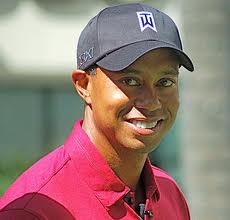
…but when pressed during his interview Tuesday, here’s how Woods responded:

“I moved out of here back in ’96 for that reason. I enjoy Florida but it was also…I understand what he was I think trying to say. I think he’ll probably explain it better in a little bit more detail.”

When California takes 13.3% and Florida takes zilch the calculus is pretty simple.

The Decline of the Union Worker

If the decline of the union means that American companies begin hiring more people, I’m all for the decline of the American union:

Last July was a good month for factory workers in Anderson, Ind., where a Honda parts supplier announced plans to build a new plant and create up to 325 jobs. But it was a grim month in the Cleveland suburbs, where an industrial plastics firm told the state of Ohio it was closing a plant and laying off 150 people.

Nearly all of the Ohio workers belonged to a labor union. Workers at the Indiana plant don’t. Their fates fit a post-recession pattern: American factories are hiring again, but they’re not hiring union members.

But nationally, is there a trend that would suggest that union shops are doing better than or worse than non-union shops?

U.S. manufacturers have added a half-million new workers since the end of 2009, making the sector one of the few bright spots in an otherwise weak recovery. And yet there were 4 percent fewer union factory workers in 2012 than there were in 2010, according to federal survey data. On balance, all of the job gains in manufacturing have been non-union.

This isn’t rocket surgery.  It’s been a fact for a long time now that unions are nothing more than modern day racketeer outfits.  While they may provide better compensation for their members, they restrict the number of jobs that otherwise might have been available.  Further, and perhaps more insidious, is the fact that the monies generated from their members goes straight into the hands of politicians.

Good riddance.

Laffer Curve: PGA Style

Imagine a curve.  On the left hand side the value is zero.  Then, as you move from left to right, the slope goes up peaking somewhere then slides down back to zero.  That’s the Laffer Curve.

If you tax income at 0%, you realize $0.00 of tax revenue.  If you tax income at 100% you will also realize $0.00 of tax revenue; no one works for free.  In between is the sweet spot.

And it appears that, for Lefty, a 63% take is just too much:

LA QUINTA, Calf. — Phil Mickelson started his 2013 PGA Tour season at the Humana Challenge in partnership with the Clinton Foundation with a tie for 37th place. But after a final-round 66, Mickelson did more than hint that the 2014 season may see some big changes for the World Golf Hall of Famer.

“Well, it’s been an interesting offseason. And I’m going to have to make some drastic changes,” Mickelson said at the Palmer Course at PGA West in La Quinta. “I’m not going to jump the gun and do it right away, but I will be making some drastic changes.”

And what changes might he be making?

PHIL MICKELSON: Well, it’s been an interesting offseason. And I’m going to have to make some drastic changes. I’m not going to jump the gun and do it right away, but I will be making some drastic changes.

Q. Meaning leaving from California?

PHIL MICKELSON: I’m not sure.

Q. Moving to Canada?

PHIL MICKELSON: I’m not sure what exactly, you know, I’m going to do yet. I’ll probably talk about it more in depth next week. I’m not going to jump the gun, but there are going to be some. There are going to be some drastic changes for me because I happen to be in that zone that has been targeted both federally and by the state and, you know, it doesn’t work for me right now. So I’m going to have to make some changes.

And why does he think he needs to make these changes?

PHIL MICKELSON: Yeah. I’ll probably go into it more next year or next week. But if you add up, if you add up all the federal and you look at the disability and the unemployment and the Social Security and the state, my tax rate’s 62, 63 percent. So I’ve got to make some decisions on what I’m going to do.

France learned it.  And now California is about to.  When you tax the living snot out of people they are going to react.  They’ll either move or quit.

And that results in $0.00 tax revenue.

Jon Stewart – Pure Platinum

Look, Stewart is funny, wickedly funny.  His timing, expressions and body language are the best. And the fact that his patter is politics only makes it better; I like politics, he makes political humor.

What’s not to love?

But lot’s of people forget that the man is a clown.  He’s an entertainer.  He’s on a stage making people laugh at jokes. Think Abbott and Costello.  Andrew Dice Clay.  Rodney Dangerfield.

Gifted all.

He isn’t a commentator.  He’s isn’t a reporter.  He isn’t a writer.

So I love it when folks use Stewart as a source of news or to make a point.  I especially love it when he turns his schtick back on the liberal establishment that loves him so:

!!!!

The Daily Show with Jon Stewart Mon – Thurs 11p / 10c
Paul Krugman & the Trillion Dollar Coin
www.thedailyshow.com
Daily Show Full Episodes Political Humor & Satire Blog The Daily Show on Facebook

Another Company Cuts Hours

Yesterday I posted about an IT firm cutting hours as a result of the economic conditions ahead.

Hours were going to be cut.  Instead of a 5-day work week the schedule would now be built around a 4-day work week.

My suspicion is that the firm is targeting a work week that comes in under 30 hours a week.

Well, there is a company that is making no bones about it:

A fast-food chain is slashing employee hours so franchise owners don’t have to pay health benefits. Around 100 local Wendy’s workers have learned their hours are being cut. A spokesperson says a new health care law is to blame.

The penalty for failure to offer insurance is $2,000 per employee.  In this case, $200,000 is a lot of money:

The company has announced that all non-management positions will have their hours reduced to 28 a week. Gary Burdette, Vice President of Operations for the local franchise, says the cuts are coming because the new Affordable Health Care Act requires employers to offer health insurance to employees working 32-38 hours a week. Under the current law they are not considered full time and that as a small business owner, he can’t afford to stay in operation and pay for everyone’s health insurance.

The irony, of course, is that fast food chains typically employ the younger worker.  Folks who might be entering the job market for the first time and are learning valuable work skills.   Skills that they may not otherwise acquire.  And the reason they are being impacted is a law that attempts to help provide medical care to the population.  Well, these kids are the healthiest segment OF that population.