
Category Archives: Politics: National

Wage Gap – Employment Gap

Increasing Bar GraphThe argument has long been, “The rich get richer while the poor get poorer.”

There are two problems with the statement:

  1. The people who make up the poor and who make up the rich change over time.  This is especially true when rich and poor are defined by wages only.
  2. This argument never takes into account “externalities”

For example, the argument never admits that we are looking at families and not individuals.  As such, it would be valuable to look at how families are changing over time.  But we never get that.

Additionally, it would be important to look at education and how it  has changed over time.  Again, nothing.

But today we have a new report that provides insight:

WASHINGTON — The gap in employment rates between America’s highest- and lowest-income families has stretched to its widest levels since officials began tracking the data a decade ago, according to an analysis of government data conducted for The Associated Press.

Rates of unemployment for the lowest-income families — those earning less than $20,000 — have topped 21 percent, nearly matching the rate for all workers during the 1930s Great Depression.

U.S. households with income of more than $150,000 a year have an unemployment rate of 3.2 percent, a level traditionally defined as full employment. At the same time, middle-income workers are increasingly pushed into lower-wage jobs. Many of them in turn are displacing lower-skilled, low-income workers, who become unemployed or are forced to work fewer hours, the analysis shows.

Amazing.  And truly heart breaking.  The very folks that need, and I mean NEED, a job are faced with unemployment levels that make it virtually impossible to find work.

A rational policy decision would be to make work as easy as possible to give away.  That is, let these people find and accept a job anywhere they can for whatever wage they can.  Ironically, the administration that most of these folks feel are helping them out are really hurting them the most.

One of the most devastating things that can happen to a worker out of work is to see the wage of the jobs he wants raised above his reasonable level of productivity.  This has the effect of discriminating against him for no reason other than he lacks the skills to obtain better work; skills that are often learned while working.

Don’t forget the history of the minimum wage:

Did you know that there was a time in our country, after the Civil War, when white unemployment was higher than black unemployment? It seems almost unfathomable now, but that was the case in the early decades of the 20th century. This was intentionally changed after Congress enacted the first federal minimum wage law: the Davis-Bacon Act of 1931.

As most of us remember from history class, the 1930s saw a plethora of public works projects introduced to combat the unemployment associated with the Great Depression. (Whether or not this worked is a topic for another day.) But during that time, many impoverished blacks left sharecropping to come north in search of such jobs. The Davis-Bacon Act was created specifically and explicitly to prevent blacks from “taking” these jobs from local white workers.

Congressman Robert Bacon of New York began crafting various pieces of legislation to discriminate against black workers when a black construction crew from Alabama was brought to his state to build a hospital for veterans in 1927. Because most blacks lived in the South, any laws restricting the use of migrant labor discriminated against them. Since blacks were not admitted to trade unions, any law that favored union labor automatically excluded blacks. Bacon submitted 13 such bills over the next four years, culminating in the Davis-Bacon Act.

The act mandated that federal contracts pay their workers the “prevailing wage.” As innocent as this might sound, records of the debate over the bill reveal that everyone understood the “prevailing wage” meant the union wage and that this meant there would be no blacks working on federal projects. In fact, when testifying before the Senate in favor of Davis-Bacon, American Federation of Labor union president William Green complained, “Colored labor is being brought in to demoralize wage rates.”

The federal minimum wage may no longer be racist in intent, but it is still racist in its effects. Labor is affected by supply and demand, just like anything else. If we pass a law that raises the cost of printer paper to $100 a ream, companies will find a way to use less printer paper. In the same way, when the law raises the cost of labor, companies purchase fewer hours of labor.

The history of the minimum wage was SPECIFICALLY meant to discriminate against black workers.  And the effects of that law have created the condition we see today.
Peak Oil – Anyone Buying?

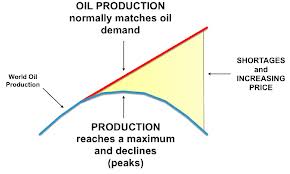
peak oil

Peak oil.  A fascinating concept.  Motley used to scare children into thinking that the planet will die and we’ll freeze due to lack of usable fuels.

Or starve because the economy will tank as oil prices continue to rise and all goods and services become too expensive for the common man to afford.

Technically it means, at least I think it means, the moment when new discovers of oil are fewer than the increasing demand for oil.  We begin to see supply diminish and demand increase.

However, there is a small catch.  The oil that is counted as “discovered” is only that oil that is economically feasible to obtain.  Oil on the moon?  No good, too expensive.  Oil 25 miles deep?  Same thing.

However, technology is catching up and pushing the concept of peak oil further and further into the future:

Rising U.S. shale oil production will help meet most of the world’s new oil demand in the next five years, even if the global economy picks up steam, leaving little room for OPEC to lift output without risking lower prices, the West’s energy agency said.

The prediction by the International Energy Agency (IEA) came in its closely watched semi-annual report, which analyses mid-term global oil supply and demand trends.

“North America has set off a supply shock that is sending ripples throughout the world,” IEA Executive Director Maria van der Hoeven said on Tuesday.

It might take a new President to obtain access to all the oil though.


Making More Food

GMO

There is a ton, I mean a TON, of opinion on the concept of genetically modified foods.  Frankly, much of it I don’t understand.  From the beginning time, we have tried to accent the positive aspects of plants and animals while minimizing the undesirable ones.

When we mate high milk producers with other high milk producers, we are “modifying” our cows.  Same when we pollinate high yield corn with more high yield corn.

So why the concern when we accelerate natural selection?  Well, more and more, people are saying:

There is no concern, none

A few weeks ago, Amy Harmon, a respected science journalist at the New York Times, turned her attention to the GMO debate, writing a masterfully textured story about the plight of the Florida orange and the role biotechnology might play in rescuing it from a potentially deadly disease. It was widely praised by independent journalists for its even-handed analysis of the costs and benefits associated with adopting new technologies, like genetic modification, to food.

As influential as the Times may be among the chattering classes, don’t expect this story to alter the trajectory of the debate over GMO foods. While every major scientific regulatory oversight body in the world, including the National Academies of Science and the Food and Drug Administration in the United States, has concluded that genetically modified foods pose no harm not also found in conventional or organic foods, the public remains deeply suspicious of them. A survey published in the same newspaper the day before Harmon’s piece ran found that 37 percent of those interviewed worried about GMOs, saying they feared that such foods cause cancer or allergies.

This one transcends political affiliation – liberals and conservatives are coming out against GMO’s.  But there is no real reason for it.

Read the whole thing.

Obama’s Economy – His Legacy

Forclosure

To demonstrate that good intentions don’t guarantee good policy:

Helene Pearson’s belief in homeownership was shattered in Roseland, the mostly black Chicago neighborhood where President Barack Obama got his start as a community organizer.

Pearson, who bought her two-bedroom, red-brick bungalow on South Calumet Avenue in Roseland for $160,000 in 2006 with a high-interest loan, put it on the market a year ago for $55,000 and didn’t attract a single offer. Her bank has agreed to take it back.

Markets come and then markets go.  But the true testament of our intervention?

For most Americans, the real estate crash is finally behind them and personal wealth is back where it was in the boom. For blacks in the U.S., 18 years of economic progress has vanished, with a rebound in housing slipping further out of reach and the unemployment rate almost twice that of whites. The homeownership rate for blacks fell from 50 percent during the housing bubble to 43 percent in the second quarter, the lowest since 1995. The rate for whites stopped falling two years ago, settling at about 73 percent, only 3 percentage points below the 2004 peak, according to the Census Bureau.

I find it tragically ironic that Obama’s legacy is going to be a more racially divided nation in addition to a more economically separated one.

Obamacare And Setbacks

Setback

In shocking news this morning we learn that the Obama administration is going to miss another deadline:

(Reuters) – The Obama administration has delayed a step crucial to the launch of the new healthcare law, the signing of final agreements with insurance plans to be sold on federal health insurance exchanges starting October 1.

Needless to say this does NOT come as a surprise but rather as an expectation from this administration.  What does it mean?

Coming at a time when state and federal officials are still working to overcome challenges to the information technology systems necessary to make the exchanges work, some experts say that even a small delay could jeopardize the start of the six-month open enrollment period.

U.S. officials have said repeatedly that the marketplaces, which are the centerpiece of President Barack Obama’s signature healthcare reform law, would begin on time.

But the October 1 deadline has already begun to falter at the state level, with Oregon announcing plans to scale back the launch of its own marketplace and California saying it would consider a similar move.

I’m betting January 1 is already dead in the water.  But don’t worry:

But having everything ready on October 1 is not a critical issue.

Well, what IS the critical issue:

What matters to people is January 1, which is when the coverage is supposed to start. If that were delayed, it would be a substantive setback.

Strap in for a substantive setback.

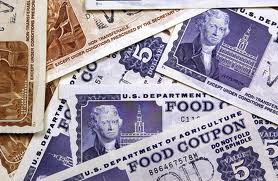
New York Food Stamp Fraud

Food Stamp

Two lessons in one story:


Last week, The Post revealed how New Yorkers on welfare are buying food with their benefit cards and shipping it in blue barrels to poor relatives in the Caribbean.

But not everyone is giving the taxpayer-funded fare to starving children abroad. The Post last week found two people hawking barrels of American products for a profit on the streets of Santiago.

“It’s a really easy way to make money, and it doesn’t cost me anything,” a seller named Maria-Teresa said Friday.

Maria-Teresa said she uses some of the products but vends the rest out of her Santiago home, providing markdowns of $1 to $2 compared to what her buyers would pay in local shops.

“I don’t know how much of a business it is, but I know a lot of people are doing it,” she said.

The black-market maven even takes her customers’ requests for hot-ticket items. Her best-sellers include a 19-ounce box of Frosted Flakes, which goes for $6.50 at Dominican supermarkets. She sells it for $2 less — after her sister buys it on sale for $2.99.

But because the sister uses her Electronic Benefit Transfer card, she actually pays nothing — taxpayers foot the $2.99.

Maria-Teresa also offers a 24-ounce Kellogg’s Corn Flakes box for $2, compared to the $4 Dominican counterpart. The Kellogg’s variety costs $2.99 on sale at Western Beef.

A 23-ounce container of powdered Enfamil baby formula goes for $25 in the United States and $19 in Santiago but Maria-Teresa sells it for $15. “People want the best quality for the price, so they buy the formula made in the US,” she said.

The average monthly wage in Dominican Republic is about 7,000 pesos, or just $167, and that’s why the black market has become so profitable, Maria-Teresa said.

So, lesson #1:

The inefficiencies of the government programs are everywhere.

And the 2nd lesson:

Markets in everything.

But, why even bother buying, packing, shipping and then selling fraudulent goods?

And the food-stamp fraud doesn’t stop there. She said her sister has Bronx grocers ring up bogus $250 transactions with her EBT card.

In exchange, the stores hand her $200 cash and pocket the rest. No goods are exchanged. Instead, Maria-Teresa’s sister sends the money to Santiago — when she’s not spending it on liquor or other nonfood items.

“We do it all the time, and a lot of people do this,” Maria-Teresa said. “It’s a way of laundering money, but it’s easier because it’s free.”

It’s easier, she says, because it’s free.

Indeed.

Health Care Markets

Healthcare

Health Care.

It’s all the rage these days.  How are we going to implement it?  Will the republicans defund it?  Can Obama legally just change the law as he sees fit?

Fascinating stuff.

But underneath it all is the assumptions that go into it.  For example, take Ezra Klein over at Bloomberg:

Health care and education pose the same basic threat to the economy: How do you keep costs down for a product that consumers must purchase?

Saying “no,” after all, is how consumers typically restrain costs. If Best Buy Co. wants to charge you too much for a television, you can walk out. You might want a television, but you don’t actually need one. That gives you the upper hand. When push comes to shove, producers need to meet the demands of consumers.

But you can’t walk out on medical care for your spouse or education for your child. In the case of medical care, your spouse might die. In the case of college, you’re just throwing away your kid’s future (or so goes the conventional wisdom). Consequently, medical care and higher education are the two purchases that families will mortgage everything to make. They need to find a way to say “yes.” In these markets, when push comes to shove, consumers meet the demands of producers.

So, first off, education is nothing like health care.  You  may or may not purchase it.  Sure, purchasing some of it is a great idea, more of it may be a good idea and too much can be a bad thing – look at all the freakin’ Fine Arts and English Literature students out there.  Sheesh.

Second, Ezra misses a critical parallel – food.  After all, even more basic a need than health care is food.  And we aren’t facing a food cost crisis.  Nor is there a food shortage.  In fact, hunger is defeated here in America and on the ropes globally.

So what gives on medical care?

One answer, beloved on the right, is that government is the problem and less government is the solution. Both medical costs and education costs are highly subsidized. Those subsidies, some contend, are the cause of rising prices. If people were paying full freight, they’d be acting more like typical consumers and demanding a better deal.

That gets causality backward. The subsidies exist because consumers — also known as “voters” — are desperate to get medical care when they need it and secure quality educations for their kids. As prices rise, they appeal to the government for help. They find a way to say “yes.”

Indeed.  Let people pay full freight.  And this should be accomplished in two ways:

  1. Let people purchase insurance on their own outside of the confines of their job.
  2. Create an environment where people shop for their own medical care.

In the first, it’s a perverse system that takes away an individual’s insurance when they loose their job.  In the second, shopping for services reduces costs and can even reduce services that are duplicates or are not needed.

But what of subjecting medical care to the market, how are we to explain emergency care?  Easy, there isn’t much of it:

Health care is a big business in the United States, representing more than 16 percent of U.S. Gross Domestic Product. Yet there are misconceptions about the costs and efficiencies of emergency rooms and “unnecessary” care. According to U.S. government statistics, emergency care represents less than 2 percent (1.9 percent)1 of the $2.4 trillion spent on health care.

Two percent on emergency care.  The rest, fully 98% of the health care spend…that money is spent on procedures and items that, while certainly not discretionary, are able to be planned and most importantly, shopped.

No one feels that food is discretionary – that we can choose to go without food for long.  But when opened up to a freer market, food has become ubiquitous.

Two simple changes to the way we deliver health care would dramatically reduce prices – okay 3, I just thought of another:

  1. Separate health insurance from employment – end the tax break for insurance as compensation.
  2. Buy plans that carry large deductibles and pair them with HSA’s.
  3. End the concept that routine maintenance be covered by insurance – this is not insurance, it is a prepaid medical plan.

Problem solved.


Barack Knows Best

Barack Obama

I was playing around this weekend reading up on retirement accounts and options available to me when I came across this gem:

How many times have you read financial-advice stories lecturing you to max-out on your IRA, save as much as you can in your 401(k), and even pay taxes now to change your regular IRA into a Roth IRA that will be tax-free until you die?

Well, be careful how much you save.

That’s the message in President Obama’s budget for fiscal 2014, which for the first time proposes to cap the amount Americans can save in these tax-sheltered investment vehicles. The White House explanation is that some people have accumulated “substantially more than is needed to fund reasonable levels of retirement saving.” So Mr. Obama proposes to “limit an individual’s total balance across tax-preferred accounts to an amount sufficient to finance an annuity of not more than $205,000 per year in retirement, or about $3 million for someone retiring in 2013.”

That’s the annoying thing about the Left; they just feel they know all about “fairness”.  See, it’s not fair that someone retire with more than a certain amount.

And why?

Because, the Barackness Monster knows best.

From Poverty To Middle Class

Middle Class

A conversation on my Facebook feed brought me here today:

In addition to the thousands of local and national programs that aim to help young people avoid these life-altering problems, we should figure out more ways to convince young people that their decisions will greatly influence whether they avoid poverty and enter the middle class. Let politicians, schoolteachers and administrators, community leaders, ministers and parents drill into children the message that in a free society, they enter adulthood with three major responsibilities: at least finish high school, get a full-time job and wait until age 21 to get married and have children.

Our research shows that of American adults who followed these three simple rules, only about 2 percent are in poverty and nearly 75 percent have joined the middle class (defined as earning around $55,000 or more per year).

Three things.  Simple things.  Not hard to do things.

Go to school and finish it.

Get a job.  Any job.

Wait to have children.

This Is Obama’s Economy

Barack Obama

The United States is experiencing job growth, to be sure.  But look at the kinds of jobs being created:

(Reuters) – U.S. businesses are hiring at a robust rate. The only problem is that three out of four of the nearly 1 million hires this year are part-time and many of the jobs are low-paid.

Executives at several staffing firms told Reuters that the law, which requires employers with 50 or more full-time workers to provide healthcare coverage or incur penalties, was a frequently cited factor in requests for part-time workers. A decision to delay the mandate until 2015 has not made much of a difference in hiring decisions, they added.

“Us and other people are hiring part-time because we don’t know what the costs are going to be to hire full-time,” said Steven Raz, founder of Cornerstone Search Group, a staffing firm in Parsippany, New Jersey. “We are being cautious.”

Raz said his company started seeing a rise in part-time positions in late 2012 and the trend gathered steam early this year. He estimates his firm has seen an increase of between 10 percent and 15 percent compared with last year.

Other staffing firms have also noted a shift.

“They have put some of the full-time positions on hold and are hiring part-time employees so they won’t have to pay out the benefits,” said Client Staffing Solutions’ Darin Hovendick. “There is so much uncertainty. It’s really tough to design a budget when you don’t know the final cost involved.”

Watch the word from the Left as they mention “anecdotal”