Category Archives: Economics

Trade Offs

I’ve done a bit of reading in the last few weeks and have been on a “trade offs” kick.

So lemme ask ya.  Would you rather:

  1. Live in a place where there was more equity but people were poorer; that is the poorest ranked 2 out of 10 while the rich ranked 4 out of 10.
  2. Or, live in a place where there was less equity but everyone was wealthier; that is the poorest ranked 4 out of 10 but the wealthiest ranked 9 out of 10?

In the second case the wealthiest are not only more wealthy in terms of ratio; more than double the poorest, but they are more percentage points richer as well – 5 rather than just 2.

This is the fundamental choice before us.  There are those that think that we should be more equal, that the spoils of the rich should be more equitable to the spoils of the poorest among us.  And these people are willing to live in a world that is poorer in general, less advanced in general, in order to achieve this equity.

Then there are people would rather increase the overall prosperity of the world even if it meant that the wealthiest among us were astronomically rich.  Rich too the point that most of us couldn’t imagine.

Notice that in the example, the second option puts the poorest at the same level as the wealthiest in the first.

I’m for option #2.

You?

Elections Have Consequences

It’s simple, really.  When there is an incentive to save money, there should be no surprise that incentives will drive behavior.  Consider Community College of Allegheny County:

To Community College of Allegheny County’s president, Alex Johnson, cutting hours for some 400 temporary part-time workers to avoid providing health insurance coverage for them under the impending Affordable Health Care Act is purely a cost-saving measure at a time the college faces a funding reduction.

But to some of the employees affected, including 200 adjunct faculty members, the decision smacks of an attempt to circumvent the national health care legislation that goes into effect in January 2014.

“It’s kind of a double whammy for us because we are facing a legal requirement [under the new law] to get health care and if the college is reducing our hours, we don’t have the money to pay for it,” said Adam Davis, an adjunct professor who has taught biology at CCAC since 2005.

Temporary part-time employees received an email notice from Mr. Johnson on Tuesday informing them that the new health care act defines full-time employees as those working 30 hours or more per week.

As a result, the college as of Dec. 31 will reduce temporary part-time employee hours to 25 per week. For adjuncts, the workload limit will be reduced from 12 to 10 credits per semester.

The decision affects only temporary part-time employees and not permanent part-time employees who already are eligible to participate in the college’s health care plan.

My hope is that the folks impacted voted for Obama; you should reap the rewards of the decisions you make.

But that’s not all:

Darden Restaurants Inc. — parent of the Red Lobster, Olive Garden and Capital Grille eateries in Colorado and elsewhere — is cutting back hours of workers at some of its locations in an apparent effort to reduce insurance costs related to the new health-care reform law.

The Orlando, Fla., Sentinel newspaper reports that the Orlando-based company (NYSE: DRI) “has stopped offering full-time schedules to many hourly workers in at least a few” of its locations.

The Sentinel quotes the company as saying it plans to limit employees at some restaurants in four unidentified markets to 28 hours a week. Darden said the move is intended “to help us address the cost implications health care reform will have on our business.”

Under the federal Affordable Care Act, the health-reform law that some call Obamacare, companies with at least 50 employees must provide health insurance, starting in 2014, to all those who work at least 30 hours a week. Those that don’t will pay a penalty.

I suspect that this will play out across America more and more.  As the ramifications of electing Obama continue to see the light of day, more and more we are going to see this reaction by business.  Fewer people hired, higher ratios hired as part time employees, more efforts to drive productivity by more and more automation.

It really is important to understand that there really aren’t solutions; only tradeoffs.

Want healthcare?  Lose jobs.  Sacrifice growth, accept higher unemployment.

If you voted for Obama, this is on you.  This is what you wanted, this is what you explicitly put into motion.

We warned you.


Incentives

The Real Story Of Thanksgiving

It’s almost Thanksgiving here in Puerto Rico.  In honor of the holiday, enjoy:

Each year at this time school children all over America are taught the official Thanksgiving story, and newspapers, radio, TV, and magazines devote vast amounts of time and space to it. It is all very colorful and fascinating.

It is also very deceiving. This official story is nothing like what really happened. It is a fairy tale, a whitewashed and sanitized collection of half-truths which divert attention away from Thanksgiving’s real meaning.

The official story has the pilgrims boarding the Mayflower, coming to America and establishing the Plymouth colony in the winter of 1620-21. This first winter is hard, and half the colonists die. But the survivors are hard working and tenacious, and they learn new farming techniques from the Indians. The harvest of 1621 is bountiful. The Pilgrims hold a celebration, and give thanks to God. They are grateful for the wonderful new abundant land He has given them.

The official story then has the Pilgrims living more or less happily ever after, each year repeating the first Thanksgiving. Other early colonies also have hard times at first, but they soon prosper and adopt the annual tradition of giving thanks for this prosperous new land called America.

The problem with this official story is that the harvest of 1621 was not bountiful, nor were the colonists hardworking or tenacious. 1621 was a famine year and many of the colonists were lazy thieves.

In his ‘History of Plymouth Plantation,’ the governor of the colony, William Bradford, reported that the colonists went hungry for years, because they refused to work in the fields. They preferred instead to steal food. He says the colony was riddled with “corruption,” and with “confusion and discontent.” The crops were small because “much was stolen both by night and day, before it became scarce eatable.”

In the harvest feasts of 1621 and 1622, “all had their hungry bellies filled,” but only briefly. The prevailing condition during those years was not the abundance the official story claims, it was famine and death. The first “Thanksgiving” was not so much a celebration as it was the last meal of condemned men.

But in subsequent years something changes. The harvest of 1623 was different. Suddenly, “instead of famine now God gave them plenty,” Bradford wrote, “and the face of things was changed, to the rejoicing of the hearts of many, for which they blessed God.” Thereafter, he wrote, “any general want or famine hath not been amongst them since to this day.” In fact, in 1624, so much food was produced that the colonists were able to begin exporting corn.

What happened?

After the poor harvest of 1622, writes Bradford, “they began to think how they might raise as much corn as they could, and obtain a better crop.” They began to question their form of economic organization.

This had required that “all profits & benefits that are got by trade, working, fishing, or any other means” were to be placed in the common stock of the colony, and that, “all such persons as are of this colony, are to have their meat, drink, apparel, and all provisions out of the common stock.” A person was to put into the common stock all he could, and take out only what he needed.

This “from each according to his ability, to each according to his need” was an early form of socialism, and it is why the Pilgrims were starving. Bradford writes that “young men that are most able and fit for labor and service” complained about being forced to “spend their time and strength to work for other men’s wives and children.” Also, “the strong, or man of parts, had no more in division of victuals and clothes, than he that was weak.” So the young and strong refused to work and the total amount of food produced was never adequate.

To rectify this situation, in 1623 Bradford abolished socialism. He gave each household a parcel of land and told them they could keep what they produced, or trade it away as they saw fit. In other words, he replaced socialism with a free market, and that was the end of famines.

Many early groups of colonists set up socialist states, all with the same terrible results. At Jamestown, established in 1607, out of every shipload of settlers that arrived, less than half would survive their first twelve months in America. Most of the work was being done by only one-fifth of the men, the other four-fifths choosing to be parasites. In the winter of 1609-10, called “The Starving Time,” the population fell from five-hundred to sixty.

Then the Jamestown colony was converted to a free market, and the results were every bit as dramatic as those at Plymouth. In 1614, Colony Secretary Ralph Hamor wrote that after the switch there was “plenty of food, which every man by his own industry may easily and doth procure.” He said that when the socialist system had prevailed, “we reaped not so much corn from the labors of thirty men as three men have done for themselves now.”

Before these free markets were established, the colonists had nothing for which to be thankful. They were in the same situation as Ethiopians are today, and for the same reasons. But after free markets were established, the resulting abundance was so dramatic that the annual Thanksgiving celebrations became common throughout the colonies, and in 1863, Thanksgiving became a national holiday.

Thus the real reason for Thanksgiving, deleted from the official story, is: Socialism does not work; the one and only source of abundance is free markets, and we thank God we live in a country where we can have them.

Go now, earn your wages.  Keep what is yours and sell what you want.

We will all be happier.

President Obama’s Mandate

Here’s what Coyote thinks of Obama’s mandate:

Barack Obama argues that the last election gave him a mandate to raise taxes on the rich.  Put another way, he is arguing that 52% of the people voted to raise taxes on 2%.

Nice.

I particularly like his illustration:

Let’s take a look at two propositions [in California]:

  • Prop 30, which propose to raise taxes on on the rich to help close the deficit (there was a token 0.25% sales tax increase for cover, but everyone knew it to be a tax on the rich).
  • Prop 39, which was a broad-based income tax increase which raised taxes on most everyone (or at least on the 50% or so who pay income taxes).

So, let’s look at the results:

  • Raise taxes on only the very rich:  PASS
  • Raise taxes on everyone (including me):  FAIL

Wolves and lunch and lambs people.  Wolves, lunch and lambs.

Now That Would Have Been Some Useful Nuance Two Months Ago

A significant aspect to the Presidential campaign was how each candidate planned on reducing the deficit and addressing the fiscals woes of the nation.

Romney rolled out a plan based on rate reductions and deduction eliminations.  Romney was short of specifics; when working with a divided senate and house, the bill delivered may not contain the exact details promised on the trail.

He was ridiculed as being vague and without a clue.

Now NPR is reporting on a method to raise revenues in order to meet the President’s goal.  A method suggested by none other than one Mitt Romney:

That’s a tall order. One approach that was suggested by Mitt Romney during the campaign, and endorsed by the Wall Street Journal‘s editorial page last week, is to cap tax deductions at a specific dollar level. The nonpartisan Tax Policy Center has analyzed the idea. Its co-director, Donald Marron, says capping deductions for all taxpayers at $17,000 could produce $1.7 trillion in revenue over 10 years. That would meet the president’s dollar goal.

To be fair, there is a problem with that approach:

“That would get to the president’s revenue target, but obviously it would violate his desire not to raise taxes on people below the top 2 percent,” he says.

Even raising the limit would still put Obama at odds with his promise:

If you push that cap on deductions higher, let’s say, up to $25,000, you could meet that $1 trillion revenue target. But you still don’t eliminate the political problem, because around a quarter of the added tax burden would still fall on the middle-class taxpayers the president has pledged to protect.

In the continuation of fairness, Romney’s plan would have lost revenue on that rate reduction; a loss that he claims would have been made up by an expansion of the economy.

Whatever, it would have been refreshing to have had this open and honest discussion regarding Romney’s plan back when Romney was viable.  The man knows finance; he knows what businessmen like and what they don’t.  He knows why they invest and when.

I guess if America can benefit by his wisdom, even with the Statist in Chief in office, we;re better off for it.

Walmart Wants To Pay People More

So, I’ve already commented on the fact that a union decided that a 100% pay cut was better than an 8% pay cut.

I don’t get it, but hey, maybe the principle behind the whole thing mattered.

Then I hear of the story of Walmart workers who are mad at the prospect of making more money:

Along with Target and Sears, Wal-Mart has plans to open retail stores at 8 p.m. on Thanksgiving night. Employees said they weren’t given a choice as to whether they would work on Thanksgiving and were told to do so with little warning. “They don’t care about family,” said Charlene Fletcher, a Wal-Mart associate in Duarte, Calif. She said she is expected to report for work at 3 p.m. on Thanksgiving Day. The workers said that when they complain about scheduling and other problems, management cuts their hours or fires people.

I make a decent living.  In fact, I suspect I’m in the top 10% of Americans in terms of salary.  I enjoy the benefits of this condition.  However, there are sacrifices I have to make:

  1. When I got married, my wife and I stayed at a beach house.  I brought my laptop and was working everyday during my honeymoon.
  2. No matter where I go or what time it is,  I have my cell phone and am available night and day.  I often get called.
  3. Never, EVER, in my career have I let my management ever get the slightest inclination that I was a guy who would turn down work or responsibility.
  4. I remember a time when I worked 47 days straight, right through Thanksgiving, Christmas and New Years.  Every. Single. Day.
  5. If all goes well, I’m on a plane right now to Puerto Rico for a weeks vacation with family over the Thanksgiving holiday.  My laptop is in my luggage; I’ll work every day.

I don’t get it.  I don’t get the concept that says that hard work doesn’t pay off.  That sacrifice doesn’t lead to rewards.  I don’t understand how people who want money are resistant to working to earn more money.

Or at least I didn’t understand.

I saw a Facebook post recently regarding the strike at Hostess and the totally shocking result of the closing of the business.  One of the comments went something like this:

If they strike and  get released, at least they’ll get 100 weeks of unemployment.

I added that they would also now get free healthcare.

And that reminded me of this:

More and more these people don’t need jobs.  If they lose their job they’ll get unemployment for nearly 2 years.  Plenty of time to work something out.  Further, with the election of Obama, they are sure to get free healthcare as well.

Literally, what is it that would incent these people to work?  If they lose their jobs, what really is the downside?  How much would they net lose?

What kind of perverse incentives are we building into our society?


The Impact Of The Fiscal Cliff – CBO Analysis

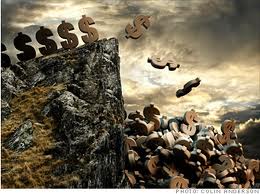
Anyone who pays attention, and even a few of us who don’t, know that we are facing what the experts are calling “The Fiscal Cliff.”  This is in reference to the set of economic or fiscal policies set to be enacted if nothing changes.  That is, it is already law and will be implemented unless new laws are passed to change them.  Key among this cliff are two main components:

  1. Allowing the Bush Tax Cuts to expire.
  2. Sequestration – Mandatory budget cuts.

Recent headlines have cited a CBO report issued earlier this month.  In it, the CBO reports that tax hikes on the wealthy won’t really hurt the economy:

(Reuters) – Allowing income tax rates to rise for wealthy Americans, and maintaining rates for the less affluent, would not hurt U.S. economic growth much in 2013, the Congressional Budget Office said on Thursday, stepping into a dispute between Republicans and Democrats over how to resolve the so-called “fiscal cliff.”

The report by the authoritative non-partisan arm of Congress is expected to fuel President Barack Obama’s demand for higher taxes on the rich, part of his proposal to avoid the full impact of the expiring tax cuts and across-the-board spending reductions set to begin in early 2013 unless Congress acts.

The narrative is that allowing Obama to follow through on the class warfare rhetoric wouldn’t really be that harmful to the economy; almost saying that any negative impact is worth it in order to restore “fairness.”

This report, and other just like it, are using the individual analysis of each portion of the fiscal cliff:

Extending all expiring tax provisions other than the cut in the payroll tax and indexing the AMT for inflation— except for allowing the expiration of lower tax rates on income above $250,000 for couples and $200,000 for single taxpayers—would boost real GDP by about 1¼ percent by the end of 2013. That effect is nearly as large as the effect of making all of those changes in law and extending the lower tax rates on higher incomes as well (which CBO estimates to be a little less than 1½ percent, as noted above), primarily because the budgetary impact would be nearly as large (and secondarily because the extension of lower tax rates on higher incomes would have a relatively small effect on output per dollar of budgetary cost).

So, by keeping the tax cuts for everyone under 250k we grow by 1.25%.  But if we keep ALL tax cuts we grow by 1.5%.  And the analysis is that the 1/4 point in GDP isn’t significant.  Perhaps.  But it represents 16.67% more growth than if we raise the taxes on the wealthy.

16.67 percent seems like a pretty big “get,” especially when the President is struggling as is.

But how about jobs:

The CBO said the tax hikes for the wealthy would reduce job growth by around 200,000 jobs…

For a President that is interested in growing jobs, he has a funny way of showing it.

So, what happens if we avoid the cliff?

Output would be greater and unemployment lower in the
next few years if some or all of the fiscal tightening scheduled
under current law—sometimes called the fiscal
cliff—was removed.

Nice.

But is that all?

However, CBO expects that even if
all of the fiscal tightening was eliminated, the economy would remain below its potential and the unemployment rate would remain higher than usual for some time.  Moreover, if the fiscal tightening was removed and the policies that are currently in effect were kept in place indefinitely, a continued surge in federal debt during the rest of this decade and beyond would raise the risk of a fiscal crisis (in which the government would lose the ability to borrow money at affordable interest rates) …

Yeah….that’s interesting, but what happens if we do nothing and just fall over the cliff?

…Moreover, if the fiscal tightening was removed and the policies that are currently in effect were kept in place indefinitely, a continued surge in federal debt during the rest of this decade and beyond would raise the risk of a fiscal crisis (in which the government would lose the ability to borrow money at affordable interest rates) and would eventually reduce the nation’s output and income below what would occur if the fiscal tightening was
allowed to take place as currently set by law.

Not for nothing, but I think that reading ALL THE WAY to the second paragraph and reporting on the part of the report that kinda isn’t friendly to Obama is somewhat important.

Be that as it is, if it were me and I was the Speaker, I’d tell the Barackness Monster to go to hell, hold on and jump.  We’d be better off.


The Corrosive Impact Of Unions In Action

If you wanna see a real life example of how the parasite kills the host look no further than Hostess Brands Inc.

Rocky Mount, N.C. — Hostess Brands Inc. filed a motion in federal bankruptcy court early Friday, seeking permission to shutter operations and end production of the snack cakes and breads known to generations of Americans.

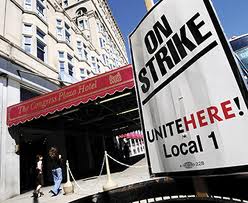
The Texas-based company said in a statement on its website that it will try to sell its assets, including the iconic Twinkie, Ding Dong and Wonder Bread brands. Bakery operations have been suspended at all 36 plants, including one in Rocky Mount, following a week-long strike by thousands of workers protesting 8 percent wage cuts and benefit concessions.

In its statement, Hostess said the strike “crippled the company’s ability to produce and deliver products at multiple facilities.”

Already-baked products will continue to be delivered, and the company said its retail stores will remain open for a few days to sell off remaining stock.

“We deeply regret the necessity of today’s decision, but we do not have the financial resources to weather an extended nationwide strike,” Chief Executive Gregory Rayburn said. “Hostess Brands will move promptly to lay off most of its 18,500-member workforce and focus on selling its assets to the highest bidders.”

In essence, the union was negotiating either an 8% wage cut or a 100% wage cut.  The union decided that they wanted the 100% version.

However, unlike in other cases where the economic realities are hidden and not immediately obvious to the employees, the workers at the plant here in Rocky Mount North Carolina are keenly aware of the decision they are making:

The company has about 18,300 employees, including about 275 in Rocky Mount.

“We’re not in the dark. We know exactly what’s going to happen,” Hoffman said, “They’re going to shut the plant. They’re going to shut down all the (plants in the) United States.”

I have to hand it to the workers here in Rocky Mount.  North Carolina is a “right to work” state where workers can’t be forced to join a union.  Further, these workers were not yet affected by the contractual mess, they were simply honoring the picket lines of those workers elsewhere.   However, the actions of these employees acting on behalf of their unions have caused the corporation to go bankrupt.  The business will be sold off and these workers have lost their job in an economy that has continued to sputter along.

18,000+ employees out of work due to the union.

Amazing.

A note concerning Twinkies and GM.  I’ll bet you a candy bar that Hostess will sell everything.  The machines, the the trucks, the buildings and THE NAMES.  Someone will come along and buy the name “Hostess” and the name of every product they make.  And they begin to produce these products but in a manner that is more able to offer a return on investment.

The same thing would have happened to GM.

Obama’s Reelection : Rational Reaction

Elections have consequences:

After yesterday’s carnage in the stock market, strategists warned bouncing back wouldn’t be easy. Sure enough, today’s slide is starting to pick up some steam in early afternoon trading.

The Dow recently fell 93 points, or 0.7%, to 12840, which comes one day after the blue-chip index tumbled 312 points — the worst drop of the year — following President Obama’s reelection. Cisco Systems  which reported its first monthly sales drop in nine years — and Home Depot are leading the declines, as lingering worries over the looming fiscal cliff are outweighing better-than-expected labor-market and export data.

The S&P 500 is down 0.9% to 1382 (so much for holding that psychologically important 1400 level). The tech-heavy Nasdaq Comp is off 0.8% at 2913 Apple Inc. shares are down nearly 3%, and have now fallen 22% in less than two months.

“The negative equity trade is building steam,” warns Andrew Brenner, global head of international fixed income at National Alliance. “Bonds are gaining traction as the world is becoming more negative on both Europe and the U.S.”

No one thinks that Obama is going to do a good job.