Sometimes I get worried or concerned over the state of our voters. The knowledge, or lack of it, among our citizenry is stunning.
But then you get teh krazy from the people who craft legislation:
What do you say to that?

Sometimes I get worried or concerned over the state of our voters. The knowledge, or lack of it, among our citizenry is stunning.
But then you get teh krazy from the people who craft legislation:
What do you say to that?
I think the government has a role to play in educating our kids. And the reason I think this is because children ate not free actors in all of their decisions. For example, if left to their own devices, many parents would just skate on school and may never force their kids to go.
I think that kids need to be protected from that.
With that said, I don’t think that government actually has to BE the educators. It is enough that they ensure an education is given:
Raleigh, N.C. — Rep. Paul Stam, R-Wake, on Monday filed a bill that would help families pay for private school tuition.
Stam calls the proposal the “Opportunity Scholarship program,” but opponents say it’s a voucher scheme that won’t help students who need it most.
“Parents can do a better job of picking the best educational environment for their child than the state can,” Stam said. “This empowers parents of limited means to make that choice effectively.”
I’m not sure that state education is better than private education. In fact, my experience is that the private school is better. As long as the government is ensuring that a kid is educated, why should it matter where that education takes place? And to the extent that it DOES matter, why not send the kid to the better school?
I think that requiring law abiding citizens to submit to a background check is a solution looking for a problem. Many people feel that requiring voters to show photo ID is the same thing. They claim that voter fraud, actual “at the poll voter fraud” is rare, very rare.
They may have a point.
However, I think that there is a parallel. We require people to register to vote, to vote only one time, to be 18. To live in the precinct they are voting in. It’s reasonable to ask for proof of ID. Reasonable in the same way that asking people to submit to a background check is reasonable.
Even if neither is really very effective at targeting abuse.
Tonight I posted an idea that WOULD reduce gun crimes:
I’m just saying that maybe before we get all worked up about checking the backgrounds of people willing to submit to background checks, we should admit who commits crimes with guns and work to remove the guns from them.
In the same vein, I think it’s important to admit that vote fraud may not be taking place at the polling station, but it IS taking place in other places:
A jury in South Bend, Indiana has found that fraud put President Obama and Hillary Clinton on the presidential primary ballot in Indiana in the 2008 election. Two Democratic political operatives were convicted Thursday night in the illegal scheme after only three hours of deliberations. They were found guilty on all counts.
Former longtime St. Joseph County Democratic party Chairman Butch Morgan Jr. was found guilty of felony conspiracy counts to commit petition fraud and forgery, and former county Board of Elections worker Dustin Blythe was found guilty of felony forgery counts and falsely making a petition, after being accused of faking petitions that enabled Obama, then an Illinois Senator, to get on the presidential primary ballot for his first run for the White House.
Fraud occurs all over the place. We should go get it where it occurs.
I remember my first post:
A democrat governor and a discussion on the minimum wage.
This is 2,000. I’ve been at it for more than four years now.
Back when this was hosted at wordpress, my traffic was stronger. I slipped heavily when I moved to a self-hosted blog and, in hind site, might not do that again. However, the increased flexibility, should I need it, makes it more attractive should the need ever arise.
I started this site after my other attempt fizzled. It was a great time as a friend of mine still living in Seattle were able to connect across a continent. Time got too valuable and we couldn’t keep up, but we certainly talked, electronically and literally, much much more than we did in the years prior and following.
Through it all I learned a ton. I’ve learned that I’m not a republican, I am more conservative than liberal. I like individual freedom eve if it means that people are free to make bad and wrong decisions. Icky messy decisions.
I’ve learned that meeting people online is rewarding. That being an ass online is a lot like being an ass in real life. It impacts people. I’ve learned to read more, to question more and to keep my mind more open.
I’ve thought about stopping for awhile now. Traffic isn’t growing like I would like and sometimes it feels the same arguments are rehashed time and time again.
But I like this.
So maybe it’s just time to refresh the site, try different strategies and just work harder.
So, here’s to 2,000 more!

An interesting chart from The Economist:
THE Easterlin paradox, named for economist Richard Easterlin, reckons that higher incomes do not necessarily make people happier. Since Mr Easterlin first made his conjecture in 1974, economists’ views have evolved: money matters, studies suggest, but only up to a point. Become rich enough, and a bigger paycheque no longer leads to more happiness. Yet a new NBER working paper by economists Betsey Stevenson and Justin Wolfers, both of the University of Michigan, casts doubt on this chestnut. They use a trove of data generated by Gallup, a polling firm, from its World Poll. Gallup asked respondents around the world to imagine a “satisfaction ladder” in which the top step represents a respondent’s best possible life. Those being polled are then asked where on the ladder they stand (from zero to a maximum of 10), and how much they earn. Though some countries seem happier than others, people everywhere report more satisfaction as they grow richer. Even more striking, the relationship between income and happiness hardly changes as incomes rise. Moving from rich to richer seems to raise happiness just as much as moving from poor to less poor. One never really grows tired of earning more.
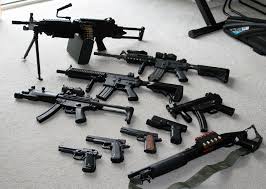
In Minnesota DUI offenders can be mandated to carry what are referred to as “Whiskey Plates” on their cars. These license plates begin with letters reserved in Minnesota for just such a reason; W, X and Z. The idea is that any on duty officer, for any reason that should move him under the canopy of heaven, can pull over the driver of the car and subject him to a breathalyzer.
Perhaps we need to profile gun criminals. For example, a quick look at anecdotal evidence from a single bust in North Carolina:
The police department worked in concert with the Federal Bureau of Alcohol, Tobacco and Firearms to identify the men, all known felons. The men and their charges are as follows:
Lorenza Dickens, 28, of Rocky Mount;
possession of a stolen firearm, aid and abettingTron Davis, 31, of Rocky Mount;
possession of a firearm by a felon; possession with intent to distribute a controlled substance; possession of a firearm during a drug trafficking crimeJames Taylor Jr., 30, of Rocky Mount;
possession of a firearm by a felon; dealing firearms without a licenseMorgan Terrell, 25, of Rocky Mount;
receive/possess a sawed-off shotgun; possession of stolen firearmHenry Purvis, 59, Rocky Mount;
possession of a firearm by felonJohnny Darden, 51 of Pinetops;
possession of a firearm by a felonBenjamin Mcpherson, 30, Rocky Mount;
dealing firearms without a license; receive/ship/transport of a firearm with an obliterated serial number; possession with intent to distribute a controlled substance; receive/possess a sawed-off shotgun; possession of a stolen firearm; conspiracy to commit an offense against the U.S. governmentAndrick Johnson, 35, of Rocky Mount;
Dealing firearms without a license; possession of a firearm by a felonWilliam Cherry, 24, of Rocky Mount;
possession of a firearm by a felon; possession of a sawed-off shotgunMark Bishop, 37, of Rocky Mount;
possession of a firearm by a felon; possession of a stolen firearmDonald Harrison, 47, of Rocky Mount;
arson/attempted arsonDarryel Hill, 23, of Rocky Mount;
possession of a firearm by a felonWendell Lloyd, 29, of Rocky Mount;
possession of a firearm by a felon; possession of firearm during a drug trafficking crime; possession with intent to distribute a controlled substance; maintaining a place for a controlled substance; receive/ship/transport of a firearm with an obliterated serial numberJamie Bryant, 35, of Rocky Mount;
possession of a firearm by a felonJimmy Hunter, 36, of Rocky Mount
possession a firearm by a felonOzay Richardson, 41, of Rocky Mount
possession of a firearm by a felon; possession of a firearm during a drug trafficking crime; possession with intent to distribute a controlled substanceJames Woodley, 28, of Rocky Mount
possession of a firearm by a felon
I’m just saying that maybe before we get all worked up about checking the backgrounds of people willing to submit to background checks, we should admit who commits crimes with guns and work to remove the guns from them.
This is going to go over like a ton of bricks:
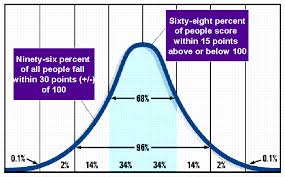
One of the authors of a Heritage Foundation report that panned a Senate plan to overhaul the nation’s immigration laws argued in his doctoral dissertation that immigrants generally have lower IQs than the “native white population” of the United States.
Jason Richwine, who received his doctorate in public policy from Harvard in 2009 and joined the conservative Heritage Foundation in 2012, wrote in his dissertation titled “IQ and Immigration Policy” that immigrants in the U.S. have lower IQs than native Americans, and that that difference “is likely to persist over several generations.”
“The consequences are a lack of socioeconomic assimilation among low-IQ immigrant groups, more underclass behavior, less social trust, and an increase in the proportion of unskilled workers in the American labor market,” Richwine wrote, in a story first reported by The Washington Post. “Selecting high-IQ immigrants would ameliorate these problems in the U.S., while at the same time benefiting smart potential immigrants who lack educational access in their home countries.”
I’ll drift over to our more liberal media sources later to see if this is making waves.
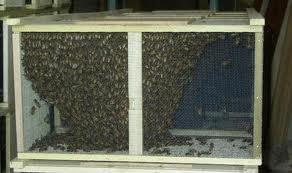
I picked up my package of honey bees the other day. This is one of two methods that a new hive is started if you are beginning from scratch. This method has three pounds of bees with a queen been in her own little queen box. The idea is that the new beekeeper has the hive ready and waiting, removes the queen box, a matchbox sized container that keeps the queen separate from her swarm, and installs the little box in the waiting hive.
Because the queen is trapped in her little cage, it takes a day or two for the swarm to set her free. This trick is performed by eating through the sugar candy that plugs the escape hole.
So, once the queen box is placed in the hive, the whole rest of the package is also set in the hive and let to sit. The bees will leave that box and swarm to protect the queen and, indeed, as I mentioned, work to set her free.
This is where I’m at now and am just waiting for the bees to work and set her free.
So, while I wait I read:
The winter of 2012-13 was another rough one for honeybees, threatening an industry that is integral to a large part of fruit and vegetable production in the U.S. said the number of honeybee colonies declined 31% last winter, by about 800,000 colonies, the latest reported toll of the mass die-offs with multiple causes that have been plaguing the U.S. for several years.
The impact of the premature deaths is significant for the honeybee industry and the broader agriculture industry. Beekeepers can generally bring populations back up during the warmer months, but while they do so, honey production can suffer. Also, the largest single driver of demand for bee colonies is California’s almond crop, which requires bees for pollination and blooms toward the end of the winter when bee populations are at their nadir.
Overall, more than $20 billion of annual harvests rely on pollination, according to U.S. estimates, with the almond harvest alone valued at $4 billion a year.
A 31% failure seems high to me but reports are that it’s been the normal loss since 2006.
But what’s causing these failures?
The Department of Agriculture and the Environmental Protection Agency said last week that “multiple factors” were behind the population declines, including parasites, disease, poor nutrition and pesticide exposure.
Last month, the European Commission said it would soon restrict the use of three seed-coating pesticides known as neonicotinoids while scientists review concerns about the chemicals’ impact on bee health.
The neonicotinoid pesticides under debate are widely used in the U.S., including on corn in the Midwestern states where many beekeepers keep their hives during the summer. The pesticides are considered less harmful to the environment than other insect killers because they are often applied to the seed and contained within the plant, rather than sprayed onto fields.
U.S. officials said they didn’t have enough evidence to ban neonicotinoids and warned that other pesticides could be more harmful to the environment.
From what I’ve been able to read and understand, the beekeeper goes to the bee yard to check on the hives and finds that some of those hives have simply “failed”. It’s a here today gone tomorrow kinda scenario. In fact, there isn’t any evidence of dead bees; they’ve simply abandoned their hive and left the queen to die.
While I tend to believe that the chemicals we use on our crops has an impact on the bees, my intuition tells me that we would see dead bees. Further, hives wouldn’t simply thrive and then fail, they would struggle, shrink and perhaps stop producing. With a average lifespan of only 6 weeks, the bees would be impacted by “poison” somewhere along the way, but it would seem to hit bees at a certain point in the lifecycle.
That is, exposure to these pesticides would begin to kill of bees at week, say 3.5. But the younger bees wouldn’t yet be affected.
And the pattern doesn’t hold.
So, what else could it be?
When I went to move the queen box from that package into my hive, I noticed that the queen wasn’t alone; there were about 3-4 other bees in that little cage. I became worried that she had been “infiltrated”, killed, escaped or whatever. So I called a guy and asked him. He assured me that such arrangements are normal and I had nothing to worry about. I asked him about CCD and it’s causes.
He mentioned mites.
This sounds to me like a strong possibility.
The mites attack the bee brood, killing the young yet to be hatched bee and laying eggs in the cell. The first is always a female with the remaining 3-4 being males. They then move on to the next cell and so on.
The bees are not able to kill the mites and really try just to build comb around them and keep them separated from the rest of the hive. My guess….when the hive becomes too infested with the mites, the hive swarms and leaves the nest to find a new home. No dead bees, no hive failure, just a natural method of out with the old and in with the new.
As I build experience with my new pets, I’ll investigate and try to develop a strategy for those pesky mites. A strategy that doesn’t destroy my crop of honey along the way!
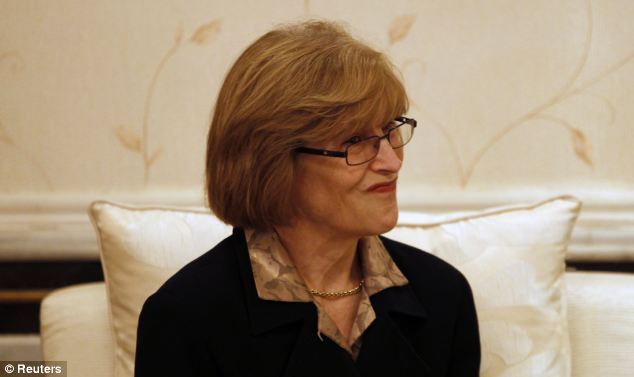
After watching a good portion of the hearings this afternoon I was struck by three facts:
Let’s focus on the first; the knowledge within the administration that this was a terrorist act carried out by an organized enemy.
A top State Department appointee told Libya’s ambassador to the United States one day after the military-style assault on the U.S. Consulate in Benghazi that the terror group Ansar al-Shariah was responsible.
But four days later, the U.S. Ambassador to the United Nations said on television that it was the product of a spontaneous protest.
During a fiery and emotional congressional hearing on the 2012 attack on the U.S. Consulate in Benghazi, Rep. Trey Gowdy read aloud from an email dated Sept. 12, 2012 to senior State Department officers, from Elizabeth Jones, the acting Secretary of State for Near Eastern Affairs.
Describing a conversation she had with then-Libyan ambassador Ali Aujali, Jones wrote in the previously undisclosed email that ‘I told him that the group that conducted the attacks, Ansar al-Sharia, is affiliated with Islamic terrorists.’
The next day.
September 12th.
The acting Secretary of State for Near Eastern Affairs told the Libyan Ambassador to the United States that the group that conducted these attacks was affiliated with Islamic terrorists.
What this means is that every single word that Obama, Clinton and the rest of the administration regarding the YouTube video, not to mention the arrest of the man who posted it, was flat out untrue.
This wasn’t a fog of war type situation. There was no careful couching of words due to a potential lack of clarity. This wasn’t a “all indications seem to validate the strong likelihood of an element of organization, possibly linked to known terrorists, again possibly Islamic in nature…yada yada yada”.
No. This was a clear and sure statement from a ranking American diplomat to the Libyan Ambassador to the US that, in fact, we know what this was and here it is.
But who saw this email?
Her email, Gowdy said, went to ‘almost everyone in the State Department,’ including spokeswoman Victoria Nuland.
They all knew. And then:
Nuland, according to a report in The Weekly Standard, was instrumental in raising red flags about the CIA’s candid assessment of how and why the consulate was attacked, which the agency prepared as talking points for members of Congress.
And according to a report from House Republicans released in April, Nuland wrote in an email that ‘my building leadership’ at the State Department wasn’t happy with those talking points.
In the ensuing 24 hours, the talking points were edited heavily, reportedly by White House deputies, and all references to Islamic terrorism were removed.
Jones is clean I suspect. Nuland? She’s complicit. She saw the email and took demonstrable actions. Further, she implicates “my building leadership” in her response.
After the hearings today, there is no longer any doubt that the administration knew these attacks were not the result of a spontaneous protest. It is very clear that full knowledge of the actors in Benghazi were known and little, if any doubt, existed.
What remains is the “So? What?” aspect of this story. So the administration knew. So the administration sent Susan Rice on 5 Sunday morning talk shows claiming the events were the result of a YouTube video. So Obama mentioned the video for days and for days after the events of September 11, 2012.
So. What.
Indeed. That’s the question.
Posted in Politics: National
Tagged Barack Obama, Benghazi, Elizabeth Jones, Hillary Clinton, Victoria Nuland
I mentioned this earlier today:
On CBS, #Benghazi is the most popular story, but it’s not one of the 25+ front page stories: cbsnews.com #MSM
— AG (@AG_Conservative) May 8, 2013
Pathetic.