Category Archives: Economics

Wherein Pino Is Fine With A Worker’s Strike

Strike

I’m harsh on labor unions.  In today’s world – and for much of the time I’ve been alive, labor unions have been the scourge of life.  Nothing but sucking the productive forces of our economy and lining their pockets off the backs of the workers.

Actions truly worth protest march.

Anyway, today there is a semi-nationwide strike:

Workers at the nation’s best known fast-food restaurants in seven cities across America are planning to walk off the job Monday to protest what they say are wages that are too low to live on. In a move orchestrated with the help of powerful labor unions and clergy groups, the workers plan to strike for a day to demand their wages be doubled.

The Washington Post reports that the protests will take place in New York City, Chicago, Detroit, Milwaukee, St. Louis, Kansas City, and Flint, Mich., involving workers at McDonald’s, Burger King, Wendy’s and KFC. Some employees at stores including Dollar Tree, Macy’s and Victoria’s Secret are also expected to join the protesters in several cities.

The workers are calling for wages of $15 per hour, more than double New York’s current minimum wage of $7.25.

As far as I can tell, these workers are not represented and actually could be fired if their employer so desired.

THAT is the type of labor protest that I can respect!

I remember, years ago, working in a catering gig when the boss, a reasonable man, offered me a promotion running a cafeteria at a local community college.  WAY more responsibility and work, staff and everything.  When I asked what my raise would be he said, “There wouldn’t be a raise, just the opportunity.”

Knowing that my field of choice was not going to be in the food industry I declined claiming that the money didn’t justify the effort.  He mentioned that he could just change my assignment and force me to report to my new job Monday.  I told him that he could, but that he wouldn’t want to have to train me and then my replacement in a matter of 6 weeks.

So I GET the fact that people don’t wanna work for less money than they feel they ought to.  And I think that they SHOULD walk out if they feel strongly enough.

Good for these guys and gals.

What I oppose is the racket that is the union basically legislating rules that tip the balance in their favor.

However, the grievances these guys make are less than compelling:

“A lot of the workers are living in poverty, you know, not being able to afford to put food on the table or take the train to work,” Fast Food Forward director Jonathan Westin told CBS New York. “The workers are striking over the fact that they can’t continue to maintain their families on the wages they’re being paid in the fast-food industry.”

Simple fact – these jobs are not meant to support families.

Robert Wilson, Jr., a 25-year-old McDonald’s employee in Chicago, told The Washington Post that he makes $8.60 an hour after seven years on the job. A previous walkout in April led to “small victories,” he said, including additional hours and slight raises.

Simple fact – These jobs are not meant to be stayed at for 7 years.

The truth is that these jobs are meant to be entry level low paid gigs that, in addition to paying money for baseball cards and skateboards, teach young people work ethic, job skills and interpersonal skills.

These jobs are MEANT to be worked for a year or 3 while in school and then left for greener pastures.  These employees are being underpaid, they are overstaying.

Detroit – How Did We Get Here

Detroit

De’troilet is and has been a mess for decades now.  A prime example of what happens when a democrat party controlled by unions (sorry to repeat myself ) has control of a city.

An insightful story in what residents of De’troilet have to look forward to:

In a small mill town in New England, dozens of retired policemen and firefighters are feeling the pain of what they see as a broken promise, offering a glimpse into what could happen to thousands of public workers in Detroit facing massive reductions in pension payouts after the city’s declaration of bankruptcy.

Donald Cardin became a firefighter at age 20 in Central Falls, R.I., a town just north of Providence that filed for bankruptcy in 2011. He was making $60,000 a year as a fire chief before retiring at age 42 in 2007 to take care of his wife Lana, diagnosed with thymic carcinoma, a rare cancer with extremely low survival rates.

The couple relied on Cardin’s health insurance, which required no copay, to cover Lana’s $8,000-a-month treatment. Cardin worked a part-time contracting job to make up the difference between his $34,000-a-year pension and his former salary.

But that all changed in 2011 when Cardin, and his fellow firefighters and policemen, were called to a meeting at the local high school, where state-appointed receiver Robert Flanders warned them that the city would not have enough money to survive if pensions were not cut. Weeks later the city would file for bankruptcy.

Bruce Ogni, 53, president of the Central Falls Police Retirees Association, won’t forget that day, either.

“All of a sudden they dropped this on us. There was no real negotiation. Flanders came in and said the city is in big trouble, we need half your pension and your medical,” he said.

With a wife and twin boys to care for, Ogni lost $1,200 a month and had to pay additional fees incurred by his wife’s health insurance. Eight months ago, Ogni’s wife was diagnosed with breast cancer, adding more medical bills to the family’s worries.

Ex-fireman Laurie and his wife, Kathleen, live off disability from social security (which he receives from previously working part-time jobs in addition to his service as a fireman) and a $19,000-a-year pension — down from $39,000 before the cuts.

The Lauries makes just enough money not to qualify for public assistance, but the $2,700 the family brings in each month barely covers their $2,300 in monthly bills.

Each of these individual stories is heartbreaking, to be sure.  Life threatening cancer to disability to expecting twins.  All of which is enough to occupy a man, but then the additional pressures of having your world turned upside down.

But there are some striking observations:

  1. What reasonable world do we live in that allows a man to retire at 42 with $34,000 in pension AND full health benefits?
  2. Every single one of the subjects is a tragedy.  Cancer, disability and expecting wife with twins.
  3. A 53 year old President of the Retired Police Association?

Personally, I think that contracts between companies and their pensioners should be upheld – the folks no longer have a position from which to bargain.  If my company changes my compensation, I can leave or stay.  However, with that said, these unions have absolutely been acting in bad faith and without moral concern for the parties involved.

They elect their cronies to office in order to negotiate with themselves.  The deals they strike are so ridiculous as to fail to pass a red face test.  And then, when the parasite finally kills the host leaving nothing but a dead husk – they act so SO surprised and innocent.

As if.

The Republican Conundrum On Social Security – California

Savings Account

As the debate raged over Obamacare, I warned that republicans were painting themselves into a corner.  It has been correctly pointed out that the idea of the individual mandate was an idea first introduced by the right.  After all, by requiring everyone to purchase health insurance, the costs would be spread more equitably – those more likely to require care would pay more, those less so would be less.

While that debate was raging, republicans were pushing the idea of reforming Social Security.  The goal was to institute personal retirement accounts.  In other words, the government would still take 6% of your money, probably 6% of your employers money, and give you the option of investing it as you so desired.

Forced savings.

I didn’t see the difference between forcing someone to purchase health insurance and forcing them to  purchase savings accounts.

To be sure, both are good ideas – VERY good ideas.  But having the government force it on us?  No bueno.

Now see this:

California lawmakers are pushing a controversial, first-in-the-nation plan that would require private-sector employers to remove 3 percent from every worker’s paycheck. The money would go into a new state fund with a guarantee that all withheld funds plus investment gains will be available for distribution at retirement age.

The idea behind the Secure Choice Retirement Savings Program, which got preliminary approval, is for it to be a state-run supplement to Social Security, but only for people who don’t have traditional workplace retirement plans. For an estimated 6 million working Californians, the benefit of a pension or 401(k) is out of reach — so state lawmakers are trying to implement the new mandatory retirement fund for private sector workers.

Boom.

Now, to be fair, there is NO WAY that California doesn’t spend the money before the benefits come due causing a dramatic budget deficit.  Beyond that, however, there is little difference between this plan and the one republicans called for in social security reform.

Maybe the good news is that by being continually to the right of the crazy, the crazy will feel the need to move right.

Wages In America – The Gender Gap

Gender Pay Gap

As reported earlier, there is a gender wage gap:

On this day 50 years ago, President John F. Kennedy signed the in an effort to abolish wage discrimination based on gender. Half a century later, the Obama administration is pushing Congress to pass the Paycheck Fairness Act, designed to make wage differences more transparent.

After 50 years, it turns out that laws can’t change things like facts.  And economics; at least that science that describes incentives and pay-offs.

Though we are getting closer:

Some dispute the frequently cited figure that women are paid 77 cents for every dollar a man earns. But even those who argue the gap is narrower agree it’s most prominent when a woman enters her childbearing years.

In 2010, an analytics firm called Reach Advisors crunched Census Bureau numbers and found something surprising: The median salary of single, childless women under the age of 30 was 8 percent higher than their male counterparts. That’s largely because more women are going to college than men.

What made that number noteworthy is that it’s the only group of women who have a pay advantage. In fact, different numbers from Reach Advisors show that that early advantage vaporizes later in women’s lives — especially if they have children.

“Studies have shown for over a decade that what is really killing women economically is motherhood,” says Joan Williams, professor at the University of California Hastings College of Law. She popularized the term “maternal wall,” referring to discrimination against hiring or promoting mothers based on the assumption she will be less committed to her job.

All valid, of course.  When a priority ranks higher than a job, it stands to reason that the job will suffer.  This is not surprising.  However, it would appear that even this isn’t enough to satisfy some:

A study out of Indiana University found that “overworking,” or working hours above and beyond the standard 40-hour full-time work week, contributes to the persistence of gender segregation in occupations, with the main result being that woman are frequently pushed out of male-dominated careers.

Study author Youngjoo Cha, a sociologist at Indiana University, noted that the proportion of employees who work long hours (and are pressured to do so more frequently) has continued to rise over the past 50 years, and further, that overworking is generally praised and rewarded in the workplace. However, because women are still expected to carry the brunt of housework and child rearing, men’s and women’s ability to meet these expectations must necessarily differ.

Hard work pays.

Women want to raise families.

Men suck.


Eating Like A College Student – Update

Food Stamps

I have recently posted on the democrat’s challenge to eat on the average weekly amount of benefits under SNAP – $31.50 – and of the republican’s attempt to meet that challenge.

Nickgb posted over at PYM of his attempt to replicate that attempt here and here.

Then I gave it a college try here.  And I hit it:

For $31.50, I have eaten for a week AND included veggies and fruits.  Plus I have a small beginning for next week to help me out even further.

But I wanted to see if North Carolina was “average”.

I went here to find out:

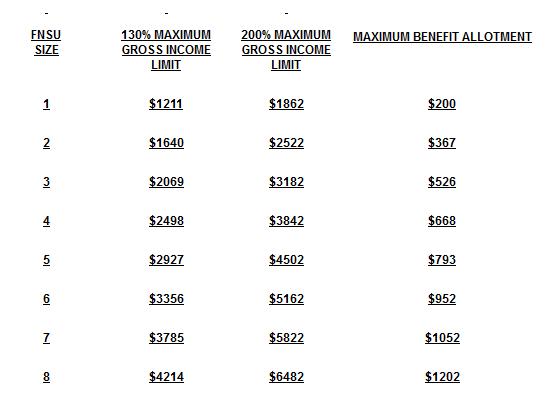
North Carolina Benefits

We much more generous than the average as described by the democrats.In fact, an individual can earn up to $14,532 and still qualify for $200 a month.  To be sure, 14k a year isn’t much money at all; rent surely would take most of it.  But, 50 bucks is a bunch more than $31.50.  If I had an extra 20 to spend in my challenge I could almost certainly afford a twelve pack.

Where it gets really interesting, however, is at the 2 household range.  There a person can earn $19,680 a year and still qualify for $367.00 a month.  In fact, if approved, an individual could earn $30,000 and qualify for that amount.

And if that individual is the mother of a young child?

WIC

  • 128 oz of juice per month
  • 4 gallons of milk per month
  • 36 oz of cereal per month
  • A dozen eggs
  • 2 lbs of bread
  • 18 oz of peanut butter

Again, not the life of luxury and excess.  But I’m not sure that most people would  support the idea of providing such aid to someone making 20-30k a year if they were asked.

New York Yankees And Free Market

Yankees

This past Father’s Day I was in Minnesota where I took my 7 year old son to his first major league baseball game.  The Twins got beat by the Tigers but seriously, we could have been “10 run ruled” and I wouldn’t have cared.

It was a magic moment for me – a time in my heart that I’ll be able to revisit for the rest of my days.

However, my son is a Yankee fan – I HATE the Yankees- and it’s been HIS dream to see the Yankees.  Well, now that “the first game” is over, I relented and took him to Yankee Stadium this past Saturday.

Pettitte won, “Enter Sandman” played and Mariano saved.

Of all of it, I have to admit, “Enter Sandman” was moving.  Perhaps the greatest reliever in baseball was coming to go to work.  Pretty cool.

However, the story is about before the game.

Because the Yankees price their fan base out of the stadium, they never sell out.  And because I didn’t know where I wanted to sit, I bought tickets at the game.

We were in the ticket queue when a middle aged guy in his late 50’s approached us and asked if we were going to the game.  When I told him that, indeed, we were, he asked if we wanted to buy two of his 4 season tickets; he and his son were going and they had two extra.  “$125 tickets for $50 each.”

Sold.

We left the queue and stood in line at the gate.  We chatted.  His wife went to Duke – my son was wearing his Duke blues- and he and his family now lived here in New York.  The day was looking to be wonderful – nice guy, great weather and a Yankee game.

While standing there I reached into my wallet and gave him his hundred bucks.  Within 5 seconds we were surrounded by 3 NTPD officers.

The guy, shocked and stunned, tried to make the case that he didn’t “scalp” the tickets, we bought them for less than half value.  The officer became irritated and reversed the sale, taking the tickets out of my son’s hand and forcing the gentleman to give me back my money.  He further insulted him by making me count it not once, not twice, but three times “directly in front of me”.

I was free to go but the man was to be removed from Yankee stadium, arrested and fined.

God I hate the New York and the Yankees!

Gender Pay Gap- 2013

Gender Pay Gap

The news from a few weeks ago remarked on the 50th anniversary of the Equal Pay Act.  Predictably, much of the reporting focused on the fact that women only earn 77 cents for every dollar that a man earns:

Unfortunately, five decades later, women still earn an average of 77 cents for every dollar earned by a man. For African-American and Hispanic women it’s even lower: 64 and 54 cents, respectively.

And just as predictably, democrats rushed to submit new legislation:

The disparity led Sen.r Kirsten Gillibrand, D-N.Y., to co-sponsor an update to the law, called the Paycheck Fairness Act, along with a number of other female senators.

“We believe this is an economic issue. It’s not only about women but the middle class, and if you’re not paying a woman dollar for dollar for the exact same work you’re not really tapping the full potential of the economy,” said Gillibrand on “CBS This Morning.” “And why wouldn’t you tap the full potential of 52 percent of the resources of the women of this country? “If you paid women for dollar for dollar, you could raise the GDP by up to 9 percent.”

But is it true?  Are women really paid 77% of a man’s salary?

Data says no:

Payscale controlled for a variety of factors and found that the pay gap is far narrower among men and women who have similar levels of experience, work in the same fields and locations, have the same skills and certifications and are otherwise workplace clones. Among non-managerial workers, Payscale found no pay gap at all, on an apples-to-apples basis. At more senior levels, women do earn slightly less than men, but the biggest gap was only 8.5% — far lower than the frequently mentioned 23%. And that gap may exist because top male executives put in more hours, travel more and spend more time with clients than their female counterparts, which is hard to measure among salaried employees.

In certain sectors there is no gap.  In other sectors where there is a gap, it can be explained by other factors including the amount of time put in at the office.  Or a requirement that an individual travel.

Other reasons exist:

As other pay experts have pointed out, women tend to earn less overall because they are more likely to work in fields such as health care, education and social work that pay less than male-dominated fields such as vocational trades, engineering and financial services. But women don’t go into the workforce blindly, and they often know the tradeoffs.

“Women consider a lot of factors and not just monetary benefits,” points out Katie Bardaro, lead economist for Payscale. “Many women choose jobs with a certain level of flexibility.”

Women work different jobs than men.  A sure sign that this is true?  Check the workplace mortality figures one day.  Try to explain why men are dying on the job at rates significantly higher than women.

Finally, if you really wanna see a proponent of legislation akin to Ms. Gillibrand squirm, ask them for legislation that would create equality in college.  Women are earning significantly more college degrees.  Not just bachelor degrees, but advanced degrees as well.  Ask them to explain the inequity there.

And listen to their answer.

Unintended Consequences

Unitended Consequences

I understand and resonate with the noble intentions of the left as they enact legislation that is the entitlement culture we find ourselves in.

Who doesn’t wanna help those in need, those who are hungry, homeless and cold.?

The problem is that you cannot change human nature.  And until we as a human race turn a corner, we are going to be faced with the fact that people, in general, look out for their own self interests.  Further, people generally resent having their money spent by someone else.

Which is why we continually see this:

Would you like to have a “skinny” health insurance policy? Probably not. But if you’re employed by a large company, you may get one, thanks to ObamaCare.

That’s the conclusion of Wall Street Journal reporters Christopher Weaver and Anna Wilde Mathews, who report that insurance brokers are pitching and selling “low-benefit” policies across the country.

Wonder what a “skinny” or “low-benefit” insurance plan is? The terms may vary, but the basic idea is that policies would cover preventive care, a limited number of doctor visits and perhaps generic drugs. They wouldn’t cover things such as surgery, hospital stays or prenatal care.

You might ask how ObamaCare could encourage the proliferation of such policies. It was sold as a way to provide more coverage for more people, after all. And people were told they could keep the health insurance they had.

As Weaver and Mathews explain, ObamaCare’s requirement that insurance policies include “essential” benefits such as mental-health services apply only to small businesses with fewer than 50 employees. But larger employers “need only cover preventive service, without a lifetime or annual dollar-value limit, in order to avoid the across-the-workforce penalty.”

Low-benefit plans may cost an employer only $40 to $100 a month per employee. That’s less than the $2,000-per-employee penalty for providing no insurance.

“We wouldn’t have anticipated that there’d be demand for these type of Band-Aid plans in 2014,” the Journal quotes former White House health adviser Robert Kocher. “Our expectation was that employers would offer high-quality insurance.”

Health Insurance Acting Like Insurance – Not A Prepaid Medical Plan

Health Care

It’s long been a plank that we need healthcare reform due in part to the number of medical related bankruptcies:

A study released Thursday [pdf] by the American Journal of Medicine finds a huge increase—nearly 20 percent—in medical bankruptcies between 2001 and 2007. Sixty-two percent of all bankruptcies filed in 2007 were tied to medical expenses. Three-quarters of those who filed for bankruptcies in 2007 had health insurance.

I’ve often wondered about those numbers but haven’t taken the time to dig further into ’em.  For example, if I break my leg, incur $7,000 in medical debt but can’t work, did I really declare for protection because of the 7k or because of all the other bills mounting up as a result of no income?

Be that as it may, I was reading an NPR article when I came across these numbers:

According to an analysis by eHealthInsurance.com of one large insurer’s 2012 claims, just under 11 percent of people with a $2,500 deductible met the deductible for that year. For those with a $5,000 deductible plan, the figure dropped to just under 4 percent. Only 3 percent of people with a $7,500 deductible had that much in claims, and at the $10,000 deductible level the figure was just over 2 percent.

Just 11% of people with a deductible of $2,500 hit that amount.  That means that the remaining 89% of the folks who had such a policy didn’t have bills more than $2,500.  At least qualified bills that high.

The story is the same for the plans that have $5,000, $7,500 and $10,000 caps.

In any event, I was struck by the fact that it seems deductibles are doing their jobs.  Individuals are covering themselves for what might be described as normal day to day bumps and bangs.  Only when significant illness or injury strikes does the plan step in.

Just like insurance should.

Youth Unemployment – Unfinished Story

The Atlantic

The Atlantic had me at hello, but lost me at, “wanna dance”:

Europe’s unemployment inequality is simply astonishing. Germany’s jobless rate for young people is 8.2 percent. In Greece, it’s 54.2 percent.

Elevated and lasting unemployment is an awful thing, anywhere, and for anyone. But it is awful in a special way for young people, cutting them off from networks and starting salaries at the moment they need to forge connections and begin to cobble together a career.

A truly honest take on the impact of youth unemployment.  The first rung of the employment ladder doesn’t contain money so much as “stuff”.  Things like speaking to customers, showing up on time, meeting other people in your field and developing a work ethic that is rewarded by promotion.

Money is nice, but at age 16, 17 and 18 is largely unimportant; parents and all.

Yet we never remember this as we craft legislation, minimum wage laws anyone, that punish our youth mercilessly.  In fact, if you wanted to purposely handicap a nation, enforcing a minimum wage law that results in youth unemployment, would be near the top of the list.

But The Atlantic never goes any further than reporting on the symptom, never mentioning the cause.

So close.