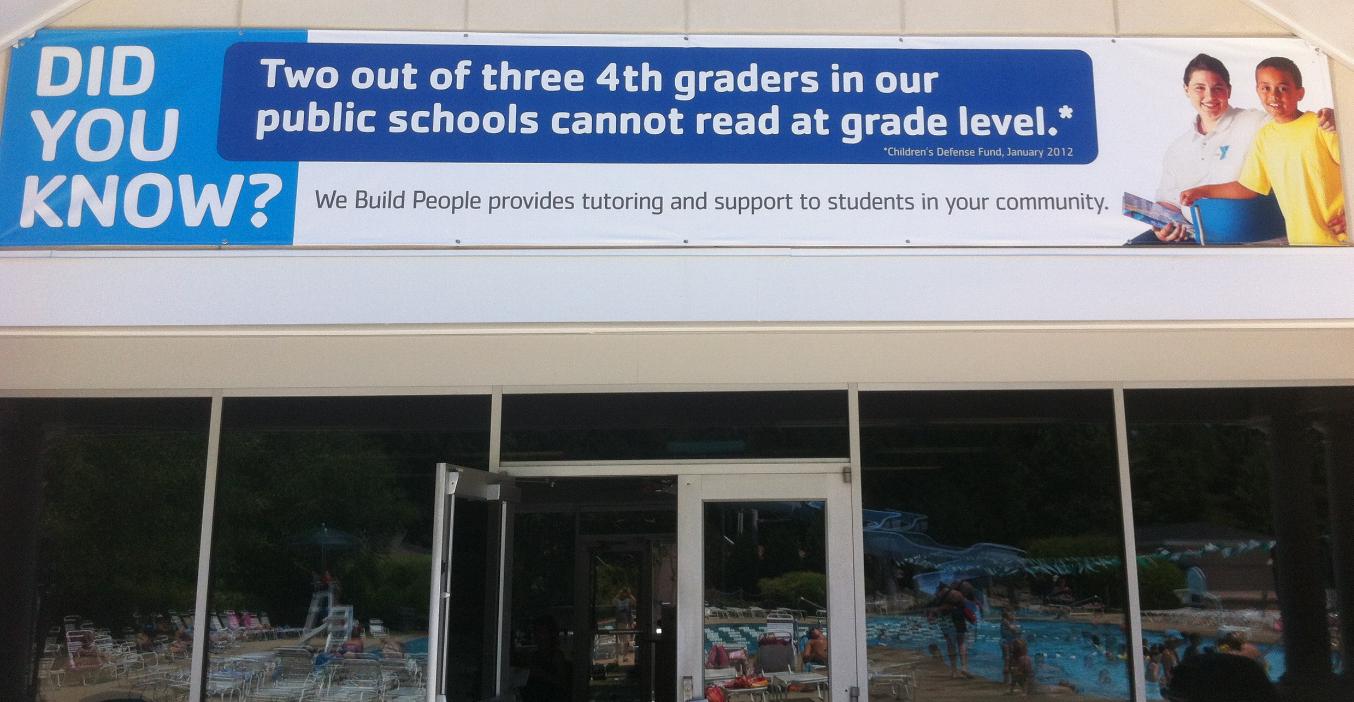
Saw this at the Y a couple of weekends past. I went to the Children’s Defense Fund and found this:
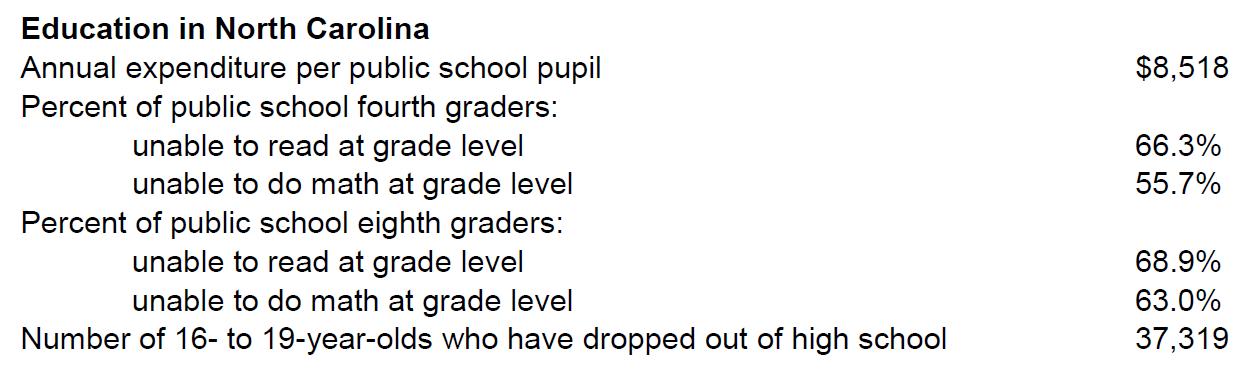 I’m gonna have to do something about that. Maybe if I put it into print I’ll actually get off my ass.
Saw this at the Y a couple of weekends past. I went to the Children’s Defense Fund and found this:
I’m gonna have to do something about that. Maybe if I put it into print I’ll actually get off my ass.
Posted in Education, Politics: North Carolina
Tagged Children's Defense Fund, Illiterate, North Carolina, Tragedy

I’m continuing my series on the chapters of “The Bell Curve”, by Herrnstein and Murray. If you are interested in the posts so far, just go to the category selections on the right sidebar, I’ve grouped them together under The Bell Curve.
So far we’ve taken a look at the impacts that the socioeconomic status of the parents of white women in the NLSY have on various life outcomes. Included in those outcomes so far is poverty, education, Employment and the family. This post deals with welfare and the dependency on welfare.
The first look at the impact of SES has welfare is what the probablity is of a white woman going on welfare within a year of her first birth. The data presented below shows that probability with poverty and marital status taken into account:

As probability of going on welfare moved from the poorest, about 28%, to the wealthiest, about 19%, the trend is down. However, the authors report that the results are not statistically significant.
But another picture arises altogether when we look at chronic welfare recipients:
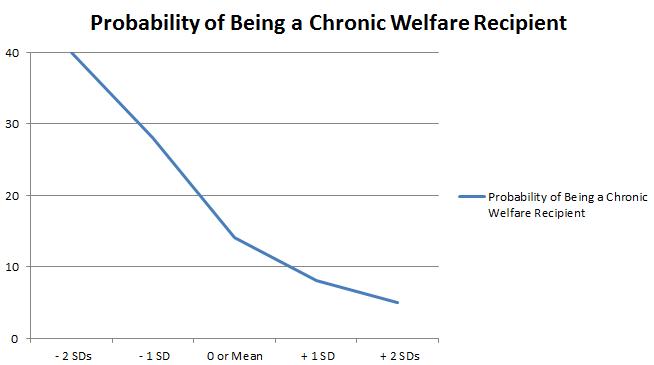
Here the results are dramatic. The probability of a white woman in the NLSy study is greatly influenced by the socioeconomic status of her parents. The authors don’t explain what might cause the change in the mild predictive value of SES in welfare at all vs. the highly predictive value that it plays in chronic welfare dependency. However, they do hint that education plays a role somehow.
On Friday I posted that there may be a reason behind the claim that republicans are obstructing the democrats in the senate. Nickgb called shenanigans:
How about on the GOP members that use a filibuster threat to prevent anything from passing or, if they get to add those amendments, just use it to add pills to everything.
In the past, I’ve been unable to to find data on senate majority leaders use of the practice called “filling the tree.” However, with the use of the term “poison pill” I was able to find this:
Senator Robert Byrd understood the importance of allowing for a full debate and amendment process in order to preserve the Senate as a unique institution in our democracy – “the one place in the whole government where the minority is guaranteed a public airing of its views.” The Senate, he taught, “was intended to be a forum for open and free debate and for the protection of political minorities.” Indeed, “as long as the Senate retains the power to amend and the power of unlimited debate, the liberties of the people will remain secure.”
Allowing the minority to debate and amend legislation has given way to the Democrats’ election-year political strategy of blaming Republicans as obstructionists. Majority Leader Reid has done this by preventing Republicans from amending pending legislation, ending debate before it starts, and by-passing the committee process.
And how does the current majority leader score?
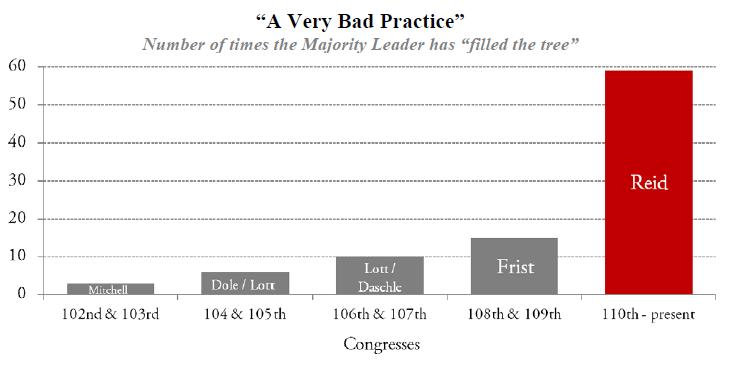 Counting the 102ns through the 109th congress, we have 9 sessions. Combined they haven’t accumulated the instances that Reid has in just more than 2.
And blocking debate?
 Now, to be sure, Frist was leader for only two sessions, Reid just over 2. That would put Frist at 12.5 per session. Reid is at just over 25 if his total doesn’t rise at all in the remaining time of his 3rd session.
Posted in Government, Politics: National
Tagged Congress, Filibuster, Filling The Tree, Harry Reid
Preceding his election to the senate, Rand Paul got himself into some hot water for his take on parts of the Civil Rights legislation. I’m paraphrasing, but what he basically said was that “It shouldn’t be illegal for people to be ignorant.”
Private citizens should be allowed to associate with who ever they choose. While he emphasized that he found discrimination horrible, he claimed that society would deal with them appropriately.
I think that this is a perfect example of what he meant:
BOSTON – The mayor of Boston is vowing to block Chick-fil-A from opening a restaurant in the city after the company’s president spoke out publicly against gay marriage.
Mayor Thomas Menino told the Boston Herald on Thursday that he doesn’t want a business in the city “that discriminates against a population.”
Chick-fil-A President Dan Cathy told the Baptist Press this week that his privately owned company is “guilty as charged” in support of what he called the biblical definition of the family.
The fast-food chicken sandwich chain later said that it strives to “treat every person with honor, dignity and respect — regardless of their belief, race, creed, sexual orientation or gender.”
Atlanta-based Chick-fil-A has more than 1,600 stores nationwide but just two in Massachusetts, both located in suburban malls.
Perfect.
Posted in Environment, Government, Liberty
Tagged Chic-fil-A, Discriminatioon, Gay Marriage, Rand Paul
CEOs are bloodthirsty slave drivers and the corporations they run are soulless contraptions that exploit the masses:
Morrisville, N.C. —Yuan Yuanqing, chairman and chief executive officer of fast-growing Lenovo, has not forgotten his roots nor has he overlooked the efforts of the people who have helped make the company the world’s No. 2 PC maker.
Having started at the bottom in Lenovo’s food chain as a salesman peddling PCs across parts of China from his bicycle and risen to the company’s top position, Yang decided to share a $3 million bonus he received for Lenovo’s increasing success with junior-level employees.
After being paid the bonus last month, Yang decided to present what has been called a “Yuanqing special award” – a check worth on average about $300.

Education:
What to do?
Why, take the courses for free of course:
Durham, N.C. —Duke University is joining what has been labeled the revolution in education – online and free of charge.
Duke, Johns Hopkins University and the California Institute of Technology have joined Stanford and Princeton universities in offering courses through startup Coursera Inc.
A total of 16 schools are now partners with Coursera, the Mountain View, California-based company said Monday in a statement.
Caltech and the University of Pennsylvania are partnering to an even greater degree, investing a combined $3.7 million in the company.
Coursera, founded last year by two Stanford computer science professors, Daphne Koller and Andrew Ng, offers university classes online, with the aim of educating millions of people globally for free. The company, which raised $16 million earlier this year from Kleiner Perkins Caufield & Byers and New Enterprise Associates, will receive an additional combined $2.3 million from the venture capital firms, both of which are based in Menlo Park, California.
Duke, CalTech, Stanford, Princeton. For free.
If you aren’t taking these courses…if you aren’t advocating the attendance of these course among our kids…I’m not saying that you don’t value education, I just think you’re valuing fair access to success and not fair access to opportunity.
Obama’s now famous quote out of Virgina, ” If you’ve got a business — you didn’t build that. Somebody else made that happen. ” is surprising not because he believes that. No, it’s surprising because he actually said it out loud.
Everybody knows that Obama is a big government guy. We all know that he sees the world through the lens of unequal results rather than unequal opportunities. But one has to wonder if Obama himself hasn’t channeled the villains in Atlas Shrugged:
“He didn’t invent iron ore and blast furnaces, did he?”
“Who?”
“Rearden. He didn’t invent smelting and chemistry and air compression. He couldn’t have invented his Metal but for thousands and thousands of other people. His Metal! Why does he think it’s his? Why does he think it’s his invention? Everybody uses the work of everybody else. Nobody ever invents anything.”
She said, puzzled, “But the iron ore and all those other things were there all the time. Why didn’t anybody else make that Metal, but Mr. Rearden did?”
If it were as easy as picking mangos that had dropped from the tree, everyone would be a mango seller.*
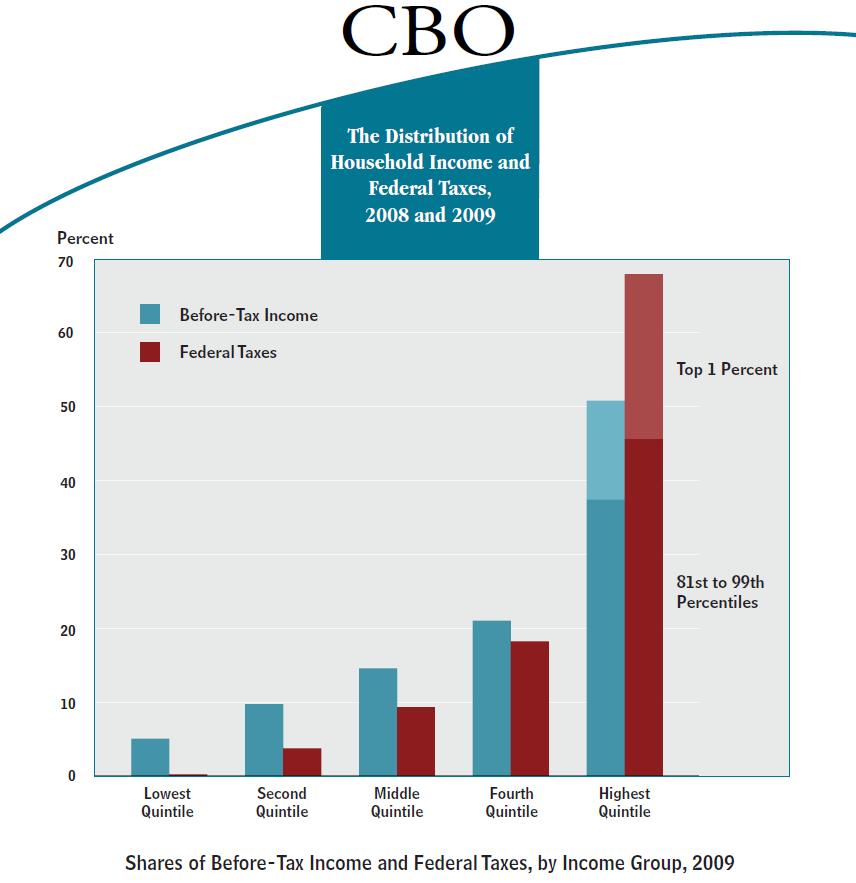
But the context of Obama’s speech wasn’t about government building out infrastructure, it was about the rich paying more taxes; paying their fair share. But what is that fair share? Ask a liberal and you’ll get a look that’s either:
But tell them that the rich already pay their fair share and they’ll start to object. Tell them that they pay MORE than their fair share and you’ll see real denial.
Every single income group earns more share of the income than they pay share of taxes. Everyone, that is, except the wealthy.
Fair indeed.
* My wife’s family is Puerto Rican; I visit often. Every time I visit when the mangos are in season, there are people with bags gathering them from the little rural roads. It’s dangerous enough to drive those narrow winding roads, but with the folks on the roads to boot? Anyway, these people then lug the mangos 1/8 of a mile to the main road and sell them to people driving by. Mangos literally lying in the ditch are picked by some people and sold to to others. This makes me think of liberals every time.
Posted in Liberty, Middle Class, Politics: National
Tagged Barack Obama, Fair Share, Taxes, You Didn't Build That

The nature of health insurance is to protect us against the risk of requiring medical care. If we get hurt or sick, we have the mechanism of insurance to protect us. Depending on our individual circumstances, we purchase different kinds of policies. The very young may choose a simple plan that protects against only the most extreme costs. Those of us who are more likely to require care may purchase a plan that accommodates those contingencies.
But it’s all about managing risk.
After the supreme court upheld Obamacare, we have moved from insurance protecting us from risk to insurance offering prepaid medical care. When an “insurance plan” covers office visits, routine tests and other incidentals, we are nt paying someone to take the risk from us, we’re paying someone to give us medical care.
And what happens when that happens?
Raleigh, N.C. — The University of North Carolina system requires all students to have health insurance coverage, but the cost of a plan the system offers has more than doubled in two years.
The insurance requirement started in 2010, and about one-third of students on the system’s 16 university campuses buy their policy through UNC’s provider, New York-based insurer Chartis. The rest of the students have other coverage, usually through their parents.
The average cost of the Chartis policy started at $695 a year, but it rose to $847 last year. Tuition bills that are now arriving in student mailboxes for the 2012-13 school year include a $1,418 health insurance premium.
Why the rise in prices? Greedy insurance companies?
Bruce Mallette, the UNC system’s vice president for academic and student affairs, blamed the increase on a high number of claims by students on the policy.
“It was a very affordable plan,” Mallette said. “If you look nationally, the pricing we had in the first two years was very, very competitive, and students utilized it and utilized it and utilized it.”
Right.
People demand value. When they’re forced to buy something they don’t want, they’re gonna use it. And by using it they raise the price. The next guy, not wanting to be left behind, uses HIS policy. It’s a spiral.
Consider a table of 10 people having dinner. They agree to just “split the bill 10 ways.” The first guy orders a BLT. The second a steak, the third wants a bowl of chili but senses that he’s paying for the prior two guy’s high priced meal – so he too orders steak. And so on.
Prices are going up folks, not down.
Posted in Economics, Health Care, Politics: National

So many times you hear the right rail against government regulations as being too tight, too restrictive and representing too large a burden. We complain that over regulation leads to less risk taking and can dampen growth and creating of companies, products and jobs.
On the other hand, the left will jump up and point out that we all love clean water, fresh air and safe cars, medicines and food. Without regulation, the saying goes, evil greedy corporations will just do whatever they want in the name of profit.
I suspect that there’s validity in not just one side, but both.
Take, for example, the case of the BP oil spill in the gulf a number of years ago. The government regulates oil rigs and mandates certain safety equipment in order to eliminate or reduce the chance of spills. However, the government isn’t in a place to be experts in oil rig or deep water drilling technology. Further, the government agencies are subject to politics, lobbying efforts and corruption.
We saw that very problem with the agency charged with developing those safety standards.
Next, take California. California requires that every house constructed have a sprinkler system installed. The argument, “certainly homes are safer.” But no one knows by how much and if the cost of building more expensive homes is worth the gain. If taken far enough, government regulations can rise the cost of housing far above what an average person can afford. The very real world examples of this are the land use restrictions found in cities around the country.
But, back to regulating safety. Is it radical to suggest that people should decide how safe they want to be? Or, put another way, can we trust individuals to conduct their own cost/benefit analysis?
If so, I would suggest that private industry competing for customers and profit, would solve the solution the best way. And that method?
CHESTER COUNTY, S.C. —
Hurricane-force winds hit 136 miles an hour inside a massive wind tunnel in Chester County.
105 powerful fans were aimed at two masonry buildings set up to look like small businesses, or a strip mall. The two buildings took a tremendous beating Tuesday.
…
The two cinder block buildings look identical on the outside, except for their color.
One building is built with a better roof, including reinforced flashing and stronger materials. It also has more rebar running down the block walls and tied together in the corners.
The other building is constructed in the common way most similar structures are built.
During the first test, 95 mile an hour winds pound both buildings. The commonly built structure loses the flashing and part of the roof. A second test pumps the winds to above 130 miles an hour. Within minutes, the outer wall of the common building buckles and falls outward, sending pieces of concrete block everywhere. At the same time, the roof shifts as well.
The reinforced building has no visible damage except for a broken front picture window where a two-by-four was shot out of a cannon to simulate flying debris in a storm.
Advanced techniques, both in building and then in testing were undertaken to determine how best to design and construct a stronger more tolerant building in the face of severe weather.
And who conducted this test? Government regulators? Not at all:
Julie Rochman heads the Insurance Institute for Business and Home Safety. Funded by a large group of insurance companies, the group runs a test facility unlike any other in the world.
The implications of this test?
A large crowd of reporters, photographers and insurance and building executives were on hand to watch the power-packed artificial storm.
One of them, Mark Pizzi, is president of Nationwide Insurance. He flew in from Ohio for the event. Pizzi said twenty-five percent of small businesses destroyed in a disaster never reopen.
He hopes this test can change that down the road.
“I look at it this way. This test today is about business, staying in business,” he said.
And as a result, the industry advanced the methods of construction and did so in a way that makes sense:
Rochman said the better roofing materials on one of the test buildings only cost about $150. The whole building, which survived the powerful winds virtually intact, cost only $3,000 more to build.
And the whole reason is profit. The endless desire to make more money. On one hand, insurance companies now have a better way to conduct risk analysis on the buildings they insure. Those that are unsafe will be charged a higher rate, those that are built to the new suggestions; a cheaper rate. But more than that, the insurance companies hope to save money directly:
Rochman told Channel 9 that the education coming out of these tests is having a strong influence on the construction and insurance industry. The goal, she said, is to prevent loss.
It turns out that insurance companies don’t like the buildings they insure to blow away in the wind.
Problem solved. And Obama didn’t build that.
Posted in Economics, Politics: National
Tagged Capitalism, Free Market Solutions, Insurance, Profit