Another one of Obama’s “winners” bites the dust:
A123 Systems, which had received a $249 million grant from the U.S. government, filed for Chapter 11 bankruptcy protection on Tuesday
Hard to believe.
And here’s Obama:


Take a look at the picture above. It’s from a long time ago. A very long time ago. A time nearly 100 million years ago when the oceans covered portions of North America. Pay extra attention to the coast line that runs through modern day Alabama, Mississippi, Georgia and the Carolinas.
Now consider this:
The Deep South had a shoreline that curled through the Carolinas, Georgia, Alabama and Mississippi, and there, in the shallow waters just offshore, were immense populations of floating, single-celled creatures who drifted about, trapped sunshine, captured carbon, then died and sank to the sea bottom. Those creatures became long stretches of nutritious chalk. (I love chalk.) When sea levels dropped and North America took on its modern shape, those ancient beaches — so alkaline, porous and rich with organic material — became a “black belt” of rich soil, running right through the South.
…
And because this stretch was so rich and fertile, when cotton farmers moved here in the 19th century, this stretch produced the most cotton per acre. Harvests of 4,000-plus bales were common here. Notice that the most productive plantations mirror the ancient coastline.
Then came slavery.
McClain, quoting from Booker T. Washington’s autobiography, Up From Slavery, points out: “The part of the country possessing this thick, dark and naturally rich soil was, of course, the part of the South where the slaves were most profitable, and consequently they were taken there in the largest numbers.” After the Civil War, a lot of former slaves stayed on this land, and while many migrated North, their families are still there.
Take a look at voting by county in 2008:
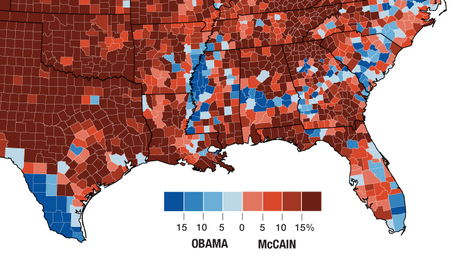
Absolutely fascinating.
Go read the whole thing.
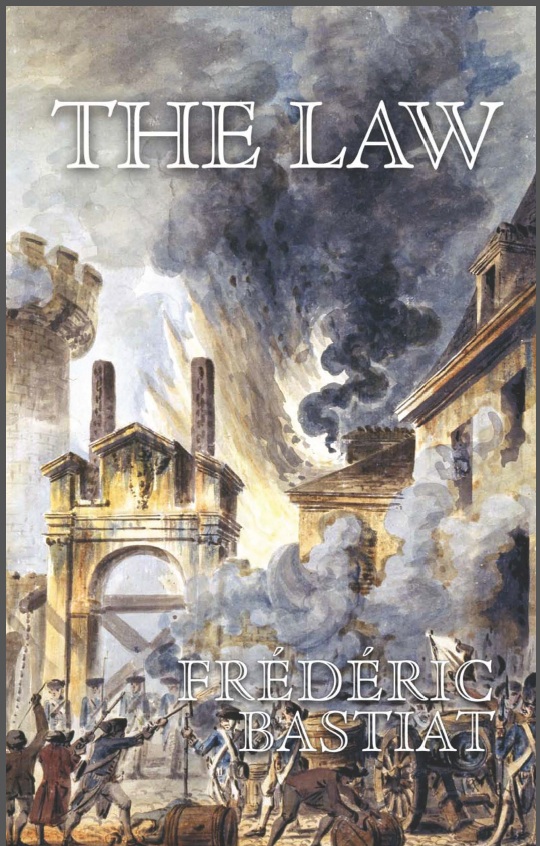
My Prima Prima Ballerina will turn 10 soon. Today my gift to her arrived in the mail:
Frederic Bastiat’s book, The Law.
She may grow up one day and be as liberal as liberal can be. But she won’t be ignorant.
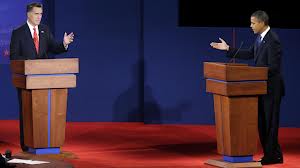
It turns out that a debate can be huge.
Going into Wednesday last week Romney had experienced a series of perceived setbacks. The video of Romney talking to high dollar donors about the 47% certainly played into Obama’s attempt to characterize him as a member of the rich white guy club. This only contributed to the continued bad press Romney was generating for his critique of the White House during the Libya crisis.
Romney was having a hard time of it.
People said his only hope was the debate. However, there was little belief that Romney would even win the debate much less win it by enough to influence polls:
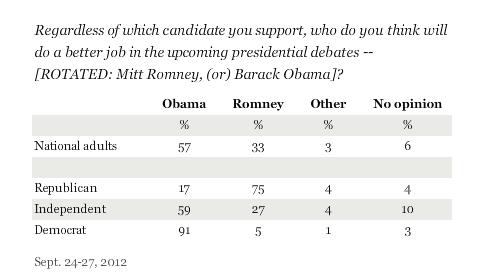
The overwhelming odds on favorite was Obama heading into the debate. While I favored Romney, he has better ideas and isn’t hampered by Obama’s habit of “aaahhhhing” everything, I thought the win wouldn’t matter. Further, I was sure that the polls would suggest Obama won regardless of what I thought.
I was wrong:
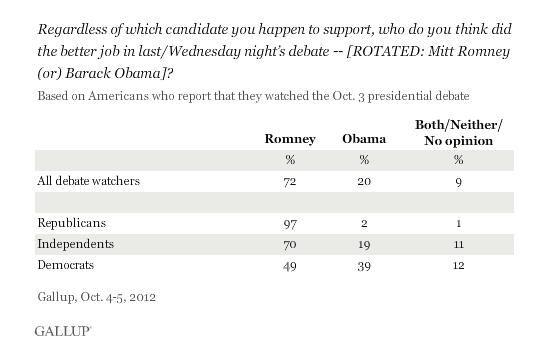
It wasn’t just “not close” it was historical. Never before has a debate been so lopsided as this one. From the opening bell to the final round Romney completely dominated Obama. There wasn’t even one time where Obama even looked like he might rally and make a showing of it. The night was completely and wholly Romney’s.
Obama’s fate was sealed when he issued this advise to the moderator:
You might wanna switch topics Jim.
Even Obama knew this was a disaster.
However, what NO ONE could have anticipated was the impact this debate would have on the race. As I mentioned, Romney came into last week’s contest behind, way behind. And today…? Today’s he’s not only closed the gap, he’s leading:
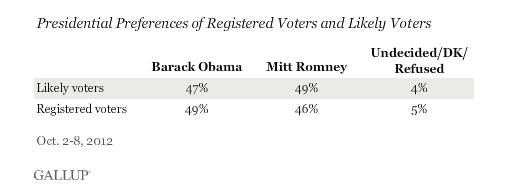
Romney has moved ahead of Obama.
This shouldn’t be surprising to anyone who has the ability to be objective. Obama has been an abject failure. His policies haven’t led to prosperity, they’ve led to a suppressed recovery. His policies overseas are failing, or worse, are undefined to the point that success or failure can’t be determined.
Last week we saw what happens when a life long community organizer goes up against a successful CEO.
It wasn’t even close.
Reuters has a nice article discussing the trouble France is in. We all know that the French are one of the leading examples of a bloated government gone bad.
Too much spending on programs that have nothing to do with a government governing. The whole thing is worth the read. The money sentence:
France is too generous so people take it for granted.
Indeed.

The elections of 2010 continue to have consequences. One of the biggest of those is the passage of voter ID laws across the nation. In general, I have no issue with the concept of having to prove you are who you say you are. In fact, it’s my belief that if you make rules limiting the age, the residence or the number of times an individual can vote, it should be a requirement to validate proof of identification.
Pennsylvania is just one of those states that have enacted such laws. In fact, the law is set to go into effect in time for this election cycle in November, just 5 weeks away. The law, and especially the timing, has drawn the ire of liberals all over the country.
The law requires:
That people show either a state driver’s license, government employee ID or a state non-driver ID card in order to vote on November 6.
Again, by itself, the law is perfectly reasonable in my mind and, in fact, should have been enacted long long ago.
However, while the requirement to display valid ID is a good one, the judge has ruled that the law imposed significant hurdles in obtaining the proper ID before election time and was unreasonable in its timeline.
In short, the law stands but won’t take effect for the upcoming election.
I agree with the judge on this one. The idea of the law is that we protect the sanctity of the voting process. Given that we have been faced with lax laws regarding this for decades, one more election isn’t going to result in a result incongruous with past elections. However, if the law was passed in order to affect the outcome of THIS election, then I have an issue with an unstated voter restriction for the very specific purpose of electing a specific candidate.
And that’s wrong.
The law is good. The timing is bad.
Posted in Elections 2012, Government, Politics: National, States Behaving Badly
Tagged Pennsylvania, Voter ID

It’s been a theme lately. But it needs to be said explicitly.
If you don’t trust the private sector or the people that make it up, why would you trust the people in government?
See the whole thing here at Coyote Blog.
But for now, the money line:
I tell folks all the time – I don’t trust private actors any more than the people in government. What I trust more are their incentives and the tools I have for enforcing accountability on them.
I’m a vocal opponent of the minimum wage. The idea, of course, is that when you implement a minimum price for labor, you get an excess of labor. In other words, higher unemployment. I’m equally a vocal opponent of a “maximum wage.” When you place a maximum price on labor, you get a shortage of it. In other words, you can’t find people to hire.
For this reason I take the decidedly unpopular combination of policy stances that we should abolish the minimum wage AND allow corporate CEOs to earn as much money as they can command.
However, this does not mean that I am in favor of just throwing money at the executive suite. The money should be commensurate with the level of competence. And a recent study is finding that it’s not always the case:
To determine how much to pay a CEO, corporate compensation committees look at how much the chiefs of similar companies earn, which has the result of lumping together all CEO talent into one pool. Elson and Ferrere argued that expertise in management isn’t the same, and isn’t as good, as having a deep base of knowledge in one particular industry.
Many of the skills that make a chief executive successful don’t translate to another company. “The theoretical underpinning of [peer grouping] became the notion of transferability,” Elson said. “That was false. The superstar theory of the CEO failed, and if transferability failed, the peer system has to fail.”
“There’s been a sense for some time that the external view of pay-setting has been a problem in ratcheting up pay,” said Paul Hodgson, chief research analyst at corporate governance research company GMI Ratings.
Elson and Ferrere said benchmarking against what other CEOs make is flawed in several ways that inflate pay packages.
One problem is that the definition of what constitutes a “similar” company can be manipulated to skew pay higher by including larger companies or ones in different industries. Institutional shareholders are “very, very suspicious” of that practice, Hodgson said.
Even without manipulation, Elson said companies should decide how much to pay a CEO based on performance, not how much his or her counterparts earn. “If you don’t have that internal benchmark you’ve made a mistake to begin with,” he said.
Make no mistake, highly successful corporate managers earn every dollar they make. But when companies don’t link pay to success, they are hurting themselves.