Category Archives: Government

North Carolina: Church and State

Earlier this week I posted on North Carolina submitting legislation that would allow for the creation of a State Religion:

I can’t imagine that this bill will pass into law.  In fact, I have no idea what the point of the legislation is about.

Well, it turns out that the bill won’t become law after all, in fact, it won’t even make it for a vote:

RALEIGH — The resolution that would assert North Carolina and its counties have the right to declare an official religion won’t be voted on, the office of House Speaker Thom Tillis said Thursday. That means it’s essentially dead.

Further, and I didn’t catch this at first:

Resolutions like the Defense of Religion Act do not become law if they are passed. They are generally used to honor dignitaries or groups, or to launch commissions to study issues.

It was never meant to actually BECOME law, just make a point.

And the legislators who submitted the resolution?

SALISBURY, N.C. — One of the North Carolina legislators who sponsored a resolution declaring the state can make its own laws about religion without involvement from the federal government and courts is apologizing for any embarrassment to his community and state.

Warren says he only intended to allow Rowan County officials to continue opening meetings with prayer, not to establish a state religion. The American Civil Liberties Union sued county commissioners last month, accusing the panel of violating the First Amendment by routinely praying to Jesus Christ.

Whatever else the bill/resolution did or didn’t say, I have to add that I think a small community, even a county, should be able to open their meetings with a prayer to whoever they wanna pray to.  What they cannot do is to force everyone in that community to offer the same prayer to the same divine.


The State Of Our Nation’s Schools

School Building

There’s a new report out that shows the conditions of our schools across the nation is pretty poor:

WASHINGTON — America’s schools are in such disrepair that it would cost more than $270 billion just to get elementary and secondary buildings back to their original conditions and twice that to get them up to date, a report released Tuesday estimated.

Horror stories abound about schools with roofs that leak, plumbing that backs up and windows that do little to stop winds.

I have little doubt that the report is accurate, at least in direction if not in total value.

Where is the failure occurring?

The report does not assign blame for schools’ disrepair but the problems often start at the local and state levels. In most cases, schools are funded by local property taxes and they are reliant on their neighbors’ wealth and willingness to fund their schools. A National Center for Education Statistics found large disparities between schools in areas of high poverty and those in more affluent areas.

This shouldn’t surprise us; school districts are local affairs and, as such, responsibility falls to those at the local levels.

I would occur to me that the solution to this problem is going to fall into one of two areas – local and state or the federal government.  Well, the folks that are featured in this interview have their ideas:

“We have a moral obligation,” said Rachel Gutter, director of the group affiliated with the U.S. Green Building Council. “When we talk about a quality education, we talk about the “who” and the “what” — teachers and curriculum — but we don’t talk about the “where.” That needs to change.”

Her organization is urging the Education Department to collect annual data on school buildings’ sizes and ages, as well as property holdings. The group also wants the Education Department’s statistics branch to keep tabs on utility and maintenance bills.

It’s hard to argue that schools in areas of poverty are not only functionally poor but structurally deficient as well.  And the solution to that is tricky.  I break with a lot of conservatives on education; I DO think that the role of government is to care for our kids.  However, I’m not convinced that a federal program is what we’re after.  For example, I don’t have much of a problem funding schools federally in some way, but I do fear the extremists who are allowed to insert their version of what a good school is and what that means.

The alternative?  The individual state or school district.  But there isn’t a lot of hope there either.  The obvious solution is public funding of private schools for each kid, but the power of the school boards and teacher’s unions is such that public delivery of education seems here to stay.

When Holding A Super Majority Yields Bad Legislation

elephant on a limb

North Carolina has gone decidedly red in recent years.  After voting for Obama in 2008 along with a democrat for governor and senator we have gone red; very red.  In 2010, however, that all changed.  Republicans won majorities in both the house and the senate.  In fact, it was the first time that had been the case since the Civil War ended.

In 2012 the trend continued.  North Carolina was the only battle ground state to switch and go for Romney.  The governor’s race was, in essence, a rematch between the candidate from the 2008 election.  Except the sitting governor chose not to run and instead we saw her Lt. Governor get trampled.  In the state house?  The republicans not only held serve but they extended their majority.  To the point that they hold a veto proof majority.  In fact, they are so in the majority that the republicans are able to submit constitutional amendments to popular vote without even one democrat agreeing.

I think this level of dominance is dangerous.  Dangerous in the same way that I thought the democrats held control of the federal powers in 2008.

So far, the majority has taken to a little political payback.  The democrats, predictably, have squealed, but to be very fair, the fact that they are not getting their way after more than 100 years of uninterrupted control is a bit of righteous karma.

As I feared the republicans are using their muscle in a way and manner that would be checked with a more balanced government:

Resurrecting last session’s bruising battle over the death penalty in North Carolina, a Republican state senator on Wednesday filed a bill to wipe all traces of the Racial Justice Act off the books.

The 2009 law allowed statistics compiled statewide to be used to prove racial bias in the prosecution, jury selection or sentencing in capital cases.

Now, in full disclosure, if I could have the “Eye of God” and be certain that the guilt or innocence of an individual could be ascertained with certainty, I have no problem with the death penalty for certain crimes.  However, we do not possess this “Eye of God” certainty and, in fact, I have no more faith in the government “getting it right” when determining said innocence or guilt, or the sentence associated with that verdict, than I do with that government managing health care, or nutritional needs, or education.

In short, I don’t trust government all that much at all.

So when people tell me that the poor and minorities are subject to sentences of the death penalty in meaningful volumes, I advocate creating a law that has the ability to not change the verdict, but change the sentence from death to life in prison.

And the republicans are changing that.

And it’s wrong.


Why Democrats Won’t Pass A Budget

Harry Reid

It’s been years since the senate has passed a budget; we’re going on 5 now.  And if you wanted to know why that is, you have to look no further than these two articles from The Hill.

First, Paul Ryan gettin’ it done:

Ryan, the former Republican vice presidential candidate who chairs the House Budget Committee, will release his 2014 budget on Tuesday. He’s expected to outline a plan to balance the budget in 10 years.

And why does this contribute to the reasons democrats won’t pass their own budget?

Senate Democrats promised Monday to make Rep. Paul Ryan’s (R-Wis.) new budget a focal point of their 2014 campaigns.

Democrats argue changes to Medicare and other spending cuts outlined by Ryan will pay political dividends for their Senate candidates, who face a difficult 2014 landscape.

“The Ryan budget will be a gift that gives throughout the 2014 cycle for Democrats,” pollster Geoff Garin said on a Monday call hosted by the Democratic Senate Campaign Committee.

And now over to the article describing progress on the senate’s budget:

Senate Democrats say they will soon pass their first budget in four years, but it is proving a test.

Disputes over tax cuts, spending reductions and entitlement reform all present challenges to Budget Committee Chairwoman Patty Murray (D-Wash.) and Majority Leader Harry Reid (D-Nev.).

One reason Senate Democrats did not pass a budget bill for the past four years was that they wanted to avoid unpopular votes to cut spending and hike taxes.

Leadership aides say Democrats from red states are less nervous now.

“The 2012 election showed that being in favor of revenue does not tar and feather you as a tax-and-spend liberal,” one aide said.

For the democrats, being elected to public office is the whole of the point.  There is no effort to govern or lead, only to win the next election.

Paul Ryan submits a budget and the democrats do nothing but “run against” the “gift that keeps giving.”  Yet when it comes time to pass their own budget, we get nothing because they are afraid to make the tough decisions.

Not surprising really.

Stealing Via The Government

Public Housing

If you want something but would rather not pay for it you can:

  1.  Hope that someone will give it to you.
  2. Elect politicians who will pass laws that gives it to you.

Granted, that’s the cynical take on the process but it does present what is occurring economically.  Consider housing:

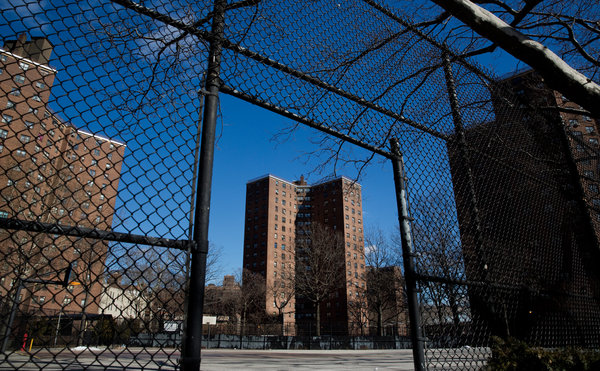
The authority, landlord to more than 400,000 residents, has a backlog of about 350,000 repair orders. It also has a waiting list of 160,000 families.

The reason for this phenomena?  Greedy landlords or slum lords?  Hardly:

The eight projects, with a combined population of more than 25,000 people, are Alfred E. Smith, Baruch, Campos Plaza, Fiorello LaGuardia and Meltzer in Lower Manhattan; Carver and Washington on the Upper East Side; and Douglass on the Upper West Side.

Public housing all.

It’s simply economics.  When land is restricted by public use zoning laws, the price of real estate in general goes up.  And when the rent charged is limited by laws attempting to break the laws of economics, the quality of available housing goes down.  Represented her by budget shortfalls, backlogs of repairs and waiting lists.

The only natural remedy?

But soon, that patch of asphalt at the Alfred E. Smith Houses could be replaced by market-rate apartment buildings.

The New York City Housing Authority, facing one of the most serious financial shortfalls in its history, is for the first time making a major push to lease open land on the grounds of its housing projects to developers to generate revenue.

The authority wants to raise more than $50 million a year on long-term leases for parks, courtyards, parking lots, playgrounds and other property, seeking to address a $6 billion backlog of repairs.

The only thing that makes sense; open the land available to market forces and raise revenues.

Outside Federal Jurisdiction

Government Control

The powers not delegated to the United States by the Constitution, nor prohibited by it to the States, are reserved to the States respectively, or to the people.

We’re seeing more and more of this:

With gun rights coming under fire across the border in New York State, the Susquehanna County commissioners spoke out by resolution Wednesday in favor of the Second Amendment.

Republican Commissioner Michael Giangrieco said the issues in New York prompted him to address the matter on a county level.

He proposed a resolution stating that “any federal act, bill, law, rule or executive order that in any way infringes on our Second Amendment rights by attempting to reduce the private ownership of any firearm, magazine or ammunition shall be unenforceable in Susquehanna County.”

So, it occurred to me, “Can the federal government regulate guns at all?  And if so, how does it derive that power?”

I couldn’t find anything that expressly authorized the federal government to regulate guns but had a sneaking suspicion I would find the authority somewhere else.  And then I found this:

Congress derives its power to regulate firearms in the Commerce Clause, in Article I, Section 8, Clause 3, of the U.S. Constitution. Under the Commerce Clause, Congress may regulate commercial activity between the states and commerce with foreign countries. In reviewing federal legislation enacted pursuant to the Commerce Clause, the U.S. Supreme Court has given Congress tremendous leeway. Congress may enact criminal statutes regarding firearms if the activity at issue relates to interstate transactions, affects interstate commerce, or is such that control is necessary and proper to carry out the intent of the Commerce Clause.

Ahh yes, the Commerce Clause.  The Clause that effectively ended state’s rights and allowed the federal government massive power over those states.  In fact, the landmark case establishing such leeway seems to make Montana’s effort to try and skirt federal gun regulations by manufacturing and selling guns within the state outside federal control.  Remember, that case found that a farmer didn’t have the right to grow and use wheat on his own farm as he saw fit.

My feel is that it was never meant that the federal government could regulate firearms in general, that it be left to the states.  But that the states and local governments COULD regulate those weapons as THEY saw fit.

Blantant Scaremongering

I’m not sure if she simply made a mistake, is truly that ignorant or is guilty of flat out scaring the living soul out of people:

Rand Paul: Values

Rand Paul

Look, you might like more government rather than less.  Perhaps you like more guns than less.  Taxes on the rich?  More money on the less fortunate?

Let’s debate that.  Earnestly and honestly.

But honestly.

And when you are living the line and walking the walk, walk it like this:

(CNN) – Sen. Rand Paul cut another six-figure check to the United States Treasury Wednesday, taking the money he said he didn’t need from his office’s budget to make a tiny dent in the nation’s massive federal debt.

“We watch every purchase,” Paul, a Republican from Kentucky, said at an event next to an oversized check for $600,000. “We watch what computers we buy, what paper we buy, the ink cartridges. We treat the money like it’s our money, or your money, and we look at every expenditure.”

The $600,000 reflects more than 20% of Paul’s annual office budget, according to a press release.

Last year Paul returned $500,000 to the Treasury, and said he hoped other members of Congress would follow his cost-cutting lead. In total, Paul’s office says they’ve returned $1.1 million that was unspent from his office’s operating budget.

Rand.  Ayn Rand.  A little weird, sure.  But the dude’s living the lesson.

Strange But True: Elements Of Obamacare Cost Most Than Originally Expected

Imagine my shock when I heard that portions of Obamacare are running into financial difficulty:

WASHINGTON (Reuters) – The Obama administration on Friday said it would stop enrolling new beneficiaries in a special $5 billion insurance program for people with pre-existing medical conditions, because of rising costs and limited funding.

The news comes a day after a top U.S. healthcare official told lawmakers on Capitol Hill that the administration is grappling with financial difficulties but determined to keep the Pre-Existing Condition Insurance Plan (PCIP) operating in 23 states and the District of Columbia through 2013.

PCIP was established in 2010 under President Barack Obama’s healthcare reform law to provide coverage for sick people unable to find it in the private insurance market. The program is designed as a bridge to January 1, 2014, when legal restrictions barring discrimination over medical conditions come into force.

The U.S. Department of Health and Human Services issued a notice on Friday saying it would suspend new enrollments beginning on Saturday to “help ensure that funds are available through 2013 to continuously cover people currently enrolled in PCIP.”

And what happens to government agencies that find they are short on money?  Why, they ration:

Gary Cohen, the HHS official responsible for overseeing implementation of Obama’s healthcare reforms, including PCIP, told the Senate Finance Committee on Thursday that the administration had begun to alter program benefits while grappling with funding restrictions.

It’s not very difficult to see where this whole thing is going to go.

We Can’t Be Racist If We Call You Racist

I’ve been watching the whole series of “The West Wing”.  Its a great series, I loved it then and I like it even more now.  Sadly, even as I obtained the ability to rip scenes from my DVDs, YouTube has objected claiming copyright infringement.  And I don’t wanna take material that isn’t mine so….

The scene is this:

There is a party going on and Sam is entertaining an old professor of his.  This professor wants funding for his project.

Sam’s advice, his comment?

What are you for?

Sam’s point is that if you want something, all you have to do is stake ground that you are FOR something and then cast your opponent as against it.  And that has summed up the liberal left’s attack on reality.  What are you against?

See, if the conversation can be shaped into one where there is a good guy and a bad guy, and you simply make sure that you are the good guy, then whatever it is that you are proposing is “good.”

For example:

A student at Eagle Rock Junior High won first prize at the Greater Idaho Falls Science Fair, April 26. He was attempting to show how conditioned we have become to alarmists practicing junk science and spreading fear of everything in our environment. In his project he urged people to sign a petition demanding strict control or total elimination of the chemical “dihydrogen monoxide.”

And for plenty of good reasons, since:

  1. it can cause excessive sweating and vomiting
  2. it is a major component in acid rain
  3. it can cause severe burns in its gaseous state
  4. accidental inhalation can kill you
  5. it contributes to erosion
  6. it decreases effectiveness of automobile brakes
  7. it has been found in tumors of terminal cancer patients

He asked 50 people if they supported a ban of the chemical.

  • Forty-three (43) said yes,
  • six (6) were undecided,
  • and only one (1) knew that the chemical was water.

This is where I think that left is playing fast and loose with race.  See, the left sells this notion of a minimum wage as a way out for minorities and the poorest among us.  In reality, the minimum wage traps those very people into a continuous cycle of unemployment and dependence.  And who wins?

The rich elite labor leaders who just so happen to mobilize to elect those very same democrats and siphon millions upon millions of dollars from their ranks into the coffers of democrats across the country.

Witness one man’s explanation:

The minimum wage is one of the most effective tools for racism in the world.