Category Archives: Government

Spoiled Kids Acting Like 1%’ers

Found this while reading through Say Anything:

Some classics:

  • Hey, dude, that’s not cool!
  • It’s not fun to take people’s candy.
  • This is my candy.  I worked hard for it.
  • He stole my candy already!
  • You can’t split candy ’cause that’s not right.  That’s HIS candy.
  • I’m gonna call the police!

Notice that the kids felt that this was theft.  Taking something from them that they had earned was “not right.”

It’ll be years before these kids learn that when a monkey does it they can call the cops.  But when the government does it, the GOVERNMENT calls the cops.

These kids are learning what legal plunder looks and feels like.

Obama And Losers

Another one of Obama’s “winners” bites the dust:

A123 Systems, which had received a $249 million grant from the U.S. government, filed for Chapter 11 bankruptcy protection on Tuesday

Hard to believe.

And here’s Obama:

And One Sentence Sums It All Up

Reuters has a nice article discussing the trouble France is in.  We all know that the French are one of the leading examples of a bloated government gone bad.

Too much spending on programs that have nothing to do with a government governing.  The whole thing is worth the read. The money sentence:

France is too generous so people take it for granted.

Indeed.

Pennsylvania Voter ID Delayed

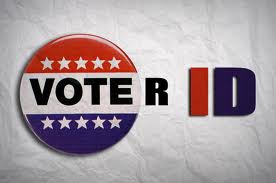
The elections of 2010 continue to have consequences.  One of the biggest of those is the passage of voter ID laws across the nation.  In general, I have no issue with the concept of having to prove you are who you say you are.  In fact, it’s my belief that if you make rules limiting the age, the residence or the number of times an individual can vote, it should be a requirement to validate proof of identification.

Pennsylvania Voter ID Law

Pennsylvania is just one of those states that have enacted such laws.  In fact, the law is set to go into effect in time for this election cycle in November, just 5 weeks away.  The law, and especially the timing, has drawn the ire of liberals all over the country.

The law requires:

That people show either a state driver’s license, government employee ID or a state non-driver ID card in order to vote on November 6.

Again, by itself, the law is perfectly reasonable in my mind and, in fact, should have been enacted long long ago.

Judge Rules To Halt Law

However, while the requirement to display valid ID is a good one, the judge has ruled that the law imposed significant hurdles in obtaining the proper ID before election time and was unreasonable in its timeline.

In short, the law stands but won’t take effect for the upcoming election.

I agree with the judge on this one.  The idea of the law is that we protect the sanctity of the voting process.   Given that we  have been faced with lax laws regarding this for decades, one more election isn’t going to result in a result incongruous with past elections.  However, if the law was passed in order to affect the outcome of THIS election, then I have an issue with an unstated voter restriction for the very specific purpose of electing a specific candidate.

And that’s wrong.

The law is good.  The timing is bad.

How [or why] A Statist Thinks

It’s been a theme lately.  But it needs to be said explicitly.

If you don’t trust the private sector or the people that make it up, why would you trust the people in government?

See the whole thing here at Coyote Blog.

But for now, the money line:

I tell folks all the time – I don’t trust private actors any more than the people in government.  What I trust more are their incentives and the tools I have for enforcing accountability on them.


Thoughts On Chicago Teacher Strike

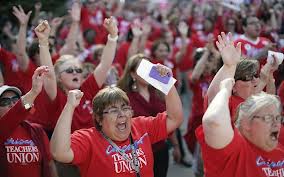
Teachers Walk Out On Strike!

The emotions of a strike are sure to supersede the rational negotiations.  However, this struck me as interesting:

Lewis said among the issues of concern was a new evaluation that she said would be unfair to teachers because it relied too heavily on students’ standardized test scores and does not take into account external factors that affect performance, including poverty, violence and homelessness.

I’ve often encountered this line of reasoning when discussing teacher evaluations.  First, I find it unfathomable that an educated group of experts who routinely adjudicate proficiency of very subjective materials find it completely out of the realm of possibility to measure the effectiveness of teachers themselves.  Second, if they are unwilling to allow themselves to be measured on their effectiveness based on poverty, violence and homelessness, can we expect them to adjust grades so that such impacts are taken into account?

For example, I’ve heard that teachers won’t accept performance based measurements because, “a dog may be barking during the test.”  Yet, are these same teachers willing to change the test scores of those kids subjected to the barking dog?

Utter nonsense.


Venezuela, Oil And Government

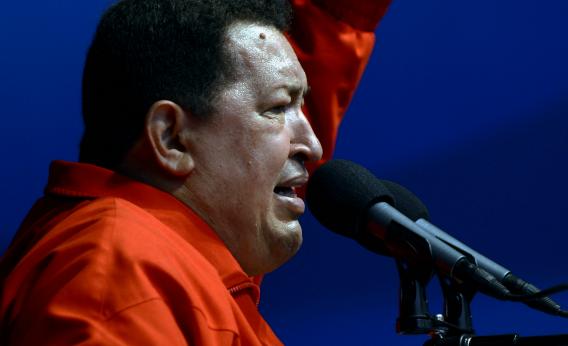
The fire in Venezuela is a perfect example of the dangers of the corporate state:

Venezuela’s Amuay refinery explosion is emblematic of the Hugo Chavez curse. The blast hobbled PDVSA’s largest oil processor – as well as killing 39 people. The Venezuelan leader’s policy of placing loyalty before commercial prowess may not have caused the accident. But it has warped the nation’s business ethos. The way he has meddled in the state-owned oil company offers an apt example.

A decade ago Chavez purged PDVSA of 19,000 employees he considered enemies and now rewards political allegiance over anything else. Employees must now devote as much time to political proselytizing as they do to pumping and refining oil. Top jobs typically go to true-blue Chavistas.

As a result, PDVSA is no stranger to maintenance issues from wellhead blowups to oil spills and unplanned shutdowns. And now, at some 2.7 million barrels a day, oil output is almost a fifth below the level when he took office in 1999.

A large part of why I don’t like the idea of too much Government meddling is that it provides too much opportunity for abuse.  I’m continually confused as to why those on our left would think that we’ll find angels in government but only devils in a free’er free market.

Recent moves make matters worse. Last week Chavez vowed to strip PDVSA of a seventh of its 70 percent stake in a key oil venture to hand it to another government-controlled enterprise -mining operation CVG. It’s a great deal for the latter. CVG companies consistently lose money, so getting a 10 percent share in 150,000-barrel-a-day Petropiar oil venture will bolster its finances. And it may also help win over CVG’s 9,940 steel workers ahead of the presidential election in October.

It’s explicit.  Chavez, and  he’s by no means unique, is using his power to buy votes.  Capitalism may be imperfect; businesses will fail and people will lose their job, but it’s simply superior to this.

It’s not the only recent example of mind-bending politicking, either. On August 22 Chavez approved a plan to finance unpaid benefits for government workers with petroleum-backed bonds. Workers cannot cash them in for a year, however, and the 18 percent coupon they pay is less than the 19.4 percent inflation rate. But after years of waiting, this transparent play for votes must seem better than nothing to thousands of active and retired public servants.

Put Bicycle Riders In Their Place

I live outside of the city of Raleigh.  The roads of Wake County are two things:

  1. Beautiful
  2. Narrow

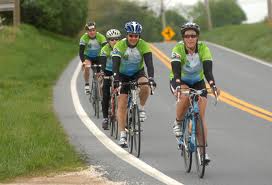
Really, driving through the county on those little county roads is a good way to spend a couple hours.  When the kids were very young I’d get them to nap by driving through the roads near my home.  However, those roads offer little to nothing in the way of a shoulder.  Even the picture above has very little shoulder support, and the roads near my house offer even less.

Which is why I advocate that bikes should not be on these roads.  Fifty or seventy years ago these roads were lazy country affairs.  Today, with the population growth, these roads are legit thoroughfares that move 1000’s of people to and from work every day.  Complete with the hustle and bustle of such.  Drivers are hitting speeds of 50-60 MPH and that just doesn’t work when you have a cyclist, or 5, moving at 20 with no way to get out of the way.

While I don’t think that bikes have a place on these roads, I DO like this idea:

Every day, one-third of the people of Copenhagen ride their bikes to work or school. Collectively, they cycle more than 750,000 miles daily, enough to make it to the moon and back. And city officials want even more people to commute, and over longer distances.

So a network of 26 new bike routes, dubbed “the cycling superhighway,” is being built to link the surrounding suburbs to Copenhagen.

Lars Gaardhoj, an official with the Copenhagen capital region, says the routes will be straight and direct.

“It will be very fast for people who use their bike,” he says. “This is new because traditionally cycle paths have been placed where there is space for them and the cars didn’t run. So now the bike is going to challenge the car.”

The first highway, to the busy suburb of Albertslund some 10 miles outside the city, was completed in April.

Each mile of bike highway will cost about $1 million. The project is to be financed by the city of Copenhagen and 21 local governments. And in a country where both right- and left-leaning politicians regularly ride bikes to work, it has bilateral support.

Even as I object to cyclists on our roads I preach that we should build a “bike-way” through the county.  Start with a small map and add 5 feet to one side or the other of our roads; a place where only bikes can go.  But creating a highway might even be better.

Certainly government has a role in transportation.  And we can pay for it by implementing a use tax.  You can tax bicycles, something I had to pay every year growing up in Minnesota, or pay a toll as you ride the highway.

Ride on!

When A Society Wants To Care For Itself

It takes a village.

A theme more or less explored in our politics in general.  And sometimes in specific.  For example, President Obama touched on it during his now famous firehouse stop in Virgina.  There, on the stump, Obama extolled the crowd that successful folks are successful in large part, some part, to those that have come before.  Their success is due, in some measure, to those who’ve built the infrastructure.  Therefore, the logic goes, it is now up to those successful individuals to “give back” and embrace a higher tax burden.

The central idea being that we’re all part of this thing and we all need to contribute.

It takes a village.

Further, this is a concept I resonate with and embrace.  We DO rely on each other.  It’s the volunteer firefighter that makes sure our homes are safe.  It’s the teacher that slaves away tirelessly at 10:00 at night.  There’s the pastor watching over the kids during summer break.  I love the fact that my son’s karate teacher watches him as he walks down the block to the dance studio to wait for his sister.

It DOES take that symbolic village.

Which makes this and this all the more frustrating:

A woman may be fined $600 for each day she provided free food to children in a poor Philadelphia neighborhood for the past few months.

Angela Prattis, 41, of Chester Township has been distributing free healthy lunches in a neighborhood that has a per capita income of $19,000 a year.

Prattis made no money from the meal distribution, and gave out food provided by the Archdiocese of Philadelphia. The “lunch lady” ran the charity out of her garage, to which about 60 children came, five days a week.

After the city council was alerted of the free lunches, it ruled that she would have to acquire a variance to give away food next summer – or pay a fine of $600 a day. The council considers Prattis’ deed a zoning violation. Three months of distributing food would instigate a fine of more than $50,000.

60 kids, 5 days a week.  Free.

PHOENIX –  The city of Phoenix is facing a possible lawsuit after a woman claimed a city worker told her she could not pass out free water in the Arizona heat without a permit.

Dana Crow-Smith tells ABC 15 she was passing out water bottles in the 112-degree heat along with others in an attempt to share their Christian beliefs with people attending a festival downtown last month, when a city worker ordered them to stop. She said the worker told the group they would be cited if they continued passing out the water because they did not have a permit.

Admittedly, the second case may not involve city officials in real authority, but the point remains that there is this idea that the city has these regulations.

It’s important to remember that the villagers created the village.  Not the other way around.

Government Can Make It All Better

I generally resent the idea that the government can do things better.  In many, if not most things, the government does them worse, not at all better, than if left to someone else to do.

However, in some cases it’s even worse.  The government does it worse than if it were just left alone:

Tree sections are stacked floor to ceiling. They’re like rounds chopped from a carrot, the carrot being a tree trunk. They’re the size of dinner plates. When the football team scores, they rattle on their shelves.

Growth rings tell how old the sectioned tree was. But when Swetnam holds up one, he points to something else: fire scars. They’re black marks, about the size of a fingernail clipping, left by fires.

“The first time here, back in the 1600s, it looks like, and it created a wound there. Basically the fire was hot enough to burn through the bark,” he says. But the fire wasn’t hot enough to kill the tree. So the next few rings show normal growth.

“Until the next fire occurs, and it creates another scar,” he says. “And another, and another, and another, and another, and another.”

Scars from thousands of sections show how often fires burned in the Southwest. It was every five or 10 years, mostly — small fires that consumed grass and shrubs and small seedlings, but left the big Ponderosa pine and Douglas fir just fine. This was the norm.

Then something happened.

“Around 1890 or 1900, it stops,” Swetnam says. “We call it the Smokey Bear effect.”

Settlers brought livestock that ate the grass, so fires had little fuel. Then when the U.S. Forest Service was formed, its marching orders were “no fires.”

And it was the experts who approved the all-out ban on fires in the Southwest. They got it wrong.

That’s the view of fire historian Stephen Pyne.

“The irony here is that the argument for setting these areas aside as national forests and parks was, to a large extent, to protect them from fire,” Pyne says. “Instead, over time they became the major habitat for free-burning fire.”

So instead of a few dozen trees per acre, the Southwestern mountains of New Mexico, Arizona, Colorado and Utah are now choked with trees of all sizes, and grass and shrubs. Essentially, it’s fuel.

And now fires are burning bigger and hotter. They’re not just damaging forests — they’re wiping them out. Last year, more than 74,000 wildfires burned over 8.7 million acres in the U.S.

That included the huge Wallow fire in Arizona.

“It burned more than 40,000 acres in the first eight hours,” says Swetnam, the tree ring expert. “A tornado of fire.”

Fires in the Southwest have been getting bigger and bigger over the past two decades.

“Now the fire behaviors are just off the charts,” Swetnam says. “I mean, they are extraordinary. Actually, I think in some cases, they’re fire behavior that probably these forests haven’t seen in millennia or maybe even tens of thousands of years.”

Over the past several years, even as fewer fires have struck the Southwest, they’ve burned more land. The U.S. Forest Service now spends about half its budget on firefighting.