
Category Archives: Economics

The “Cost” Of Immigration

Heritage

Recently, The Heritage Foundation published a report saying that immigration reform would cost us $6.3 trillion.  I’m posting late on this but it’s been in my stack for awhile.  The report struck me wrong because I’ve never considered immigration to be a financial transaction.  It’s always been a primal “yawlp”.  America is less a physical location than it is a “way of living”.

Beyond that, I couldn’t get over the numbers.  And then CATO helped me out:

The Heritage Foundation has released a study claiming an immigration amnesty will cost the U.S. Treasury $6.3 trillion. Many other free-marketeers — of which I am one — decry that report’s methodology as ignoring the economic growth effects and resulting tax revenues of open immigration.

I’ve always thought that immigration brought the folks most willing to work for a better life.  And not those who simply want to live at the government’s expense.

So, how do immigrants that are willing to work and work hard help the new nation?

A 2009 study prepared for the Cato Institute employed a dynamic economic model called USAGE to estimate the economic change caused by immigration reform. It found that a bill similar to that proposed in the Senate added $180 billion to U.S. household income a year.

Another paper commissioned by Cato employed a similar analysis using a model called the GMig2. The study found that immigration reform would increase U.S. GDP by $1.5 trillion in 10 years.

That model also ran a simulation in which all unauthorized immigrants were removed from the U.S. economy — a policy favored by Heritage’s study. The result was a $2.6 trillion decrease in estimated GDP growth over the same decade, confirming the commonsense observation that removing workers, consumers, investors, and entrepreneurs from America’s economy will make us poorer.

The Cato studies provide dynamic tools that count the unambiguous economic gains from increased immigration as part of any reform. The consensus among economists is that immigration is good for the vast majority of Americans and the immigrants themselves, and makes both the U.S. and world economies larger and more productive.

A Reagan-era amnesty confirms that legalized immigrants experienced wage increases of up to 15 percent just by working legally. Those higher wages are a result of more productive workers who then pay higher taxes. But employers, shareholders, consumers, real estate owners, and most workers also see their incomes and productivity increase from immigration.

Not only is more open and freer immigration consistent with Liberty lovers, it makes financial sense.

The American Dream – Education Is Critical

Education

The economic well being of America and Americans is dependent on education.  But not just any education – the worlds doesn’t need “Women’s Studies” majors or those who wanna spend 4 years investigating “Migration Art of the 4th Century”.    Indeed, such degrees might have some value in a “education for education” sense, but practitioners of such majors should walk in eyes wide open – employment opportunities are going to be few and far between for such majors.  And on top of that, the salaries are going to be smaller than the harder sciences.

And why?

The U.S. economy is strengthening, adding an average of 208,000 jobs a month over the past six months.

“The private sector is generating jobs and also producing output growth of about three percent,” says Wells Fargo economist John Silvia. “It’s the public sector that’s continuing to restructure and lose jobs.”

And education has been a dividing line in the recovery. While well over two million jobs have been added in the past year for workers with at least some college education, for workers with a high school degree or less, more than half a million jobs have been lost.

“We’re hiring scientists, engineers, people with deep mathematical backgrounds,” Mehren says.

Mehren says people with the required skills “are few and far between.”

“The economy is not creating the kinds of workers that we need to move into the future,” he says. “And, you know, I think that’s a challenge for all of us and something we should examine.”

Wanna job that pays?  Study math, engineering and computers.  Wanna hobby?  Go to school for a soft science and take pleasure in the knowledge that you know a lot about your hobby.


North Carolina Republicans: Tax Reform

Taxes

North Carolina is dominated by republicans at the state level.  Such domination can be dangerous.  However, it can also make for change that has been decades in coming.

Tax reform is just that change.

Right now North Carolina has a very high corporate tax rate compared to other southern states.  Additionally, the state income tax is also higher than our neighbors.  The thinking is that we would be able to attract more businesses to North Carolina if only our tax structure was more competitive.  I agree.  However, while businesses do look at the corporate tax, I’m not sure how much they look at individual income taxes.

It is with this mix of taxes that the republicans in Raleigh are looking at tax reform:

RALEIGH — A far-reaching plan proposed by Republicans in the state Senate would slow government spending and affect the wallet of every North Carolinian as it slashes income tax rates and raises the cost of food, prescription drugs and more than 100 tax-exempt services.

Senate leader Phil Berger outlined the forthcoming legislation Tuesday, calling it a $1 billion tax cut that is the largest in state history.

“This is a huge change in the way North Carolina taxes its citizens, the way North Carolina generates its revenue to fund services that government provides,” said Berger, an Eden Republican and the Senate president pro tem.

It shifts the tax burden to consumption rather than income, a move that will disproportionately affect low-income taxpayers and families. A married couple with two children making $30,000 a year would pay an estimated $1,000 more in taxes each year, according to a calculator on a political website designed to support the plan. By contrast, a single taxpayer making $200,000 would get a $6,000 break.

Under the proposal: The state’s 7.75 percent personal income tax rate for the top bracket would gradually drop to 4.5 percent over three years, and likewise the 6.9 percent corporate income tax would fall to 6 percent. The estate tax, paid by only the wealthiest taxpayers in 2010, would be eliminated, and the business franchise tax would see a 10 percent reduction.

To offset the cuts, the state would apply a lower sales tax at 6.5 percent to roughly 130 services that are currently exempted, or essentially any service taxed by at least one state.

In short, the idea is to reduce the corporate tax -GREAT idea- reduce the income tax -perhaps a good idea- and lower the sales tax BUT widen the base of that lower sales tax.

In discussing the new structure, I think that the republicans are going to have to be honest and admit that it is what it is, a shift of taxes and a effective increase on the folks who make less money than the wealthy.  It still might not be a bad idea, but it has to be recognized for what it is.

Personally, I would like to see a plan that is closer to revenue neutral for those who would be most negatively impacted.  And this is where it can get tricky.  For example, for those of us who are most poor, we would indeed be faced with a sales tax on food.  However, we have to acknowledge that the money for that food is likely to have been supplemented by government to begin with.

Is taxing food stamps really taxing those that use them?  Perhaps in a way, but not in the way that we generally use the term tax.  What it would do is reduce the amount of food that would otherwise fit in the basket, but it would not be taxing the income of that individual purchasing the food.

The next idea would be that while the tax burden is certainly shifting, and no one should deny that, is it shifting into a more equitable position?  After all, this is more of a “Flat Tax” solution than the traditional income tax only solution.  In fact, other states are even more reliant on sales tax than income tax; think Washington state and Florida.

Regardless of what actually is passed into law, this is certainly an interesting conversation.

North Carolina Toll Roads

Toll Road

So, I like the idea of toll roads as a method to raise money for infrastructure spending.  I like it because it taxes use.  I like it because it can be used to control the supply and demand for our roads and bridges.  I like it because it’s energy source neutral.  And I like it because it can be targeted to certain throughways – think freeway not neighborhood boulevard.

So I like this:

Raleigh, N.C. — North Carolina Transportation Secretary Tony Tata says toll roads can’t be ruled out as an way to help pay for future transportation projects.

“You have to talk about tolling as an option across the state as we look at how we’re going to generate funds for future projects,” Tata told area business leaders Thursday morning at an annual breakfast meeting of the Regional Transportation Alliance.

However, even republicans are not immune to an ever growing government:

Tata said the transportation department faces significant funding challenges as the state gas tax, a major source of funding, is bringing in less revenue each year.

Although more people are driving in North Carolina, they are driving more fuel-efficient vehicles, including hybrid and electric cars. Drivers living near state borders also cross state lines to avoid paying North Carolina’s gas tax, one of the highest in the Southeast.

I support toll roads in lieu of gasoline taxes, not in addition to.

And let’s not forget that just because the idea of toll roads is a good one that government can’t mess it up:

Raleigh, N.C. — State lawmakers are pushing for changes to the state’s relatively new Triangle Expressway toll road after numerous complaints from drivers about unexpected bills, big late fees and poor customer service.

Andy Lelewski, the state’s director of toll road operations, acknowledges that changes to the Quick Pass system are needed and says he will work with the legislature to make some adjustments.

5 On Your Side first reported about toll road billing problems in August. Since then, we’ve investigated more than 18 complaints from drivers – all but three of whom got on the toll road by mistake.

A wrong veer, and you’re on it. Delay paying the bill when it arrives in the mail, and you’re in for major late fees.

“It’s robbery,” said Heidi Matesevac. “To me, it’s robbery.”

Matesevac’s original toll bill was just 77 cents. The amount was so small, she said, she wasn’t sure how to handle paying it.

“It will cost me more to write the check and send it through the mail than to pay the toll,” she said.

To make it more frustrating, when Matesevac called to pay the bill over the phone, a Quick Pass customer service representative told her that only her husband could make a payment because their system only lists the first name on the title. Matesevac even sent proof that her name was also listed on the title, but Quick Pass wouldn’t budge.

“I’m like, ‘You’ve got to be kidding me,'” she said. “I said, ‘Really? You’re not going to talk to me about a 77 cent bill at a toll that my vehicle – that I own – is being billed for?”

After Quick Pass added a $6 processing fee, Matesevac sent a check for $6.77. In the meantime, she was slapped with a $25 civil penalty and more processing fees.

“It’s at $55 now,” she said. “They’re just billing service charges on service charges. It doesn’t make sense to me.”

That’s insane.  People howl when payday lenders charge crazy rates, but this?  This is extortion.

However, people love the toll roads:

Raleigh, N.C. — Despite continued complaints from drivers about unexpected bills, big late fees and poor customer service, the North Carolina Department of Transportation said Thursday that the Triangle Expressway continues to see a steady increase in traffic.

Over a little more than three months, the number of toll transactions processed daily by the Turnpike Authority nearly doubled, from 960,000 in December to 1,780,000 in March. The expressway covers 18 miles in Western Wake County, from Morrisville to Holly Springs.

Vehicle traffic on the toll road was also up sharply in the first quarter of 2013, climbing from 19,800 drivers on a typical weekday in December 2012 to 24,900 vehicles in March.

As toll traffic increases, we can increase the toll until The Laffer Curve puts traffic levels where they are most efficient.

I love toll roads.

Minimum Wage : New York

Minimum Wage

I was in New York back in April during the fast food workers strike against the prevailing minimum wage.  They want to raise the wage to $15.  Amusing to say the least.

I think the whole argument is flawed.  Consider:

Gregory Reynoso, a driver for a Domino’s in Brooklyn, complains that he is making $7.25 an hour after a year and a half on the job. “It’s impossible to support a family on $7.25 an hour,” said Mr. Reynoso, 26, who lives with his 3-year-old daughter and his wife, a part-time employee at Macy’s. “We’re just surviving.”

The reality is that these jobs are not meant to be used to raise a family.  Neither are they meant to be a job that an individual stays at for more than a year or possibly two.  These jobs are meant to be entry level jobs in the job market.  A place where an individual learns to work, to take instruction, follow through, show up on time.  A place to learn customer service.

The argument that you cannot support a family working at Burger King is not a valid argument for raising the minimum wage.

Obama’s Legacy

Barack Obama

I think that Harsanyi is on to something here:

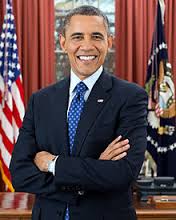
One of the most seductive parts of President Barack Obama’s political message (and the message of progressive Democrats in general) is sympathy for the poor and a willingness to talk about the disparities of capitalism — about the rich being too rich and the poor being screwed. In some ways, it’s the predominant message of the Obama era.

Now, if you’re heavily invested in the market, life is peachy. A confounding fact, no doubt, when one considers that nearly every economic indicator known to mankind has been pretty abysmal of late. We are experiencing high unemployment, a shrinking labor force, stagnant gross domestic product growth and rickety consumer confidence. A disconnected market, though, has been on a historic boom. So if we need any more proof that life really isn’t fair, think about this: The rich have the Federal Reserve, and you have Harry Reid.

What does it mean in substance? According to a new Pew Research Center analysis of Census Bureau data, thanks to a robust stock and bond market, coupled with a lousy housing market, the recovery has meant that households with a net worth in the upper 7 percent have seen their net worth rise, on average, by nearly 30 percent in the years after the recession and that everyone else’s net worth has dropped by an average of 4 percent.

The economic gap between whites and minorities is even worse. According to the Urban Institute, whites, on average, have two times the income of blacks and Hispanics and six times the wealth, and that gap is accelerating.

This is going on, if you can imagine, even after a tax hike on the wealthy.

The brutal and bitter reality of liberal policy is that the very people they claim they are helping are getting hammered.  And just as those very folks who are getting screwed by the democrats go to vote, they are going to hear that it’s all because of the republicans.

In all of history, nothing has improved the lot of the ordinary man in the way that a freer and more open market has.  Increased government regulation leads only to the poor remaining poor.

How To Reduce Healthcare Costs: Increase Supply Of Healthcare

Health Care

Last week I posted on the fact that the government released data describing the prices hospitals charged the government for services.  Armed with this knowledge, perhaps we can begin to see some comparison shopping resulting in lower prices.

I am glad to see the administration embracing some free and open market concepts.

And we have another example, this time in California:

As states gear up for the Affordable Care Act, they’re trying to figure out if there will be enough providers of health care to meet demand from the newly insured.

California is one of 15 states expected to consider legislation this year that would give advanced practice nurses more authority to care for patients without a doctor’s supervision.

If you want to bring prices down, you need to reduce demand, something that Obamacare does NOT do, or you need to increase supply, something governments have been unwilling to do.

As an example, I was discussing this with my mother-in-law some 2 years ago.  I mentioned that we need to increase the amount of services that can be handled by lower educated/certified professionals, thus increasing the number of people who can perform that service.

“For example” I said, “if I were to break my finger today, there is no need for a medical doctor to set that finger; a nurse could do it just fine.”

“Not me!  Why would I want to see a nurse when I can see an orthopedic specialist today?”

Exactly.

Venezuela, Economics, Politics and Toilet Paper

Economics

When I heard that in the 2008 Presidential election it would be the first time in a long time that we would have a true wide open primary in both parties, I became interested in politics.  Can you believe that back then, I felt that if Romney didn’t win the GOP primary I would likely support the Jr. Senator from Illinois?

HA!

Anyway, before I started blogging I was a big commenter on Alan Colmes‘ site.  Only after experiencing frustration at being unable to format my responses did I begin blogging.  But while over at Alan’s place, I realized that I knew not thing one about economics.  I Googled basic economics and was driven to Amazon’s “Basic Economics” by Thomas Sowell.

I ordered the book and my life changed.

One of the money quotes?

The first lesson of economics is scarcity: there is never enough of anything to fully satisfy all those who want it. The first lesson of politics is to disregard the first lesson of economics.

A real life example:

The government has announced an emergency toilet paper run for 50 million rolls

Venezuelans are scrounging around for toilet paper. Markets throughout the country have run out, and when they are in stock the rolls fly off the shelves.

The country of Venezuela is running out of toilet paper.

Why?

State-controlled prices — prices that are set below market-clearing price — always result in shortages. The shortage problem will only get worse, as it did over the years in the Soviet Union. [AP]

Venezuela also has tight controls on foreign currency, which makes it hard for companies to import raw materials and equipment, slowing down production of a wide range of goods, according to the AP.

I should add a correction to Mr. Sowell:

There is never enough of anything, when the cost is sufficiently low, to satisfy all those who want it.


Wherein Obama Discovers The Market

Healthcare

During the healthcare debate, one of the alternatives to a government based solution was one where the market would be more free to act.  Right now, whether through insurance, private or one of the Medi’s, people are really spending someone else’s money.  This leads to two bad results:

  1. Over consumption
  2. No shopping based on price

When I’m the one paying for the services, I’m more careful on the services I buy.  Take my vision [please!  ha] coverage for example.  As I’ve aged I’ve gone through 4 phases of vision:

  1. Needing no glasses
  2. Requiring glasses to read – though my vision remained stable
  3. My vision began to deteriorate requiring new glasses often
  4. Full on transitional glasses that allow for gradient lenses.

In the past, when my vision transitioned from great to merely “kinda bad” I wouldn’t need new glasses every time I had my eyes check; my eyes did not get worse.  But because I had insurance that covered the cost of glasses, I would get a new pair each visit.  One for the bedroom, the home office, the work office and so on.  Today, however, my vision is changing.  Each visit requires a new pair of glasses.  And the cost of the new glasses is significantly more than the cost of those glasses; I am paying the large share now.

The result?  I push my vision purchases out as long as a I can.  I don’t get new glasses each visit – I push my way through older glasses for as long as I can before buying new.

On top of no longer over consuming vision services, I shop on price.  Because I now care how much the glasses cost, I find the best value.  In the past, I couldn’t care less how much the frames cost because I wasn’t paying for them.  To me, convenience mattered and if the office I was at had a product I liked, I bought ’em.

No longer.

Why is this important?  Because the government recently released how much hospitals charge for services:  [Hat tip to Ryan Grace]

For the first time, the federal government will release the prices that hospitals charge for the 100 most common inpatient procedures. Until now, these charges have been closely held by facilities that see a competitive advantage in shielding their fees from competitors. What the numbers reveal is a health-care system with tremendous, seemingly random variation in the costs of services.

In the District, George Washington University’s average bill for a patient on a ventilator was $115,000, while Providence Hospital’s average charge for the same service was just under $53,000. For a lower joint replacement, George Washington University charged almost $69,000 compared with Sibley Memorial Hospital’s average of just under $30,000.

Virginia’s highest average rate for a lower limb replacement was at CJW Medical Center in Richmond, more than $117,000, compared with Winchester Medical Center charging $25,600 per procedure. CJW charged more than $38,000 for esophagitis and gastrointestinal conditions, while Carilion Tazewell Community Hospital averaged $8,100 in those cases.

Now, if we can just get a system that builds in market forces, the price of healthcare will come down without the need of a massive government solution.

Taxation And The Laffer Curve

This has been on my stack for some time.  I came across a story after reading a post by Dan Mitchell of CATO:

CIGARETTE-smuggling continues to soar in Ireland, with new Department of Finance figures showing that tobacco excise tax receipts are falling dramatically short of targets, even though taxes have increased and the number of people smoking has remained constant at 29 per cent of the population.

I especially enjoyed the assumed fact that economic gain made by the voluntary trade in an open a free market somehow first belongs to the government:

What Fianna Fail TD Niall Collins called “Premiership-style criminality” is behind the latest upsurge in smuggling, which is costing the state hundreds of millions in lost revenue.

Not one pause at the idea that the profits realized by selling tobacco from those who have it to those that want it should first be the property of the sellers.

Unreal.