Mark Sanford

Mark Sanford

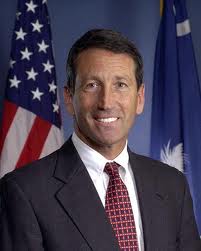
I’m dramatically less interested in Mark Sanford than I was 4 years ago.  Remember, back then Sanford was an up and coming republican star.  Two term governor of a southern red state.  In my mind, he was on the short list of the top contenders for the 2012 ballot.

The came Argentina and the Appalachian Trail.

Sanford rightly was banished from American politic and finished his term in disgrace.  Many, me included, thought that his career was over.

Well, not yet:

Former South Carolina Gov. Mark Sanford (R) has won his House primary runoff, setting up a high-profile special election against businesswoman Elizabeth Colbert Busch (D), the sister of comedian Stephen Colbert.

Sanford led attorney Curtis Bostic (R) by 57 to 43 percent as of 8:40 p.m., with 96 percent of precincts reporting. The Associated Press has called the race.

The win is the latest step in Sanford’s rehabilitation after an extramarital affair derailed his political career in 2009 — but his biggest test lies ahead in the Republican-leaning district.

Since he has mounted his comeback, Sanford is 2 for 2.  He “won” the first runoff but failed to obtain the 50% he needed to avoid the second runoff.  And he won this one going away.

The first PPP polling shows the race a toss-up:

PPP’s first look at the special election in South Carolina’s 1st Congressional District finds a toss up race. Democrat Elizabeth Colbert Busch leads Republican Mark Sanford 47-45 and ties Curtis Bostic at 43.

This is a Republican leaning district and Barack Obama’s approval rating in it is only 41% with 57% of voters disapproving of him. But Democrats are far more unified than the Republicans are. Busch is winning 87-89% of the Democratic vote while Sanford (76%) and Bostic (72%) are both earning less than 80% of the GOP vote. Busch is also up by 16-18 points with independent voters.

Focusing in on the potential race between Busch and Sanford it’s surprisingly close for one simple reason- voters like Busch and they continue to strongly dislike Sanford. 45% of voters see Busch favorably to only 31% with a negative opinion. On the other hand Sanford is still stuck with a 34% favorability rating and 58% of voters seeing him in a negative light.

I’m betting that right now, Sanford is experiencing his lowest polling numbers of the election.  He’s a veteran of 5 winning elections and is unlikely to make an unforced error.  Further, every single skeleton has likely been exposed.  I’m guessing that he wins relatively easily.

What this means in the larger picture however, is kinda ho-hum.  The seat was republican and, as I mentioned, will probably stay republican.  Both senators are republican and are unlikely to turn blue anytime soon.  He’ll probably never hold the governor’s mansion again, so I don’t see much upside for him outside of his house seat.

Then again……

Obamacare and Cost Savings

health care

Remember when proponents of Obamacare told us that government run health care models were better than private ones because they wouldn’t have to spend money on things like profit?

Or marketing?

So far California has received $910 million in federal grants to launch its new health insurance exchange under the Affordable Care Act (“Obamacare”).

The California exchange, “Covered California,” has so far awarded a $183 million contract to Accenture to build the website, enrollment, and eligibility system and another $174 million to operate the exchange for four years.

The state will also spend $250 million on a two-year marketing campaign.

Two hundred fifty million on marketing.

Not to mention the $143 million extra to start the thing:

Privately funded Esurance began its multi-product national web business in 1998 with an initial $5.5 million round of venture fund investment in 1999 and a second round of $34 million a few months later.

I’m not sure that we’ll ever be able to fix this thing we call Obamacare.  But it sure is gonna cost us if we don’t.

Light Rail

high-speed-rail

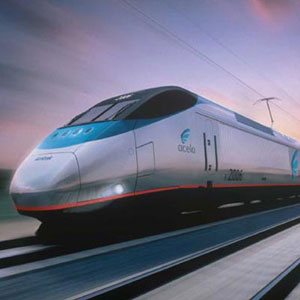
Trains are cool.  And fast trains are fastly cool.

I live nearly 15 miles from my office.  And I would love to be able to take a train, preferably a fast one, to the office each day.  However, there are some constraints  on even an imaginary train.

  1. I have to take my kids to school.  So, even if I can take the train to work, I have to drive to school.
  2. My kids would appreciate it if I picked them up.
  3. Sometimes, more when they were younger, I have to go to school to get them because they are hurt or sick.
  4. Now that they are older, they need to go to places like dance, karate, soccer and basketball after school.
  5. I have to go to places like lunch, the grocery store and Wal-mart during the day.

All of this is a not so obvious way of saying that unless the train stopped at my door, my kid’s school, the grocery and each of our events, I can’t use it.  None of the things in my life are close enough that I can afford to give up the car.

My wife was born in Brooklyn.  And I love to visit.  Everything is so close to the house that you can go for days, weeks I suspect, without having to go further than 6 blocks.  Within just 2 are more than 20 places to eat, a movie theater, grocery and drug stores.  Everything.

But here, in Raleigh, and most place sin America, things that people need and want are spread all over the place.  And because of that, trains, being static once built, are of very limited use to a very limited population of people.

And saying that makes me happy:

“The commuter rail plan and the light rail plan just don’t make sense to me,” said John Pucher, a professor in the Bloustein School of Planning and Public Policy at Rutgers University in New Jersey. He is a visiting professor this semester at the University of North Carolina-Chapel Hill in the Department of City and Regional Planning.

Pucher has more than 40 years of experience in transportation planning. He supports alternative modes of transportation, but he said planners often underestimate cost and overestimate ridership projections.

“It’s just so difficult in this very decentralized, very sprawled metropolitan area,” he said.

I wish I could take a train to work.  Maybe in 12 years after the kids are in college and I have fewer variable trips, I can.  In fact, when I was single and living in Seattle, I often had thoughts of moving to Bainbridge Island and commuting by ferry.  I could arrange to work from home in the morning, miss the massive morning commute, take the boat across and be in the office by 10.  Same thing on the way home.

But right now, the way that we have built our cities, the juice ain’t worth the squeeze on this light rail.  The money just doesn’t make sense.

But what does?

A better option for Wake County would be a “bus rapid transit system,” he said. The system essentially allows buses to use high-occupancy vehicle lanes on area highways, which he said is more efficient, flexible and cost-effective than rail systems.

Indeed.

Gay Marriage And States Rights

Gay Marriage

Watching the story surrounding the arguments before the Supreme Court is fascinating.  I love hearing the back and forth not only among the partisans but the “experts” as well.

Some thoughts.

I love President Obama being called out:

Chief Justice John G. Roberts Jr. and some of the other more conservative justices expressed irritation that the case was before them at all and said President Obama’s stance – to enforce the law but not defend it – contradicted itself.

“I don’t see why he doesn’t have the courage of his convictions” and not enforce the law if he thinks it is unconstitutional, the chief justice said.

This goes to the decision by the President that the law was unconstitutional and that his Justice Department wouldn’t defend the law in court.  However, Obama is still enforcing the law and when the law was struck down by a lower court, Obama appealed it to the Supreme Court.

 Then, I never would have thought I’d see the day when a liberal Justice would appeal to the concept of state’s rights:

“It’s not as though there’s this little federal sphere … you’d be really diminishing what the state has said is marriage,” Ginsburg said.

I think that if Ginsburg rules DOMA unconstitutional because of state’s rights, the left is going to have a hard time fighting state efforts to ban gay marriage.

As for me, I think that gay marriage is protected federally in the same way that interracial marriage is protected federally.

There Are No Journalists Anymore: Version 12,567

AP

I’m sure there are example on both sides of the ideology spectrum; right and left.

But this one’s a doozy:

RICHMOND, Va. –  Gov. Bob McDonnell has signed legislation into law that will require voters to carry photo identification with them to the polls, starting next year in Virginia.

Virginia joins four other states that have strict photo ID requirements in place for elections, an action Democrats decried as a Jim Crow-era tactic to suppress the votes of the elderly, minorities and the underprivileged.

“This is merely a continuation of attempts by Republicans to suppress the vote of individuals who are not likely to support their right-wing agenda. I guess it’s true that if you can’t win elections the right way, cheat,” said Sen. Mamie Locke, D-Hampton and chairman of the Virginia Legislative Black Caucus.

Republican majorities in the Virginia House and Senate pushed the bill to passage one year after a more modest GOP-sponsored voter identification law failed to prevent President Barack Obama from winning Virginia for the second presidential election in a row and a Democratic U.S. Senate victory.

Serious.

I think it is entirely fair to point out that one side, one team, feels the republicans are pushing this law through for the exact reasons mentioned above.  I have no issue with that.  And, in fact, that point was made by inserting the quote from Locke.  And further in the article, next paragraph, the reporter points out that republicans have their reasons for passing the law.

But the editorial section is totally out of line.

Bees And Chemicals

beehive

My son is 7 now.  So it was near 5 years ago that I remember talking to a friend about bees and colony collapse disorder.  This is where a normal fully functioning hive of bees suddenly fails for no apparent reason.  There are tons of explanations but so far none seem to have stuck.

Here’s another one:

… pesticides are typically applied to seeds — mainly of corn, but also other crops — as a sticky coating before planting. When a seed sprouts and grows, the chemicals spread through the whole plant. So insects, such as aphids, that try to eat the plant also get a dose of poison.

But could they be killing more than aphids? Krupke put up a picture of a beehive surrounded by a carpet of dead honeybees. In several places across the Midwest, there have been reports of bees dying in large numbers like this. And tests detected the presence of neonics on them.

It seemed like a mystery. How could bees come into contact with chemicals that are buried in soil with crop seeds?

Krupke put up another slide: a picture of a huge machine that’s used for planting corn. This equipment is apparently part of the answer.

These machines use air pressure to move seeds from storage bin to soil. A slippery powder — talc or graphite — keeps everything flowing smoothly. The air, along with some of the powder, then blows out through a vent.

Krupke explained how he tested that planter exhaust and found amazing levels of neonic pesticides: 700,000 times more than what it takes to kill a honeybee.

That toxic dust lands on nearby flowers, such as dandelions. If bees feed on pollen from those flowers, that dust easily can kill them. A tell-tale clue: These bee die-offs all happened during corn-planting season.

The cold spring has delayed the efforts of apiaries to split their hives so I may have to wait an extra week or 4 before I can get mine.  No worries.  In fact, the delay may do me well, I’ve found an acquaintance at  the YMCA that is anxious to have me host one or two hives on his property to help with his garden.

Mandatory fun!

The Cost Of Food In America

Food Consumption

The chart above, first posted at Carpe Diem, is an interesting snapshot of America.  We have the lowest food costs in the world.

Interesting threads in the comments.  I’d add that Household Compensation includes money spent as a result of various programs; food stamps et. al.

From the post:

Relative to our total household spending, Americans have the most affordable food on the planet — only 6.7% of the average US household budget goes to food consumed at home. European countries like Spain, France, Belgium, and Norway spend twice that amount on food as a share of total expenditures, and consumers in countries like Turkey, China, and Mexico spend three times as much of their household budgets on food as Americans (see full list of countries at the link above).

For America’s increasingly affordable food over time, which has also been the most affordable in the world as a share of household spending for many years, we can thank the innovation, technological advances, and ever-greater supply-chain and distributional efficiencies that drive America’s farming industry, which in turn drive down food prices relative to other goods and services and relative to our income.

The State Of Our Nation’s Schools

School Building

There’s a new report out that shows the conditions of our schools across the nation is pretty poor:

WASHINGTON — America’s schools are in such disrepair that it would cost more than $270 billion just to get elementary and secondary buildings back to their original conditions and twice that to get them up to date, a report released Tuesday estimated.

Horror stories abound about schools with roofs that leak, plumbing that backs up and windows that do little to stop winds.

I have little doubt that the report is accurate, at least in direction if not in total value.

Where is the failure occurring?

The report does not assign blame for schools’ disrepair but the problems often start at the local and state levels. In most cases, schools are funded by local property taxes and they are reliant on their neighbors’ wealth and willingness to fund their schools. A National Center for Education Statistics found large disparities between schools in areas of high poverty and those in more affluent areas.

This shouldn’t surprise us; school districts are local affairs and, as such, responsibility falls to those at the local levels.

I would occur to me that the solution to this problem is going to fall into one of two areas – local and state or the federal government.  Well, the folks that are featured in this interview have their ideas:

“We have a moral obligation,” said Rachel Gutter, director of the group affiliated with the U.S. Green Building Council. “When we talk about a quality education, we talk about the “who” and the “what” — teachers and curriculum — but we don’t talk about the “where.” That needs to change.”

Her organization is urging the Education Department to collect annual data on school buildings’ sizes and ages, as well as property holdings. The group also wants the Education Department’s statistics branch to keep tabs on utility and maintenance bills.

It’s hard to argue that schools in areas of poverty are not only functionally poor but structurally deficient as well.  And the solution to that is tricky.  I break with a lot of conservatives on education; I DO think that the role of government is to care for our kids.  However, I’m not convinced that a federal program is what we’re after.  For example, I don’t have much of a problem funding schools federally in some way, but I do fear the extremists who are allowed to insert their version of what a good school is and what that means.

The alternative?  The individual state or school district.  But there isn’t a lot of hope there either.  The obvious solution is public funding of private schools for each kid, but the power of the school boards and teacher’s unions is such that public delivery of education seems here to stay.

Where Are All The Doctors Going?

Doctor

There’s going to be some problems in Minnesota in the next 10 years:

Doctors are getting older in Minnesota.

In the next 10 years one in three will retire, and there aren’t enough future physicians to replace them. That could threaten your access to health care.

Combine this with a demand problem:

The Minnesota Health Insurance Exchange will give access to health care to an estimated 300,000 currently un-insured Minnesotans, meaning more patients, more overtime, and fewer doctors to treat them.

Now, I happen to think that as we increase our demand for doctors, the market should correct and supply us with more.  However, this can only happen if the market is free enough to allow corrections in price.

It’ll be interesting to watch as this unfolds across the country.


The Cost Of Ethanol

Ethanol

I’m in the market for a lawn mower.

I’m reading the various reviews online and I’m struck y how many negative reviews there are for many of the mowers out there.  I suspect that there is the phenomenon of the negative reaction; people trend to rate only when they wanna complain.  But still, there are a whole lot of mowers out there that won’t start.

It turns out that ethanol contributes to the failure of these small engines.  In order to keep the engine safe, you have to purchase Stay Bil.  This is an additive that helps negate the impact of ethanol in the engine.  While it is relatively inexpensive, $6 for enough to treat 20 gallons, it’s still a pain in the arse to have to account for.

And wait until we get to E15.