Category Archives: Politics: National

If I Were A Democrat….

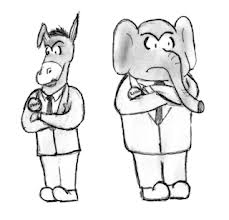
Donkey

I know why the democrats haven’t submitted a budget in 4 years:

Its Democratic counterpart, from Senate Budget Committee Chairwoman Patty Murray (Wash.), raises nearly $1 trillion in new taxes, adds new stimulus spending and does not project any date at which balance will be reached.

Murray, who released details but not a full document, also axed nine years of the sequester, meaning her budget would actually not cut spending compared to the Congressional Budget Office baseline.


Nullification

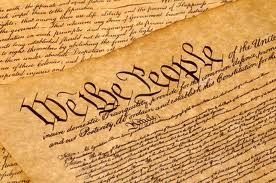
Constitution

Lately, and mostly, it’s been conservatives and republicans that get all crazy on the nullification kick.  Recently the trend has centered on the 2nd amendment and gun control or regulation.

Trust me, I resonate with the concept and the idea; the federal government is limited in what it can do.  And everything that is not given to the feds is given to the states.  I get it.

But we don’t live in that world anymore.   That world ended when the Supreme Court ruled that a man, on his own land, raising his own wheat, couldn’t grow as much as he wanted to feed his own animals.

Period.

So it is with great joy that I see the left jumping on the bandwagon:

CONCORD, N.H. (Mar. 13, 2013) Today in a lopsided vote, the Democrat-controlled State House of Representatives in New Hampshire approved Representative Dan Itse’s HB399, the Liberty Preservation Act.  If passed into law, HB399 would nullify the NDAA “indefinite detention” powers that Barack Obama signed into law at the end of 2011.  The vote was 337-15 (roll call here).

Pure awesomeness.

I don’t think this will matter.  Federal law trumps state law, does anyone younger than 40 know what trump is, so there is little hope that this in reality matters, but it’s cool.

Why Democrats Won’t Pass A Budget

Harry Reid

It’s been years since the senate has passed a budget; we’re going on 5 now.  And if you wanted to know why that is, you have to look no further than these two articles from The Hill.

First, Paul Ryan gettin’ it done:

Ryan, the former Republican vice presidential candidate who chairs the House Budget Committee, will release his 2014 budget on Tuesday. He’s expected to outline a plan to balance the budget in 10 years.

And why does this contribute to the reasons democrats won’t pass their own budget?

Senate Democrats promised Monday to make Rep. Paul Ryan’s (R-Wis.) new budget a focal point of their 2014 campaigns.

Democrats argue changes to Medicare and other spending cuts outlined by Ryan will pay political dividends for their Senate candidates, who face a difficult 2014 landscape.

“The Ryan budget will be a gift that gives throughout the 2014 cycle for Democrats,” pollster Geoff Garin said on a Monday call hosted by the Democratic Senate Campaign Committee.

And now over to the article describing progress on the senate’s budget:

Senate Democrats say they will soon pass their first budget in four years, but it is proving a test.

Disputes over tax cuts, spending reductions and entitlement reform all present challenges to Budget Committee Chairwoman Patty Murray (D-Wash.) and Majority Leader Harry Reid (D-Nev.).

One reason Senate Democrats did not pass a budget bill for the past four years was that they wanted to avoid unpopular votes to cut spending and hike taxes.

Leadership aides say Democrats from red states are less nervous now.

“The 2012 election showed that being in favor of revenue does not tar and feather you as a tax-and-spend liberal,” one aide said.

For the democrats, being elected to public office is the whole of the point.  There is no effort to govern or lead, only to win the next election.

Paul Ryan submits a budget and the democrats do nothing but “run against” the “gift that keeps giving.”  Yet when it comes time to pass their own budget, we get nothing because they are afraid to make the tough decisions.

Not surprising really.

Drones In America

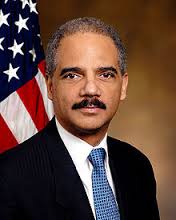
Eric Holder

For the record, I’m a hawk on enhanced interrogation techniques and am supportive of drone strikes in the prosecution of terrorist abroad.  So I certainly CAN imagine a time when the President could authorize a drone attack on American soil used against Americans.

For example, if Timothy McVeigh had left a note on the kitchen table describing what he was planning to do and we had him en route to the target; take him out.  Same for the scenario that Senator Feinstein described:

Senator Dianne Feinstein, the California Democrat who is the chairwoman of the Intelligence Committee, said one such situation would be the shooting down of a plane hijacked by terrorists.

Clearly where traditional methods would be allowed, a drone ought be allowed.  In fact, often time preferred.

But for the life of me I don’t understand why Obama, Holder and the whole of the administration won’t admit that the United States can’t use drones to strike American citizens “sitting in a cafe”:

Senator Ted Cruz, Republican of Texas, suggested a hypothetical situation in which a terrorism suspect was not presenting an immediate threat — like “sitting in a cafe” rather than “pointing a bazooka at the Pentagon” — and asked whether it would be unconstitutional for the military to simply kill that citizen.

How can the answer to that question not be an immediate “no”?

The politics are baffling to me.  This isn’t a President who would have to worry about his base being upset with the answer.  The reaction from the opposition wouldn’t be any worse than it currently is by hedging.

The answer and the “play” are so obvious that it’s mind blowing watching this play out.

What Does Compromise Look Like In The Budget Debate

Compromise

The headlines this week are going to focus on “compromise”.  What each party thinks that means, for themselves and for the other guys, is going to be interesting.  And will be at the heart of the conflict.

In the over-arching context, compromise refers to the effort to reduce the deficit so that we can begin to work on reducing the debt.  And the whole concept of compromise is the smaller individual effort to accomplish this goal by either increasing revenue or reducing spending.  Or, a third method, which is that the whole framing of the “problem” isn’t correct.  That is, while we do have a debt and a deficit, any conversation should be couched in our ability to carry, or repay, each.  However, I would suggest that such a take on the subject is awfully “inside baseball” and is even further removed from common understanding than such basic concepts as debt, deficit, baseline budgeting and “cuts”.

With the failure of Washington to stop the Sequestration, the conversation switches to:

  1. What can we do to prevent further cuts?
  2. How are we going to deal with the expiration of the continuing resolution on March 27?

And right now, the conflict between the democrats and the republicans is the whole idea of compromise.  One one side you will hear that any spending decrease will have to be matched by a conversation that discusses an increase of revenues through the tax code.  And on the other?  You’re gonna hear that revenues have already been addressed during the legislation that handled the expiration of the Bush Tax Cuts.

So, if I was the President of the United States or, if I was just a manager tasked with handling this budgetary effort, how would I guide the parties forward?

First, I would establish that for this effort, I was the President of the United States, not the President of the Democrat Party.  In other words, Obama has got to stop the party politics and blaming of the republicans.

I acknowledge that this is near impossible and why I would suck at politics.  Obama was elected because he is a democrat and he continues to receive the support he has because he’s expected to be a democrat president helping those same democrats take the House in 2014.  Which, by the way, puts him in a position that is firmly in his wheelhouse:  Campaigning.

I would approach the republicans and work on an idea that took two forms:

  1. We will reduce spending across the board; including and specifically the “entitlement” programs.
  2. We will increase revenues through tax reform – including a mix of ideas contained within Romney’s plan AND by ending tax subsidies to energy firms.

After speaking with the republicans I would approach the democrats and work on that same idea giving them:

  1. Tax benefits to oil and gas companies.
  2. Smart reforms to entitlements that ensure they continue to remain strong and viable.

In order to accomplish this plan, the main components of my plan would include:

  1. Let both sides claim victory.  Only in Washington can you INCREASE spending on programs and claim to cut them at the same time.  In other words, allow the entitlement programs to grow, but grow more slowly.
  2. Acknowledge that ALL forms of government must subscribe to the cuts, including defense and border protection.
  3. Remove “loopholes” for energy companies; oil, gas and coal BUT include alternative “green energy” firms in the legislation.  Again, this should be a win for both sides.
  4. Reduce the corporate tax in exchange for the removal of the energy legislation.
  5. Increase tax revenues by limiting deductions in exchange for a reduction in tax rates.

Items 1-4 above should be straight forward and relatively easy; the 5th is a tougher sell.   The republicans are against any revenue increase and the democrats can’t let go of the class warfare and are intransigent on the issue of tax rates; specifically on the wealthy.



Outside Federal Jurisdiction

Government Control

The powers not delegated to the United States by the Constitution, nor prohibited by it to the States, are reserved to the States respectively, or to the people.

We’re seeing more and more of this:

With gun rights coming under fire across the border in New York State, the Susquehanna County commissioners spoke out by resolution Wednesday in favor of the Second Amendment.

Republican Commissioner Michael Giangrieco said the issues in New York prompted him to address the matter on a county level.

He proposed a resolution stating that “any federal act, bill, law, rule or executive order that in any way infringes on our Second Amendment rights by attempting to reduce the private ownership of any firearm, magazine or ammunition shall be unenforceable in Susquehanna County.”

So, it occurred to me, “Can the federal government regulate guns at all?  And if so, how does it derive that power?”

I couldn’t find anything that expressly authorized the federal government to regulate guns but had a sneaking suspicion I would find the authority somewhere else.  And then I found this:

Congress derives its power to regulate firearms in the Commerce Clause, in Article I, Section 8, Clause 3, of the U.S. Constitution. Under the Commerce Clause, Congress may regulate commercial activity between the states and commerce with foreign countries. In reviewing federal legislation enacted pursuant to the Commerce Clause, the U.S. Supreme Court has given Congress tremendous leeway. Congress may enact criminal statutes regarding firearms if the activity at issue relates to interstate transactions, affects interstate commerce, or is such that control is necessary and proper to carry out the intent of the Commerce Clause.

Ahh yes, the Commerce Clause.  The Clause that effectively ended state’s rights and allowed the federal government massive power over those states.  In fact, the landmark case establishing such leeway seems to make Montana’s effort to try and skirt federal gun regulations by manufacturing and selling guns within the state outside federal control.  Remember, that case found that a farmer didn’t have the right to grow and use wheat on his own farm as he saw fit.

My feel is that it was never meant that the federal government could regulate firearms in general, that it be left to the states.  But that the states and local governments COULD regulate those weapons as THEY saw fit.

Blantant Scaremongering

I’m not sure if she simply made a mistake, is truly that ignorant or is guilty of flat out scaring the living soul out of people:

An Impact Of Sequestration

Budget Cut

I’m more than a little annoyed that the whole sequestration process is refereed to as a cut in funding.  Washington is referring to the budget action in this manner and worse, the media is reporting as a cut in funding as well.  The truth is that spending will not be cut but will. in fact, increase.  The difference is that the level of increase is less than it might otherwise have been.

Only slightly less annoying than this detail is the rhetoric coming out of the White House regarding the impacts of these cuts.  Everything from having to mothball an aircraft carrier to the FBI losing agents to DHS releasing illegal immigrants to teachers and first responders getting fired.  Heck, even traveling is going to get harder with TSA agents facing shortages.

I suspect precious little of this will actually occur.  Take for example, teachers:

The good part is at 1:30.

The sequestration is SO bad that teachers are already receiving pink slips; they are already being fired.

But, is it true:

Near the very end, the Secretary gets into a little detail.  The teachers in jeopardy of losing their jobs are Title I teachers; folks who are funded through the federal government. But right after that, at about 1:50, he also mentions a teeny tiny piece of information:

The cuts may not be related to sequestration.

Further information:

When he was pressed in a White House briefing Wednesday to come up with an example, Duncan named a single county in West Virginia and acknowledged, “whether it’s all sequester-related, I don’t know.”

And, as it turns out, it isn’t.

Officials in Kanawha County, West Virginia say that the “transfer notices” sent to at least 104 educators had more to do with a separate matter that involves a change in the way West Virginia allocates federal dollars designated for poor children.

The transfer notices are required by state law and give teachers a warning that they may be moved to a different position next school year. They don’t necessarily mean a teacher has been laid off, said Pam Padon, director of federal programs and Title 1 for the Kanawha County public schools. “It’s not like we’re cutting people’s jobs at this point.”

She said those 104 notices will ultimately result in the elimination of about five to six teaching jobs, which were likely to be cut regardless of the sequester.

“The major impact is not so much sequestration,” she said. “Those five or six jobs would already be gone regardless of sequestration.”

So we have increases in spending referred to as cuts in spending.  Then you have cuts in services turning out not to be true.  I’m beginning to believe the reports that more frightening to the democrats than the actual sequestration is that the impact won’t even be noticed.  America is going to wake up on Friday and realize that we can cut $85 billion and not even know we did it.


Unions: Legalized Racketeering

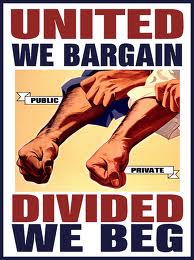
Unions

I have no issue whatsoever with the McWorker, along side his McFriend, walking into the McBoss’s office and asking for a raise.  And if denied, threatening that the two of them, in hopes they are valuable, will walk off the job and go to work somewhere else.

In this case, the McBoss can call the McBluff and say, “No raise for you!” and hope the McWorkers get back to McWork.  Or, perhaps the McBoss, seeing the value of the McWorkers, will relent and approve the raise and everyone is happy.

In other words, uniting in the pursuit of self interests is fine.  As long as the rules are fair for everyone.  And when it comes to unions, the rules are most certainly not fair:

“The most glaring examples of union favoritism under state laws,” notes a 2012 U.S. Chamber of Commerce report, “tend to occur in criminal statutes and allow individuals who engage in truly objectionable behavior to avoid prosecution solely because they are participating in some form of labor activity.”

Pennsylvania unions now enjoy a loophole that the state’s anti-stalking law “shall not apply to conduct by a party to a labor dispute.” In Illinois, anti-stalking laws exempt “any controversy concerning wages, salaries, hours, working conditions or benefits … the making of collective bargaining agreements.”

These exemptions prove that organizing tactics used by unions can have something in common with those of stalkers – and can perhaps inflict similar emotional distress.

While a number of states have exemptions that have allowed union members to intimidate and harass, California is by far the worst actor. As in other states, it is a crime in California to interfere with a lawful business through physical obstruction or intimidation of workers or customers.

Yet California has exempted unions from this law. The negative effects were clear in 2008, when United Food and Commercial Workers Union members picketed a new Ralph’s grocery store in Fresno. They went beyond traditional picketing, harassing customers and instigating confrontations with employees on store property. When store workers finally called the police, authorities refused to come and put a stop to the union’s disruptive behavior.

The police refused to even dispatch to the site.

But it gets even worse:

California also has a host of exemptions that allow union members to violate the property rights of private citizens. The 2008 Researcher Protection Act makes entering the residences of academic researchers to interfere with their work a crime. Sounds reasonable. Yet this doesn’t apply to union members. They can invade a professor’s home in California and it’s not a crime – so long as the invader is “engaged in labor union activities.”

And even worser:

Labor bosses have even deemed it necessary to get legislators to grant unions exemptions from laws against sabotage. Wisconsin’s state law against sabotage exempts unions, so as to not curtail their organizing activities. The fact that anti-sabotage laws might be construed as an impediment to union organizing says more about union organizing efforts than anything else.

Yet, in 2011, union members were alleged to have sabotaged equipment belonging to supporters of Governor Scott Walker’s labor reforms. In New York and New Jersey, during a labor dispute between Verizon and the Communications Workers of America, the telephone company contacted the FBI to investigate allegations of sabotage. The company reported equipment being stolen, fiber-optic lines cut and an office heating system tampered with.

During a union organizing effort in Ohio, the owner of one non-union electrical services company had his tires slashed and rocks thrown at his windows. One of his employees was assaulted. The owner was himself shot in the arm while confronting a person who was vandalizing his car on his property. Other owners of non-union shops experienced similar harassment and intimidation. When the Associated Builders and Contractors called on unions to halt such odious behavior, the unions responded that their actions were perfectly legal.

We all should have the right to bargain for our services and our compensation.  We should be able to grieve our differences when they occur.  But we should all be safe from threats, violence, theft and assault.

Strange But True: Elements Of Obamacare Cost Most Than Originally Expected

Imagine my shock when I heard that portions of Obamacare are running into financial difficulty:

WASHINGTON (Reuters) – The Obama administration on Friday said it would stop enrolling new beneficiaries in a special $5 billion insurance program for people with pre-existing medical conditions, because of rising costs and limited funding.

The news comes a day after a top U.S. healthcare official told lawmakers on Capitol Hill that the administration is grappling with financial difficulties but determined to keep the Pre-Existing Condition Insurance Plan (PCIP) operating in 23 states and the District of Columbia through 2013.

PCIP was established in 2010 under President Barack Obama’s healthcare reform law to provide coverage for sick people unable to find it in the private insurance market. The program is designed as a bridge to January 1, 2014, when legal restrictions barring discrimination over medical conditions come into force.

The U.S. Department of Health and Human Services issued a notice on Friday saying it would suspend new enrollments beginning on Saturday to “help ensure that funds are available through 2013 to continuously cover people currently enrolled in PCIP.”

And what happens to government agencies that find they are short on money?  Why, they ration:

Gary Cohen, the HHS official responsible for overseeing implementation of Obama’s healthcare reforms, including PCIP, told the Senate Finance Committee on Thursday that the administration had begun to alter program benefits while grappling with funding restrictions.

It’s not very difficult to see where this whole thing is going to go.